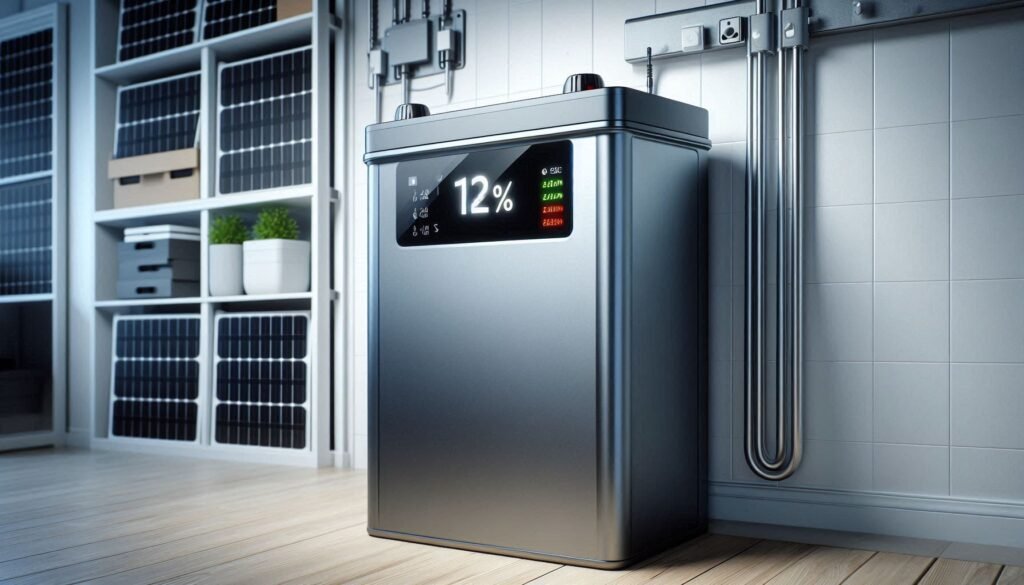
You’re dealing with lithium battery fires by weighing energy density against risk: a small defect or abuse can spark a thermal runaway that releases heat, oxygen, and flammable vapor. You’ll see different chemistries burn differently, with hotter flames from LCO/NMC/NCA and smoke-prone behavior from LFP. The challenge isn’t just ignition but how fast it can spread in a pack, and why safety measures must be precise and proactive to keep you and others protected.
What Makes Lithium Batteries Prone to Fires
Lithium batteries are prone to fires mainly because they pack a lot of energy into a small volume, and that energy can be released rapidly if something goes wrong. You carry high energy density per unit mass, storing vast chemical energy that can ignite in a failure. Oxygen-rich cathodes can release oxygen when heated, sustaining combustion. Flammable electrolytes vaporize and ignite at elevated temperatures, with flash points often below runaway temps. Metallic lithium and plating create reactive zones that spark energetic reactions. Thermal runaway can push cell temperatures well above 500–1,000 °C, driving violent venting and combustion. Separators can melt or shrink, removing barriers between electrodes. Defects and dendrite growth enable localized failures, accelerating release and propagation.
What Triggers Ignition: Internal Flaws and External Damage
You’ve seen why lithium batteries can ignite; now, the ignition hinges on internal flaws and external damage that create, or expose, weak points. Internal manufacturing defects can seed shorts through metallic bridges, thin spots in separators, or uneven coatings that heat locally. Impurities or improper electrolyte mix raise flammability and destabilize cells, while poor formation leaves high SOC variance that hides latent instability. Aging compounds the risk: lithium plating, brittle separators, micro-cracks in cathodes, and SEI instability raise impedance and form hotspots. Internal shorts may arise from mechanical deformation, puncturing, or induced shorts during thermal events, creating conductive paths to neighboring cells. External abuse—crushes, sharp penetrations, or repeated flexing—breaches containment and triggers rapid, localized failures. Thermodynamic escalation follows, but ignition starts with those flaws and damage.
How Thermal Runaway Starts and Spreads in a Pack
How does thermal runaway start and then spread through a pack? You start with cell-level runaway, triggered when exothermic SEI and electrolyte decomposition kick in around 90–150°C. An internal short or mechanical abuse can push local heat to 10–100°C per second, enough to vent and surge temperature quickly. Higher state of charge supplies more reactive energy, lowering onset temps and amplifying gas production. Early venting releases H2, CO, CO2, C2H4, and hydrocarbons, forming flammable mixtures and pressure faults. In a pack, heat transfers by conduction and radiation; nearby cells heat faster as spacing shrinks. Ejected flaming debris, molten material, and vent gases ignite neighbors, sometimes via pressure waves. Venting and gas ignition accelerate propagation, stressing barriers, gaps, and cooling systems to the limit. Thermal runaway propagation can unfold across modules and branches, creating a domino-like progression that can engulf the entire pack.
LCO vs LFP vs Other Chemistries: Fire Risk and Behavior
A quick comparison shows that chemistry largely drives fire risk and how a thermal runaway unfolds: LCO and other high-energy cathodes release lattice oxygen and burn hotter, while LFP resists oxygen release and typically burns less intensely. You’ll find higher energy density chemistries correlate with more heat and more energetic combustion, as NMC/NCA can reach self-heating earlier and vent more violently. LFP’s olivine structure reduces oxygen release, yielding lower peak temperatures and less aggressive flames, though smoke and toxic gases remain possibilities. In terms of runaway metrics, NMC/NCA commonly release 20–25 kJ/Ah with hotter peaks, whereas LFP sits around 10–15 kJ/Ah and lower temperatures. Ejecta mass tends to be larger and flaming for oxygen-rich cathodes, while LFP vents are typically smoke-dominant with reduced flaming.
Real-World LIB Fire Patterns and Safety Implications
Real-world LIB fires unfold in patterns that reflect both chemistry and context, and understanding them is essential for effective safety planning. You’ll see underreporting bias masking true incident rates, with model-based estimates counting hundreds of thousands of consumer LIB fires in structures since 2011 and EV/PEV fires rising about 45% annually. Portable devices contribute steady growth, while fire services note LIB involvement in a minority of incidents, complicated by fragmented data sources. Initiations cluster around manufacturing defects, overcharge and BMS failures, and mechanical abuse in larger packs, with thermal abuse and environmental factors amplifying risk. Patterns diverge by device: phones and laptops from aging or counterfeit cells; EVs from rapid propagation; ESS from software and installation faults. Safeguards must address early detection, separation, and robust thermal management.
Firefighting Challenges and Best-Practice Responses
Firefighters face unique challenges with lithium battery fires because rapid heat buildup, gas releases, and reignition threats complicate suppression. You must manage rapid, cascading heat within modules, where cell-to-cell transfer can trigger failures in seconds to minutes. Gas production releases flammable and toxic compounds, creating hazardous atmospheres that demand full PPE and robust ventilation strategies. Reignition can occur after apparent extinction due to pyrolysis and oxygen-generating reactions inside cells, so continuous cooling and vigilant monitoring are essential. Rely on multi-parameter sensing—temperature, voltage, current, and gas data—to detect faults early and guide decisions. Use water-based cooling as the primary suppressive method, while recognizing its limitations and need for large volumes, runoff control, and supplemental additives. Prioritize safety, containment, and controlled immersion when feasible to limit spread.
Practical Steps to Reduce Risk: Design, Handling, and Regulation
To reduce risk in lithium battery systems, design must prioritize cell-to-pack safety and robust thermal management, with multi-layer BMS protections, mechanical barriers, and active and passive safety features validated by abuse testing. You should choose robust chemistries like LFP where energy density trade-offs reduce thermal runaway likelihood, and ensure the BMS provides cell-level monitoring, balancing, and protections; remember BMS failures often trigger pack incidents.
Mechanically isolate cells with barriers, spacing, venting paths, and fire-retardant housings to slow heat transfer.
Implement active cooling with redundancy and fault-tolerant controls, plus passive features such as shutdown separators and pressure vents.
For handling and regulation, follow UN 38.3, maintain controlled storage, use proper packaging, and enforce traceability, inspections, and reporting to reduce systemic risk.
Conclusion
You now know what makes lithium batteries prone to fires, how tiny flaws can spark big problems, and why thermal runaway can race through a pack. Different chemistries burn in different ways, so safety isn’t one-size-fits-all. Real-world fires demand careful detection, cooling, and suppression, plus smart design and handling. By following best practices and staying regulated, you cut risk, protect lives, and keep energy storage safer for everyone. Stay vigilant, test rigorously, and iterate on safety.