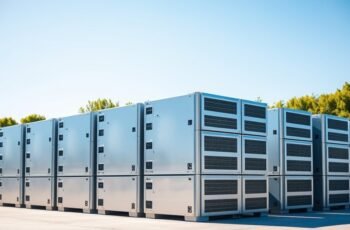
More than half of all lithium battery failures relate to heat and age, a stat that should prompt vigilance. We’re here to break down what to watch for—from performance dips to unusual warmth and swelling—so you can act before harm occurs. If you notice odd charging, rapid capacity loss, or any deformation, we’ll guide you through practical steps and safety precautions, but first, consider what these signs could mean for your setup and why swift evaluation matters.
Key Takeaways
- Performance drops and faster capacity fade under normal use indicate aging and faulty chemistry.
- Rising impedance causes voltage sag under load and reduced energy delivery.
- Abnormal charging behavior, temperature spikes, and rest-voltage instability signal deteriorating cells.
- Thermal indicators (persistent hot spots, frequent high temps) and fast temperature ramps suggest increased runaway risk.
- Visible physical signs (bulging, leakage, corrosion, or damaged seals) confirm major battery degradation.
Early Warning Signs You Should Recognize
Early warning signs start with noticeable drops in performance. We see it in shorter runtimes, less usable capacity, and faster fade under normal use, meaning faulty chemistry is already at play. Aging impedance rises, causing voltage sag under load and reduced energy delivery. As cycles accumulate, deeper discharges accelerate loss, and the pack struggles to reach its rated state of charge. Charging behavior changes follow: slower fills, premature stopping, and occasional temperature spikes signaling inefficiency. We also notice voltage irregularities, with rapid SoC shifts and poor stability in rest voltage, reflecting degraded capacity estimation. Thermal patterns worsen too—more frequent cooling cycles and higher baseline temps. Collectively, these early cues indicate aging impedance and underlying degradation, urging closer monitoring and proactive management before performance collapses. Increased charging frequency is common with aging, reflecting the battery’s reduced ability to hold charge over time.
Physical and Leakage Indicators to Check
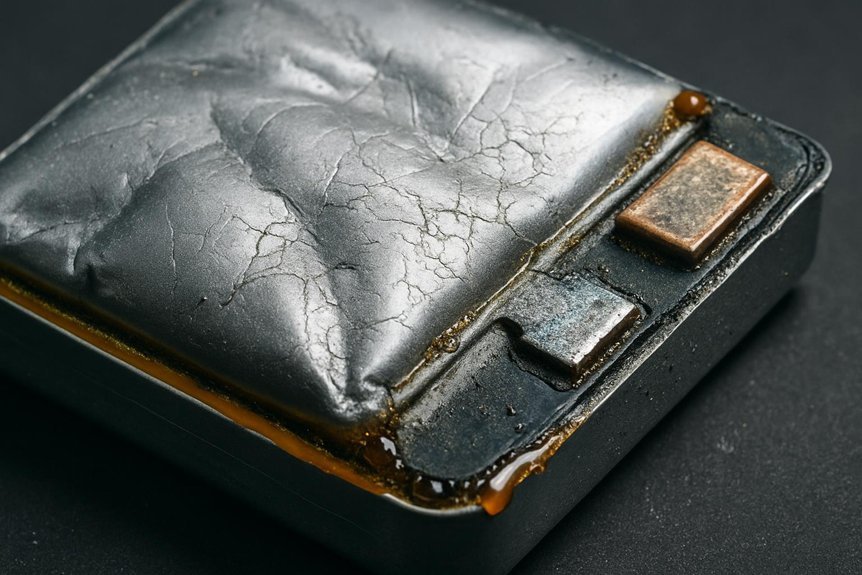
Physical and leakage indicators are the next telltales I’d check after recognizing early performance drops. We look for physical deformation and leakage signs that reveal internal problems before a failure becomes catastrophic. Visible bulging, warping, or bending signals gas generation and swelling inside. Delamination, blistering, or seam lifting shows cell expansion stressing enclosures. External leakage signs include liquid residues at terminals, corrosive or dark stains near seals, and a solvent-like odor localized to the area. Corrosion on contacts and reduced insulation resistance on PCBs point to electrolyte exposure. Cracked casings, displaced vent features, and weld or tab failures indicate mechanical stress and compromised protection. Terminal discoloration, melted joints, and misaligned connectors highlight heat and conductivity issues. These cues emphasize physical deformation and leakage signs driving early intervention.
Thermal and Acoustic Cues of Trouble

We can read trouble in the heat: rising temperatures, hot spots, and rapid ramps signal shifting internal chemistry and potential failure. We focus on thermal signatures and how acoustic cues corroborate risk, not as separate alarms but as paired indicators.
1) Surface rises >10–15°C during charge/discharge point to elevated resistance and higher runaway risk.
2) Local hot spots (>5–10°C across a module) reveal imbalance or poor cooling, signaling possible cell-to-cell propagation.
3) Repeated peaks above 45–60°C accelerate SEI growth and fade; roughly every 10°C can double capacity loss.
4) Fast temperature ramps near end-of-charge often precede gas generation and pressure buildup, with micro-short formation amplifying the signal.
New sentence with a main factual point from knowledge, added here Acoustic emissions and signal processing can flag safety issues and indicate remaining life, providing a complementary non-destructive check alongside thermal metrics.
What Electrical Performance Reveals About Health
Voltage behavior and anomalies offer a clearer read on battery health than heat alone. We see persistent resting voltage well below nominal, rapid sag under light load, or cell-to-cell imbalance that signals capacity loss and accelerated aging. Voltage hysteresis widening over time marks electrode degradation, while failure to reach end-of-charge voltage or premature cut-offs point to high internal resistance or weak cells. SoC estimates that diverge from measured throughput reveal calibration drift or aging, and frequent SoC swings expose voltage response issues. Range shrinking beyond seasonal effects indicates declining usable capacity. Internal resistance climbs cut high-current performance and extend recovery time after loads. Inconsistent SoH reports versus independent tests hint at hidden faults. These electrical cues frame concerns about overall health, not an unrelated topic.
– Added sentence: Voltage behavior remains a primary diagnostic lens, and objective measurements in professional tests help verify impressions before making decisions.
Immediate Safety Steps and Disposal Guidelines
What should you do immediately if a lithium battery shows failure signs? We act fast, following emergency response protocols and clear disposal guidelines to minimize harm. Move the device away from flammable materials, place it on a non-combustible surface, and disconnect power if safe. Evacuate bystanders and ventilate the area. If smoke, flames, hissing, or rapid swelling occur, call emergency services and treat as thermal runaway.
- Stop using the device, seal the area, and alert others.
- Do not puncture or crush the battery; keep it intact for responders.
- Use appropriate extinguishers only if trained; avoid water on lithium fires.
- After cooling, quarantine batteries in a fireproof container and arrange disposal per disposal guidelines.
Frequently Asked Questions
Can Battery Failure Be Predicted Before Any Symptoms Appear?
Yes, we can anticipate failures from unobservable degradation using predictive indicators, even before visible symptoms appear. By monitoring BMS data, EIS, dQ/dV, and SOH trends, we flag risk proactively to prevent surprises.
Do All Failures Involve Visible Damage or Leaks?
Not all failures show visible damage or leaks. We can have internal degradation, high impedance, or safety-system faults without outward signs, so we monitor temperature, voltage behavior, and capacity alongside any visible damage or leaks.
How Does Environment Affect Battery Aging Beyond Usage?
Environment aging and usage interaction shape battery life more than usage alone; we see temperature, humidity, and vibration accelerating degradation, while mild use under controlled environments preserves capacity longer. We monitor environmental conditions to minimize aging.
What Is the Typical Timeline From Degradation to Failure?
We’ll map the arc: degradation to failure typically spans years, with early signs like rising resistance. Factors accelerating aging tighten the timeline, while early diagnostic methods flag problems weeks to months earlier, guiding proactive mitigations.
Are There Differences in Signs Across Battery Chemistries?
Yes, sign differences exist by chemistry aging. We see faster thermal issues in NMC/NCA, flatter PLFs voltage, and slower calender aging in LFP. We note silicon vs graphite impacts and electrolyte clues shaping distinct failure signs.
Conclusion
We’ve walked through the red flags and what they mean for your lithium battery. If you notice performance dips, swelling, overheating, odd smells, or charging quirks, stop using it and seek pro help right away. Think of your battery like a canary in the coal mine—when it acts up, your safety comes first. Address issues promptly, dispose properly, and keep records of symptoms for future reference. Your vigilance protects you and the devices you rely on.