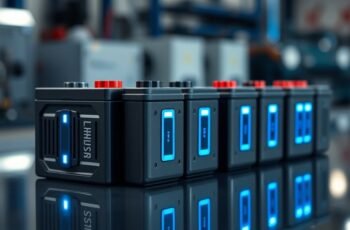
Did you know that selecting the right charger can extend lithium marine battery life by up to 30%? As marine professionals, we recognize that choosing a charger with advanced features guarantees safety, efficiency, and durability in harsh environments. This decision directly impacts performance and longevity, making it a critical component of your vessel’s power system. Let’s explore what makes a charger ideal for lithium marine batteries and how to select the best option for your needs.
Key Takeaways
- Choose chargers with multi-stage, lithium-specific charging profiles for optimal battery health and longevity.
- Prioritize models with temperature compensation and safety features like over-voltage and short-circuit protection.
- Ensure the charger’s current output matches your battery bank’s capacity and usage needs.
- Opt for reputable brands with high efficiency, reliable diagnostics, and compatibility with marine environments.
- Regular maintenance and proper connections are essential for maximizing charger performance and extending battery lifespan.
What Features Make a Charger Ideal for Lithium Marine Batteries?
Since lithium marine batteries have unique charging requirements, selecting a charger with specific features is crucial for peak performance and longevity. An ideal charger supports precise voltage regulation and multi-stage charging profiles, enhancing battery maintenance and preventing overcharging. It should monitor and adapt to each charging cycle, guaranteeing consistent and efficient recharging without damaging the cells. Temperature compensation is essential, as lithium batteries are sensitive to environmental conditions, which can impact their lifespan. The charger must also incorporate safety features like automatic shutoff and fault detection to protect against potential failures. By focusing on these technical attributes, we guarantee the batteries maintain maximum capacity through numerous charging cycles, ultimately extending their service life and ensuring reliable marine power.
How to Choose the Right Charger Based on Your Boat’s Power Needs
To select the appropriate charger for your boat’s lithium marine batteries, you must first assess your vessel’s power demands and operational profile. Accurate evaluation guarantees ideal battery maintenance and efficient power management, preventing under- or overcharging. Consider your typical usage patterns—long trips, short excursions, or frequent stopovers—as these influence charging needs. High power demands require chargers with higher current output to restore capacity quickly, while lower demands can be met with more modest units. It’s crucial to match the charger’s specifications with your battery bank’s capacity and chemistry to maintain longevity and performance. Properly sizing your charger not only supports reliable operation but also safeguards your batteries, streamlining overall power management and ensuring consistent vessel readiness.
Comparing Types of Marine Battery Chargers: Which One Fits Your Budget?
When selecting a marine battery charger, balancing cost-effectiveness with advanced features is essential for peak performance. We evaluate options that provide reliable charging within your budget while offering necessary functionalities like multi-stage charging and temperature compensation. Understanding these trade-offs ensures you choose a charger that meets both your financial and technical requirements.
Cost-Effective Charging Options
Choosing the right marine battery charger involves balancing initial investment with long-term reliability and efficiency. For cost-effective options, many boat owners opt for manual or basic smart chargers, which deliver reliable battery maintenance without high upfront costs. These chargers typically require minimal charging accessories, simplifying setup and reducing expenses. While they may lack advanced features, they still ensure proper charging cycles and help prevent overcharging, vital for lithium marine batteries. It’s essential to select a charger compatible with your battery type to maximize lifespan and performance. Investing in quality, affordable chargers can considerably reduce long-term maintenance costs, making them ideal for budget-conscious boaters seeking dependable battery management solutions.
Advanced Charging Features
- Multi-stage charging with smart algorithms
- Battery maintenance modes for prolonged health
- Solar compatibility for renewable energy integration
Important Safety Considerations When Charging Lithium Marine Batteries
Ensuring safety during the charging process of lithium marine batteries is paramount due to their high energy density and sensitive chemistry. Proper battery maintenance is essential to prevent thermal runaway, overcharging, or damage. Following correct charging etiquette, such as using a compatible charger with the appropriate current and voltage settings, minimizes risks. It’s critical to monitor the charging environment, ensuring adequate ventilation and avoiding exposure to moisture or extreme temperatures. Regular inspections for signs of swelling, corrosion, or leaks help identify potential issues early. Always adhere to manufacturer guidelines for charging procedures and safety precautions. By maintaining disciplined charging practices, we reduce the risk of fire, damage, or battery failure, ensuring safe operation and prolonging the lifespan of lithium marine batteries.
Top-Rated Chargers for Lithium Marine Batteries in 2023
When selecting chargers for lithium marine batteries, it’s crucial to prioritize charging speed and efficiency to optimize performance. Compatibility with lithium chemistries guarantees safe and reliable operation, while advanced safety features protect both the batteries and users. In 2023, top-rated chargers integrate these key points to meet the demanding needs of marine applications.
Charging Speed and Efficiency
How quickly and efficiently a charger can replenish lithium marine batteries considerably impacts overall vessel performance and operational readiness. High charging speed reduces downtime, while efficiency guarantees minimal energy loss during each cycle, optimizing battery maintenance and extending lifespan. Advanced chargers utilize multi-stage charging algorithms that adapt to battery state, improving charge acceptance and cycle stability.
- Rapid charging capabilities enable quicker turnaround times without compromising battery health.
- High efficiency ratings reduce energy waste, maximizing power output and minimizing operational costs.
- Optimized charging cycles prevent overcharging and thermal stress, enhancing battery longevity and performance.
Choosing chargers with superior speed and efficiency ensures reliable power delivery, reduces maintenance frequency, and preserves battery integrity over multiple charging cycles.
Compatibility With Lithium Batteries
Are your chargers truly compatible with modern lithium marine batteries? Ensuring compatibility is critical for effective battery maintenance and marine electrical systems. Lithium batteries demand chargers that recognize their unique chemistry, providing a tailored charge profile that prevents overcharging and extends lifespan. Using incompatible chargers can lead to inefficient charging, potential damage, and compromised safety. Top-rated chargers in 2023 incorporate advanced algorithms to optimize lithium battery charging cycles, safeguarding marine electrical systems while maximizing performance. It’s vital to verify that a charger supports lithium-specific modes, including balancing and voltage regulation, to maintain battery health. Compatibility isn’t just about fitting connectors; it’s about matching the charger’s technology to the battery’s requirements for reliable, safe, and efficient operation on the water.
Safety Features and Protections
Modern lithium marine battery chargers incorporate advanced safety features designed to protect both the battery and the vessel’s electrical system. These protections are essential for effective battery maintenance and corrosion prevention, ensuring longevity and reliable performance. Top-rated chargers include features such as over-voltage protection to prevent damage from power surges, temperature regulation to avoid overheating, and automatic shut-off to safeguard against overcharging. Additionally, many models incorporate short-circuit prevention and moisture-resistant enclosures to withstand harsh marine environments. These safety mechanisms not only enhance operational safety but also optimize battery lifespan by maintaining proper charge levels and preventing potential hazards. Choosing a charger with extensive safety features is vital for maintaining a secure, efficient, and corrosion-free marine electrical system.
Troubleshooting Common Charging Issues and When to Replace Your Charger
When troubleshooting common charging issues with lithium marine battery chargers, it’s essential to systematically identify the root cause before considering replacement. Faulty charging can stem from poor battery maintenance, worn-out components, or charger lifespan. To diagnose effectively, check for error indicators, voltage irregularities, and connection integrity. If issues persist after verifying these, replacement may be necessary. Consider the following:
| Issue | Cause | Solution |
|---|---|---|
| Charger not powering on | Faulty wiring or connection | Inspect and secure connections |
| Inconsistent charging | Charger aging or damage | Replace with a compatible charger |
| Overheating or shutdown | Overloaded or faulty unit | Confirm load capacity and replace if needed |
| Battery not reaching full charge | Battery or charger issue | Review battery health and replace if degraded |
Proper maintenance extends charger lifespan and ensures reliable operation.
Frequently Asked Questions
Can Lithium Marine Batteries Be Charged With Car Chargers?
We advise against charging lithium marine batteries with car chargers due to safety and battery maintenance concerns; car chargers lack proper voltage regulation and current control, risking damage or safety hazards, so always use chargers specifically designed for lithium marine batteries.
How Often Should I Monitor My Lithium Battery During Charging?
We monitor lithium batteries during charging every 30 minutes, as studies show consistent oversight enhances battery maintenance and charging safety. Regular checks prevent overheating and guarantee ideal performance, making vigilant monitoring essential for safe, efficient lithium marine battery use.
Are There Specific Brands Recommended for Lithium Marine Battery Chargers?
We recommend reputable brands like Victron and Minn Kota for lithium marine battery chargers, ensuring proper battery maintenance and charging safety. These brands prioritize quality, compatibility, and advanced features, which are essential for peak performance and longevity of your marine batteries.
What’s the Typical Lifespan of a Marine Battery Charger?
Typically, marine battery chargers last 5-10 years with proper battery maintenance and charging safety protocols. Regular inspections, correct settings, and quality chargers extend lifespan, ensuring efficient power delivery and preventing potential damage or safety hazards.
Can I Use a Standard Charger for Multiple Lithium Batteries Simultaneously?
We can’t recommend using a standard charger for multiple lithium marine batteries simultaneously, as differing battery capacities and charging efficiencies can lead to uneven charging, potential damage, and reduced lifespan. Always opt for a charger compatible with lithium specifics.
Conclusion
Choosing the right charger is like selecting the perfect compass—guiding your lithium marine batteries safely through the demands of marine life. We’ve seen firsthand how a reliable, feature-rich charger can extend battery lifespan and guarantee safety at sea. Investing in top-tier technology isn’t just smart; it’s essential. Just as a compass prevents us from losing our way, a high-quality charger keeps your batteries performing at their best, guaranteeing smooth sailing for years to come.