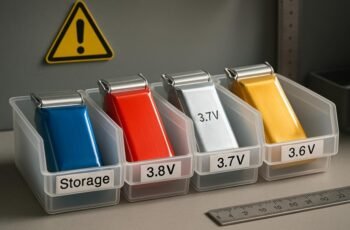
Did you know that unequal cell voltages can reduce a LiPo pack’s capacity by up to 20% over time? We approach balancing with a precise, methodical mindset, ensuring each cell stays within tight tolerances to protect performance and safety. We’ll outline practical steps, from charger selection to safe balance charging practices, and highlight how vigilant monitoring, proper connectors, and long-term care minimize heat, stress, and capacity fade. Stay with us as we outline the framework that keeps packs reliable and safe.
Key Takeaways
- LiPo balancing equalizes individual cell voltages so pack voltage reflects equal per-cell voltage, improving safety and long-term health.
- Balance charging monitors each cell and redistributes current to converge all cells to the same target voltage.
- Proper balancing reduces differential stress, prevents overcharging, and maintains synchronized voltages for reliable performance.
- Extending pack life involves strict charging profiles, temperature monitoring, and proper storage to minimize drift and aging.
- Safe practices include correct balance leads, connectors, wiring, insulation, and regular voltage/impedance checks after balancing.
What LiPo Battery Balancing Is and Why It Matters
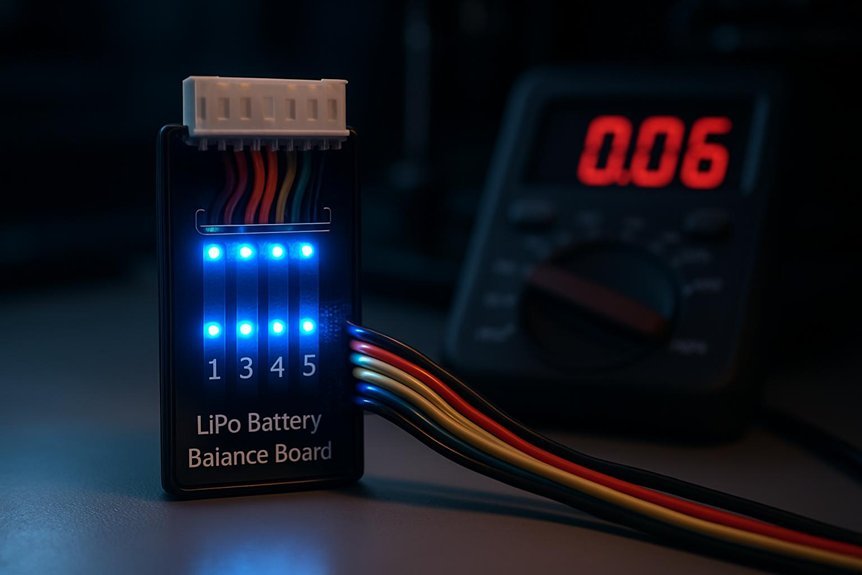
LiPo battery balancing is the process of equalizing the individual cell voltages within a pack so the total pack voltage reflects a consistent per-cell voltage, ensuring safety and performance. We balance to prevent voltage disparity that can stress cells, reduce capacity, or cause imbalance runaway. In practice, we monitor each cell during charging, adjusting current flow so all cells converge to the same voltage, typically near the pack’s nominal or recommended peak. This technique preserves overall pack health, enabling predictable discharge characteristics and longer cycle life. From a safety perspective, balanced packs reduce heat and swelling risks during operation. For storage, balanced cells minimize self-discharge and voltage drift, supporting stable, long-term pack storage. In summary, balancing is essential for safe charging, reliable performance, and controlled pack storage.
How Balance Charging Keeps Cells in Sync
Balance charging keeps each cell at the same state of charge by actively monitoring voltages and adjusting current flow. This process ensures cell synchronization, balances voltage levels, and ultimately extends the pack lifespan. By maintaining uniform cell voltages, we reduce imbalance growth and improve overall pack performance.
Ensures Cell Synchronization
Why do cells drift apart during charging, and how does balance charging correct this? We, as technicians, explain that individual cells exhibit slight disparities in internal resistance and capacity due to cell chemistry variability. During charging, a cell reaching its voltage early will accept less current, while another lags, causing voltage mismatch across the pack. Balance charging monitors each cell and redistributes current so all cells approach the same target voltage simultaneously. This synchronized current flow minimizes differential stress, prevents overcharging, and maintains pack integrity. We emphasise charging safety in all steps, using proper termination thresholds and fault detection. By maintaining synchronized cell voltages, we reduce imbalance growth over cycles and preserve overall energy delivery. Result: reliable performance, predictable capacity, and safer operation aligned with cell chemistry behavior.
Balances Voltage Levels
We align cell voltages by actively managing each cell’s charging current so that all cells reach the target voltage together. In balance charging, we monitor individual cell voltages and adjust current paths to equalize gains, preventing overcharge in any single cell. The process hinges on precise timing and threshold criteria, stopping or throttling current once balance is achieved. We account for cell-to-cell variation, temperature influence, and charger capability to maintain a safe, consistent profile. By maintaining synchronized voltages, we reduce disparities that could initiate cell stress. We remain vigilant for irreversible chemistry signs and potential thermal runaway indicators, implementing safeguards such as current tapering and voltage ceilings. Properly executed, these measures preserve pack integrity while minimizing risk during normal operation.
Extends Pack Lifespan
Indeed, balanced charging extends pack lifespan by mitigating uneven aging across cells. We, as careful practitioners, align each cell’s state of charge to prevent differential stress that accelerates degradation. By maintaining synchronized voltages, we slow capacity fade and preserve overall pack performance. Our approach emphasizes strict charging profiles, regular monitoring, and prompt correction when deviations appear. This discipline reduces hot spots, minimizes internal resistance growth, and sustains usable capacity over time. We also implement storage precautions to prevent long-term drift when packs sit idle. Consistent balancing reduces the need for aggressive reconditioning and extends service life.
- Align voltages to maintain uniform cell conditions
- Monitor cell temperatures and resistances
- Use proper charging current and termination thresholds
- Schedule periodic balance checks
- Apply correct storage practices to minimize drift
How to Spot a Mismatched or Damaged LiPo Pack
When evaluating a LiPo pack for mismatches or damage, start with a systematic inspection of physical condition and electrical behavior. We, as technicians, assess cell balance, connector integrity, and insulation for signs of swelling, punctures, or corrosion. Measure each cell’s voltage under rest and load; large deviations flag imbalance or aging. Monitor temp during gentle discharge; hot spots indicate internal damage or poor connections. Look for signs of sulfation in capacity loss or persistent voltage sag after charging. Inspect leads for microcracks and solder joints for fatigue. Compare individual cell resistance, noting rising trends that precede failure. Any inconsistent cell pair or abnormal impedance warrants sorting or retirement of the pack. Document findings, propose conservative handling, and avoid further charging until safety is confirmed.
How to Choose the Right LiPo Balancing Charger
Choosing the right LiPo balancing charger hinges on matching the charger’s capabilities to your pack’s chemistry, size, and risk profile. We evaluate balance current, cell count support, and voltage tolerance to guarantee safe, accurate cell-by-cell regulation for both drone battery and power tool charging scenarios.
- Validate supported cell count and balance method (pass-through vs. balancing taps)
- Confirm current limits align with pack capacity
- Check temperature monitoring and auto-shutdown safeguards
- Verify compatibility with higher C-rate packs and multi-pack charging
- Assess firmware updates and user-accessible diagnostics
We prioritize chargers with clear calibration procedures, low residual imbalance, and robust protection features. By aligning charger specs to pack chemistry and workload, we minimize overcharge risk and maximize cycle life for drone battery use and power tool charging alike.
Balance Leads, Cables, and Connectors: What You Need to Know
We’ll start by outlining how balance lead wiring affects measurement accuracy and overall pack safety, focusing on proper routing and separation from power leads. Next, we’ll compare cable gauge choices to ensure sufficient current handling without adding unnecessary weight or resistance, and we’ll explain when thicker isn’t better. Finally, we’ll cover connector compatibility and pin layouts to prevent misconnection and ensure reliable, repeatable balance charging.
Balance Lead Wiring
Have you ever wondered how balance leads in a LiPo battery keep all cells within tight voltage tolerances? We approach balance lead wiring with a systematic mindset, prioritizing signal integrity, insulation, and secure termination. Our focus is on可靠 connections, minimizing parasitics, and ensuring safe routing away from high-current paths. Properly organized leads reduce misreads and heating, preserving cell balance over cycles. We cover connector compatibility, strain relief, and clean sleeving to prevent shorts. By inspecting contact surfaces and pin alignment, we ensure consistent voltage sampling across all cells.
- Lead routing principles
- Connector compatibility checks
- Insulation and sleeving choices
- Strain relief techniques
- Contact cleanliness and alignment
Cable Gauge Choices
Ever wondered how the gauge of balance leads and main cables affects accuracy and safety in LiPo packs? We start by selecting wire thickness that minimizes voltage drop under load, while fitting within connector housings. Heavier gauges reduce resistance, improving balance precision during charging, but add bulk and weight. We evaluate current ratings, insulation, and temperature rise to prevent overheating. For balance leads, we prefer consistent cross-sectional area along the run, with robust splices and strain relief to preserve signal integrity. Main cables should match pack chemistry and expected current, ensuring low loss at peak load. We verify connector compatibility, solder joints, and crimp quality, documenting voltage drop and thermal behavior. This careful approach supports charging safety and reflects disciplined attention to battery chemistry in practical balance systems.
Connector Compatibility
Connector compatibility matters for both balance leads and main cables, ensuring accurate voltage sensing and safe, reliable charging. We evaluate pin configurations, plug types, and polarity before assembly. Mismatches can cause misreadings, inefficient balancing, or heat generation, so we verify compatibility against the pack’s specifications. We also assess connector strength, latch reliability, and wire gauge continuity to prevent failures during charging.
- Match connector families to balance leads and main cables
- Confirm pin pitch, polarity, and latch mechanism
- Inspect insulation, strain relief, and solder joints
- Validate gauge continuity under load and bending
- Adhere to battery safety and charging etiquette guidelines
Step-by-Step Guide to a Safe Balance Charge
To perform a safe balance charge, we start by configuring the charger to monitor cell voltages and set an appropriate balance current. We verify the pack type, cell count, and rated capacity, then select a balance charging mode with a conservative current (C/10 to C/5). We connect the pack securely and monitor for stable ground reference. We ensure all protection features are enabled: overvoltage, temperature, and short-circuit safeguards. We observe charging indicators and confirm balanced subcell voltages converge within tolerance before finishing. We maintain a constant setup temperature and avoid fast-charge modes unless explicitly permitted. We document voltage, current, and duration, then disconnect only after current drops to a trickle. Environmental considerations, including venting and enclosure, are respected; always follow manufacturer guidelines.
Troubleshooting Common Balancing Problems
When balancing a LiPo pack, problems can arise that disrupt a proper cell convergence. We approach these issues methodically, diagnosing causes, isolating faults, and documenting results to maintain accuracy. By focusing on measurable signals and repeatable steps, we minimize guesswork and ensure consistent outcomes. Here are common problems and fixes:
- Uneven cell voltages despite charger activity
- Charger voltage reading drift or instability
- Cells failing to balance within expected time
- Temperature spikes during balance charging
- Warning indicators or fault codes from the balancer
We treat unrelated topic and filler content as non-contributing factors, excluding them from root-cause assessment. If symptoms persist, recheck wiring, verify balance connector integrity, and confirm charger compatibility. Finally, reset the pack state where applicable and re-test under controlled conditions.
Safety Habits for Balance Charging
Safety habits for balance charging are essential to prevent fires, cell damage, or unexpected shutdowns. We follow strict protocols to minimize risk and ensure repeatable results. Before unplugging, we verify cell voltages, disconnect at idle, and monitor cell balance during the process. We keep vents unobstructed, use a fireproof mat, and have an extinguisher within reach. Our charging etiquette emphasizes proper connector alignment, correct polarity, and avoiding daisy-chaining packs. We store unused packs in a cool, dry spot, away from direct sun. Safe storage reduces degradation and thermal runaway potential. The table below highlights key steps and checks for a safe session.
| Pre-checks | During | Post-action |
|---|---|---|
| Inspect pack, leads | Monitor temps | Return to safe storage |
After Balancing: Maintenance and Long-Term Care
After balancing, ongoing maintenance is essential to preserve pack health and performance. We, as careful technicians, outline a disciplined routine to extend lifespan and reliability.
- Schedule regular voltage and impedance checks to catch drifting cells early
- Monitor temperatures during charging, discharging, and storage to identify hotspots
- Use proper storage voltage, avoiding extended high or very low states
- Inspect connectors, balance leads, and seals for corrosion or wear
- Document cycles, voltages, and any anomalies to track trends and inform decisions
Two word discussion ideas: state stability, thermal margins. Maintenance pitfalls to avoid include neglecting calibration, skipping balance verification, and storing packs at improper voltages. By adhering to these steps, we maintain consistency, reduce degradation, and ensure safer long-term operation.
Frequently Asked Questions
Can Balance Charging Recover a Completely Dead Lipo Cell?
We can’t rely on balance charging to recover a completely dead LiPo cell; recovery viability is limited, and cell equalization feasibility depends on chemistry and safety limits. We methodically assess voltage, capacity, and balance using controlled, cautious procedures.
How Does Temperature Affect Balance Charging Accuracy?
Temperature drift reduces balance charging accuracy; we see gradients shift cell voltages as temps vary. We calibrate with reference temps, apply compensation algorithms, and monitor real-time readings to maintain charging accuracy across operating ranges.
Do Balance Leads Wear Out With Repeated Use?
Yes, balance leads wear with repeated use. We monitor, inspect, and replace components as needed; charger calibration remains essential. We track resistance changes, contact wear, and connector integrity to prevent inaccuracies and maintain safe, reliable balance charging.
Is Balance Charging Safe for Tiny Micro Lipos?
We believe balance charging is safe for tiny lipos when done properly; use dedicated balance chargers, monitor temperatures, and follow manufacturer specs. For micro safety, select appropriate cell counts, avoid overcharging, and never unattended charging of tiny lipos.
Can You Balance Charge Without a Dedicated Balancer?
We can’t safely balance charge without a dedicated balancer; relying on unbalanced charging increases charging hazards. We’ll follow a methodical procedure, monitor cell voltages, and stop if any cell deviates, ensuring safe, precise handling for readers.
Conclusion
We’ve walked through every cell, every lead, and every careful step. Balance charging isn’t a ritual so much as a disciplined calibration, a quiet balance beam where each cell carries its own weight without tipping the scale. When we monitor, adjust, and store properly, the pack sings in sync and longevity follows like clockwork. Treat each charge as a diagnostic, each connection as a promise, and the chemistry will reward our measured, methodical care.