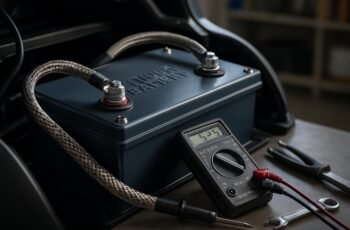
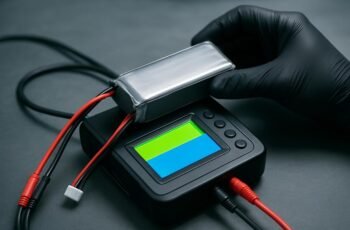
We’ll discuss LiPo battery maintenance with a precise, methodical approach, outlining proper charging, storage, and monitoring to minimize risk and maximize lifespan. We’ll cover matching chargers, CC/CV charging, reliable balance checks, and polarity verification, then move to safe storage and temperature considerations. Each step builds toward reliable performance, but the details reveal tradeoffs and real‑world constraints that warrant careful attention as we proceed.
Key Takeaways
- Regularly monitor voltage balance, capacity trends, and swelling to detect degradation early.
- Use a proper LiPo charger with CC/CV profile and balanced charging for each pack.
- Store packs at 3.8–3.85V per cell in a cool, dry, fire-safe enclosure; verify voltage before storage.
- Avoid over-discharge, punctures, or bending; handle with antistatic precautions and inspect connectors.
- Maintain a consistent charging and storage routine, and cooldown after use to prevent thermal stress.
LiPo Basics: What They Are and Why Maintenance Matters
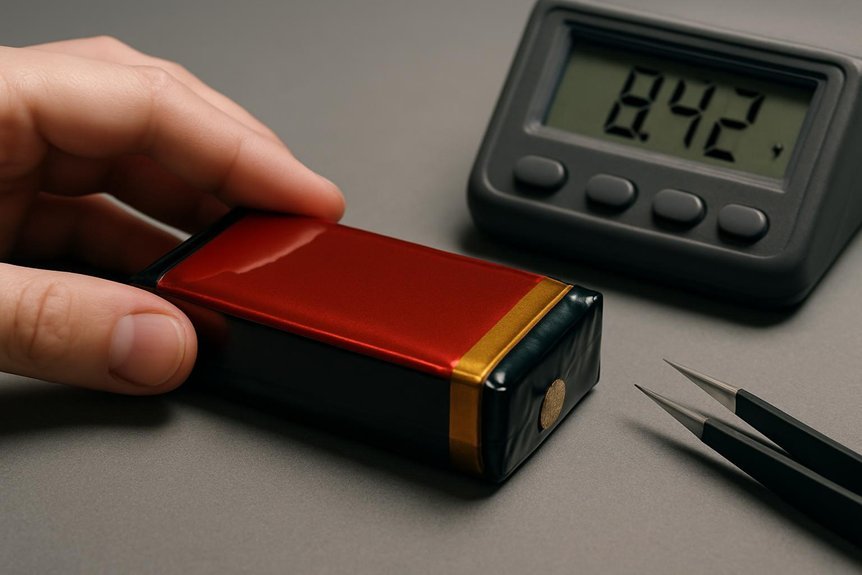
LiPo batteries, or lithium polymer cells, are lightweight, high-energy storage devices designed for high discharge rates and compact form factors. We define their core structure as a polymer electrolyte surrounding a lithium-based active material, stored in a flexible pouch. In practice, lipo chemistry enables high energy density, enabling compact packs for portable applications, while maintaining substantial current delivery. Maintenance matters because cycle life, capacity retention, and safety hinge on consistent storage, handling, and verification of integrity. We monitor voltage balance across cells, inspect for swelling, and track internal resistance trends to detect degradation early. Charging safety remains critical: use appropriate chargers, adhere to recommended C-rates, and avoid over-discharge. We emphasize disciplined procedures, documentation, and routine checks to sustain performance and minimize failure risks.
Safe Charging Fundamentals for LiPo Packs
To ensure safe charging, we follow a disciplined, step-by-step protocol that protects both the battery and surrounding equipment. We begin with a properly matched charger that reports true LiPo voltage and uses a correct CC/CV profile. Use a stable, fire-resistant charging environment, away from flammable materials, and verify polarity before connection. Maintain a consistent charging current and observe temperature; if the pack exceeds safe limits, stop and reassess. Our process emphasizes safe chemistry by avoiding improvised tweaks and ensuring balanced cell charging through a reliable balance function. We avoid rapid charging unless manufacturer specifications permit and only with compatible packs and equipment. Regularly inspect connectors, leads, and the pack for damage, and document charge cycles to detect anomalies early.
Charging for Longevity: Best Practices
Are we prioritizing longevity with every charge? Yes, and we approach charging for longevity with disciplined practices. We select chargers that match the LiPo’s cell count and capacity, avoiding generic or underpowered devices. We monitor current, voltage, and temperature during charging, terminating if any parameter deviates from specification. We prefer balanced charging to ensure uniform cell voltage and prevent weak cells from aging unevenly. We maintain a safe charging environment: dry, ventilated, away from flammables, with a dedicated power source and appropriate cable gauge. We follow manufacturer-recommended charge rates, often C/2 to 1C for longevity, avoiding high-heat fast charging when not required. lithium polymer, charging safety, and routine inspection of connectors, cables, and packs reinforce reliable, durable performance.
LiPo Storage Guidelines to Preserve Health
Proper storage is essential to extend LiPo health and lifespan. We adopt a precise, methodical approach, outlining practical storage guidelines that preserve cell integrity. Use a dedicated storage enclosure sized for your pack, with stable positioning and minimal vibration. Maintain a cool, dry environment; avoid extreme temperatures and rapid shifts. Aim for a state of charge around 3.8–3.85V per cell before long-term storage, and verify voltage with a trusted checker. Implement humidity control to prevent condensation and electrolyte degradation. Follow these steps:
| Component | Setting | Rationale |
|---|---|---|
| Storage enclosure | Sealed, shock-absorbent | Reduces physical stress |
| Temperature | 5–20°C | Slows aging processes |
| Humidity control | Low humidity | Prevents corrosion and swelling |
Monitoring LiPo Health: Signs of Degradation or Damage
Monitoring LiPo health requires a systematic approach: we start by identifying clear indicators of degradation or damage so we can intervene before failures occur. We, as readers, assess parameters that reflect cell integrity and pack safety, focusing on consistent, repeatable signals rather than transient anomalies. Our goal is to distinguish normal variance from meaningful degradation using objective measurements and documented thresholds.
1) Visible swelling, puffing beyond baseline, or header tape loosening indicates mechanical stress and potential internal distress.
2) Irregular voltage behavior, rapid voltage recovery after load removal, or persistent low voltage under load flags capacity loss or cell imbalance.
3) Heat signatures exceeding safe limits, unusual smells, or frequent venting suggest imminent failure risk.
monitoring lipo health relies on disciplined observation of these signs degradation cues.
Usage Habits to Maximize LiPo Lifespan
What habits maximize LiPo lifespan, and how can we implement them consistently? We approach practical usage habits with measurable discipline, focusing on operational discipline, storage discipline, and monitoring. We adopt consistent charge routines, track voltage under load, and minimize deep discharges to preserve cell balance. We perform periodic noise testing to detect mechanical or connector-related issues and confirm stable audible signatures. We implement temperature monitoring to identify drift during use, ensuring environmental controls remain within spec. We log cycles, peak currents, and resting voltages to quantify aging. The table below summarizes actionable practices.
| Practice | Expected Outcome |
|---|---|
| Maintain moderate discharge depth | Slower capacity fade |
| Record temperatures during use | Detect temperature drift |
| Schedule regular inspections | Early fault detection |
| Use calibrated chargers | Consistent cell balance |
Troubleshooting Common LiPo Issues
Common LiPo issues can undermine performance quickly if not addressed promptly. When troubleshooting, we adopt a systematic approach to isolate causes and implement fixes without unnecessary steps. We emphasize safe handling, verified connections, and realistic load testing to confirm integrity before reuse.
Common LiPo issues degrade performance quickly; troubleshoot with safety, verified connections, and realistic load testing to confirm integrity before reuse.
- Lip resupply gaps or improper charging profiles—verify charger settings, balance leads, and cell voltage consistency across the pack to prevent voltage depression.
- Battery swap errors or inadequate isolation—inspect for damaged connectors, ensure proper polarity, and test for residual parasitics after swapping packs.
- Thermal or moisture exposure—record peak temperatures during operation, check for swelling, and re-evaluate storage conditions to avoid accelerated degradation.
Quick Pre-Use Checklist for Drones and Daily Use
We start with a concise Quick Pre-Use Checklist for drones and daily use, focusing on a Pre-Flight Battery Check and Daily Use Safe Practices. We’ll verify charge state, cell balance, and connector integrity, then confirm firmware and weight, ensuring no visible damage or swelling. This approach provides a precise, repeatable routine to minimize risk and maximize performance.
Pre-Flight Battery Check
Before every flight, we perform a quick, structured pre-use battery check to ensure reliability and safety. Our process focuses on a concise battery inspection that confirms pack integrity, connector seating, and immediate fault visibility, then we proceed to flight readiness with documented confidence. We highlight pre flight hazards and systemic checks to prevent surprises during ascent. Precision in our method minimizes risk and optimizes performance.
- Inspect external surfaces and terminals for damage, swelling, or corrosion, logging any anomalies.
- Verify connector alignment and secure mating, testing for warm spots and voltage balance across cells.
- Confirm capacity and stored energy fall within manufacturer specifications, and review protection circuit status prior to activation.
Daily Use Safe Practices
Daily Use Safe Practices ensure we’re ready for flight with a concise, repeatable routine. We review battery condition before each session, verifying connector integrity, casing seals, and absence of swelling. We confirm charger settings align to the pack’s specifications, enabling balanced charging and correct voltage limits. We inspect for hot surfaces after recent use, and we allow cooldown periods to prevent thermal stress. During handling, we use antistatic steps and avoid punctures or flexing that could compromise cells. We stash packs in a fire-safe bag when not in use, away from heat sources and flammable materials, and monitor for odor or discoloration. Daily safety and gadget care interlock with procedural drills, ensuring consistent, predictable outcomes and reducing risk in routine operations.
Frequently Asked Questions
What’s the Minimum Safe Storage Voltage for Long-Term Lipo Health?
We recommend a minimum safe storage voltage of about 3.8 volts per cell for long-term LiPo health, aligning with storage guidelines, ensuring charging safety, and noting calibration frequency is unnecessary for stored packs.
Can I Mix Different Lipo Brands in One Device?
“Birds of a feather don’t always flock together.” We don’t recommend mixing brands in one device due to compatibility concerns, battery chemistry safety, and device specific limits; use identical brand/models and chemistries for reliable performance.
How Often Should I Calibrate My Charger’s Accuracy?
We calibrate monthly to maintain charger accuracy, adjusting as needed after firmware updates or detected drift. Calibration frequency should be consistent, and you should verify with a known reference before each full charge cycle.
Do Temperature Extremes Permanently Affect Lipo Capacity?
Yes, extreme temperatures can cause permanent capacity impact. For example, a case study shows reduced cycle life after repeated high-temperature exposure. We examine temperature stability and quantify capacity impact, detailing safe operating ranges and mitigation steps.
Is It Safe to Discharge to 0% for Storage?
Yes, we don’t recommend discharging to 0% for storage; it risks cell damage. We prioritize controlled discharge, monitor voltage, and guarantee storage duration aligns with manufacturer specs to preserve safety and longevity. We’ll handle discharging safety and storage duration carefully.
Conclusion
We’ve covered solid LiPo practices, from safe charging to storage and ongoing health checks. By following matched chargers, CC/CV profiles, and reliable balance functions, we minimize risk and maximize lifespan. We’ll monitor temperatures, voltages, and signs of wear, pausing use when limits are approached. Keep a cool, dry storage state of charge, and perform routine inspections with trusted tools. Stick to manufacturer guidelines and stay vigilant—we don’t want to bite off more than we can chew. In short, we stay sharp.