We’re barely scratching the surface here—our RV lithium setup demands exacting care, safety discipline, and precise baseline checks before any trip. We’ll map out safety gear, verify connections, and monitor voltages, temperatures, and SOC with a disciplined routine. Our approach weighs charging sources, venting, and impedance drift, then we’ll log trends to spot anomalies early. If you want predictable performance and extended life, you’ll want to see where the numbers lead us next.
Key Takeaways
- Regularly assess safety, setup, and baseline readings: voltage, temperature, cables, fuses, and isolation switches before use.
- Monitor daily health: log voltage, SOC estimates, and temperatures; flag small drifts for early intervention.
- Follow charging, storage, and temperature guidelines: venting, safe SOC for storage, and avoid extreme temps.
- Continuously balance and troubleshoot: detect drift, isolate faulty cells, recalibrate BMS thresholds, and verify with load tests.
- Plan seasonal and travel care: environmental impacts, pre-season checks, consistent charging on trips, and document climate-related cycles.
Assess Your RV Battery: Safety, Setup, and Baseline Checks
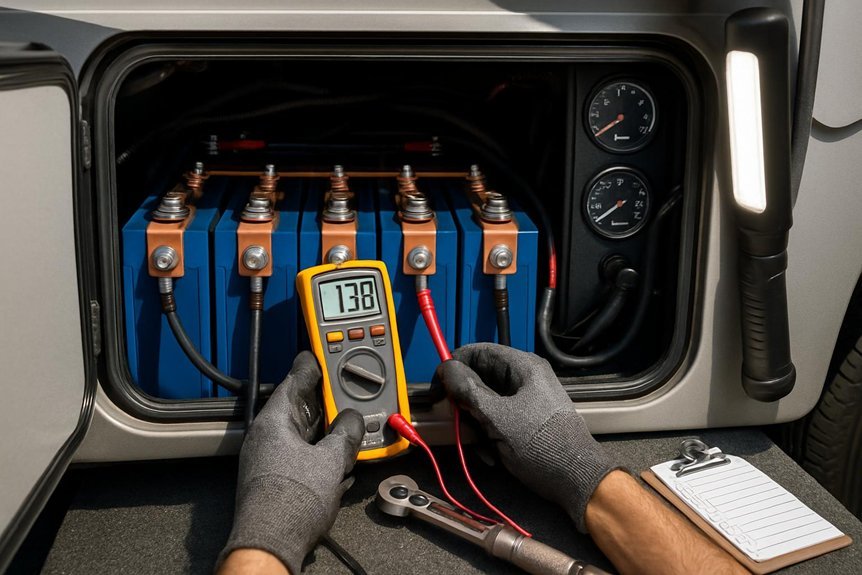
Evaluating an RV battery begins with safety, setup, and baseline checks. We approach this with a Safety mindset, ensuring protective gear, dry conditions, and clear access before any action. We outline setup steps that establish a stable reference, verify connector integrity, and confirm charging sources are within manufacturer specs. Baseline checks are our first data point: we record system voltage, inspect cables for wear, and confirm fusing and isolation switches are correct. We document temperature ranges and input/output behavior at rest, then compare to datasheet expectations. This disciplined foundation prevents misdiagnosis and guides subsequent diagnostics. We communicate findings concisely to readers, highlighting any deviations from expected values and prioritizing safe remediation. Our method remains analytical, precise, and repeatable, avoiding guesswork and ensuring dependable baseline readiness.
Daily Health Checks: Voltage, Temp, and State of Charge
Daily health checks for an RV lithium battery focus on three core metrics: voltage, temperature, and state of charge. We present a concise routine: perform daily health checks with voltage monitoring, temp checks, and state of charge estimates. Baseline checks establish nominal ranges, guiding anomaly detection. We maintain a strict safety setup, verifying isolation, fuses, and protective measures before any measurement. Observations should be logged and correlated; small drifts flag potential issues requiring further assessment. Our approach emphasizes repeatability, accuracy, and early warnings to prevent failures. Table below illustrates the core metrics and their targets for quick reference.
| Metric | Target / Action |
|---|---|
| Voltage | Confirm within nominal band; log any deviation |
| Temp | Ensure within safe operating range; note spikes |
RV Charging, Storage, and Temperature Guidelines
How should we approach RV charging, storage, and temperature guidelines to keep lithium batteries safe and performant? We approach with precise protocols that emphasize electrical integrity and thermal management. Establish a battery safety setup that enforces proper venting, enclosure ventilation, and secure mounting, then implement baseline checks before each trip. During travel, monitor balancing to prevent cell drift and maintain SOC tracking within optimal bands. Daily health checks should include voltage monitoring and temperature surveillance, noting deviations promptly. For storage management, follow seasonal care routines: discharge to a safe SOC for long-term storage and ensure stable ambient temperatures within manufacturer limits. Avoid extreme temps; resume charging after storage to avoid sulfation-like effects and ensure readiness for travel care.
Monitor, Balance, and Troubleshoot Your Pack
Can we reliably keep a lithium pack balanced and responsive by continuous monitoring and targeted troubleshooting? We believe yes, with disciplined practices centered on monitoring fundamentals and deliberate balance strategies. We track cell voltages, temperatures, and SOC trends to detect drift, impedance rise, or insulation faults early. If anomalies appear, we isolate cells, recalibrate BMS thresholds, and re-verify pack balance with load steps. Systematic logging supports root-cause analysis and preventive adjustments to charging profiles. The following visual aid helps us imagine the process:
| Channel | Indicator |
|---|---|
| Voltage | Within spec, no drift |
| Temperature | Uniform across modules |
| SOC | Consistent fleet progression |
| Impedance | Stable, no spikes |
Seasonal and Travel Care to Extend Life
Seasonal care and travel considerations build on our earlier focus on monitoring and balancing by emphasizing how environmental and usage patterns affect pack health. We examine temperature, humidity, and altitude effects on cell chemistry, SOC sliders, and thermal management interfaces. Our approach is to implement seasonal maintenance routines: pre-season checks, vapor-lock safeguards, and recalibration of BMS thresholds for varying loads. We also define travel considerations, including consistent charging discipline, avoidance of deep discharges, and monitoring impedance drift during long trips. We recommend documenting charge cycles tied to climate windows and adjusting storage voltages for idle periods. By combining proactive seasonal maintenance with disciplined travel considerations, we preserve pack health, extend cycle life, and maintain reliable thermal and electrical performance across diverse RV environments.
Frequently Asked Questions
How Often Should I Replace a Lithium RV Battery?
We typically replace lithium RV batteries every 5–10 years, depending on usage and cycles. We assess lithium safety, monitor cell health, and schedule proactive battery disposal when capacity drops below ~80%. We’ll guide you through disposal properly.
Can I Prioritize Charging of One Battery in a Pack?
We can’t reliably prioritize charging a single cell in a pack without unbalancing; we avoid single cell focus unless the BMS supports it, because priority charging creates imbalance risks and unsupported operations. We don’t recommend it for safety.
What Are Signs of a Failing Cell in a Pack?
We observe signs of failure as abrupt voltage drops, inconsistent capacity, rapid heat buildup, swelling, and high internal resistance, which indicate degraded battery health; monitor trends, perform regular impedance tests, and isolate suspect cells to protect overall pack integrity.
How Do Altitude and Cold Affect Lithium Performance?
Altitude effects and cold performance both reduce lithium battery efficiency: higher altitude lowers air density cooling, while cold raises internal resistance and degrades capacity. We monitor voltage sag, optimize charging, and maintain temperatures to preserve cycle life.
Is Equalization Charging Needed for Lithium Packs?
We, as a researcher, say equalization charging is not needed for lithium packs under normal use, since they are voltage-balanced cells. Is equalization advisable only for specific chemistries or safety-tested protocols? No, generally unnecessary.
Conclusion
We’ve covered safety, baseline checks, and daily health routines, so you’re equipped to protect and optimize your RV lithium pack. By sticking to measured SOC, temperature, and impedance trends, you’ll detect drift before it becomes costly. Think of the battery as a living system: monitor, balance, and adjust—never guess. In short, disciplined procedure plus proactive troubleshooting equals longer pack life and safer travels. The future of your ride runs on precise maintenance, one data point at a time.