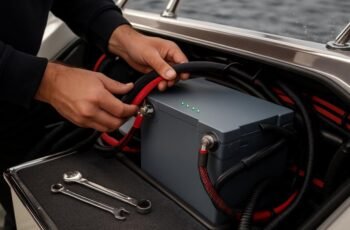
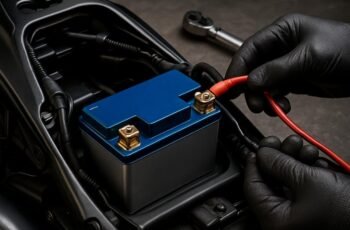
Like a seasoned mechanic tuning a vintage engine, we approach motorcycle lithium batteries with methodical care. We’ll check resting voltage against specs, watch for steady cranks and minimal under-load drops, and guard against swelling or leaks. We’ll use a lithium-friendly charger, avoid deep discharges, and top off after rides when possible. We’ll store cool and dry, label charge history, inspect terminals, and replace worn or swollen packs promptly. If you want to keep starts reliable year-round, there’s more to consider.
Key Takeaways
- Regularly monitor resting voltage, cranking behavior, and load stability to gauge lithium battery health and catch degradation early.
- Store off-season in a cool, dry place using a motorcycle-specific maintainer; top off and disconnect when fully charged.
- Use a reputable charger matched to your pack and maintain 20–40% SOC for longevity; avoid deep discharges.
- Handle with dry insulated gloves, inspect terminals before rides, and keep connections clean, tight, and insulated.
- Look for red flags (voltage <12.6V, rapid drop under load, swelling, leaks) and replace the battery if repeated recharge failures occur.
Lithium Battery Health: Key Indicators and What to Watch For
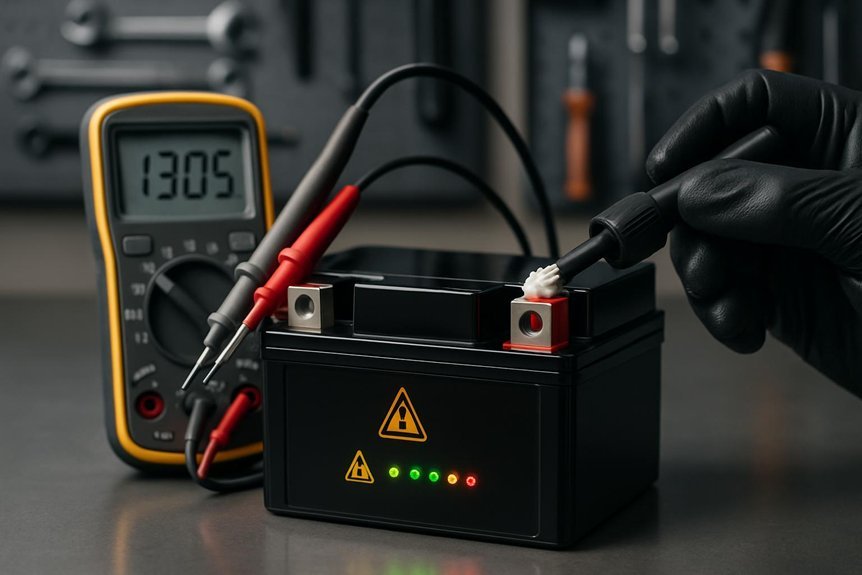
What are the telltale signs your lithium motorcycle battery is still healthy? We approach this with a practical, stepwise check that keeps you informed. First, we measure resting voltage; healthy packs sit within the manufacturer’s stated range. Next, we observe cranking behavior—steady, rapid starts indicate good capacity, while slow cranks signal degradation. We test for consistent voltage under load, noting any drop that surpasses spec. Temperature stability matters too; a healthy battery remains near ambient during idle and quick to recover after a test. Visual inspection follows: no swelling, cracks, or electrolyte leakage. Finally, we track cycle history and maintenance reminders, aligning with battery health indicators watch. By combining these checks, you maintain clear battery health insights and reliable indicators watch.
Charging for Longevity: Best Practices for Motorcycles
Charging for longevity isn’t optional—it’s essential. We’ll approach battery care with clear steps that respect battery chemistry and debunk charging myths, so you can ride with confidence.
- Use a reputable charger designed for lithium chemistry and ensure it matches your pack’s specifications.
- Avoid frequent deep discharges; keep a practical 20–40% state of charge for storage and charging.
- Charge after rides when possible, not just when it shows low power, to minimize stress.
- Verify connections and wires are clean, tight, and insulated to prevent heat buildup and parasitic loss.
We’ll stay practical, precise, and methodical, separating fact from charging myths and aligning practices with real-world performance.
Seasonal Storage: Keeping Starts Ready All Year
Seasonal storage isn’t optional; it’s about keeping starts dependable year-round. We’ll plan ahead, then execute a simple routine to keep seasonal storage efficient and reliable, so starts ready when you need them. First, we top off with a stable charger setting, disconnect when full, and store in a cool, dry place. Second, we monitor monthly voltage and recharge as needed to prevent sulfation. Third, we use a battery maintainer designed for motorcycles, never exposing cells to extreme temps. Finally, we label and inventory each battery, noting last charge date and expected readiness.
| Month | Action |
|---|---|
| January | Check voltage |
| July | Rebalance charge |
| April | Inspect connectors |
| October | Final recharge |
Safe Handling and Protective Measures for Longevity
Safe handling starts with practical safeguards we can rely on daily. We emphasize protective handling to extend longevity strategies for our lithium battery. By staying deliberate, we reduce risk and maximize life, clearly and consistently.
Safe handling daily safeguards extend longevity and maximize battery life.
- Handle with dry, insulated gloves and avoid metal jewelry to prevent shorts.
- Store in a cool, dry place, away from heat sources, moisture, and direct sun.
- Inspect terminals and connectors before every ride, tightening loose fittings and cleaning corrosion.
- Use a compatible charger and monitor charging current to avoid overcharge and thermal stress.
These steps keep exposure controlled and performance stable, supporting longevity strategies. Practically, we prioritize safe handling habits, routine checks, and proper connectors to minimize degradation and hazards, ensuring reliable power delivery and longer service life for our motorcycle lithium battery.
Quick Troubleshooting and When to Replace the Battery
What quick checks can we perform when a motorcycle lithium battery acts up, and when should we consider replacing it? We start with basic diagnostics: verify the battery is properly connected, inspect terminals for corrosion, and test for solid voltage at rest. If voltage sits below 12.6 volts or drops quickly under load, note it as a red flag. Rotate through a simple load test by turning on lights briefly and observing brightness; sluggish or dim output signals weakening capacity. Check for swollen casing or leaks, which require immediate replacement. If the battery fails a proper recharge test after several attempts, or presents frequent crank failures, plan for replacement. Quick troubleshooting is essential, but when to replace should be based on sustained performance, not just one-off symptoms.
Frequently Asked Questions
Can I Jump-Start a Motorcycle With a Lithium Battery?
Yes, we can jump-start a motorcycle with a lithium battery, but follow jump start safety and avoid charging pitfalls. We’ll disconnect load, use proper cables, limit amperage, and monitor voltage—reassuring steps that protect the battery and rider.
Do Lithium Batteries Need a Separate Charger for Maintenance?
Yes, lithium maintenance typically requires a separate charger. We’re careful about trickle charging, avoiding overcharge, and using a charger designed for lithiums for proper lithium maintenance. We’ll guide you step-by-step, ensuring safe, reliable performance and longevity.
How Often Should I Cycle a Motorcycle Lithium Battery?
We should cycle it every 1–3 months, depending on usage, to keep the cells conditioned. Our cycling frequency tips: start with a gentle discharge, full recharge, and watch voltage. Maintenance reminders: avoid deep discharges and keep connections clean.
Are Lithium Batteries Safe for Extended Off-Season Storage?
Safe storage is possible, yes. We’ll follow a maintenance schedule with careful charging, conditioned tests, and climate control, ensuring prolonged life. We’ll reassure you that lithium stays secure and stable when stored properly and monitored regularly.
Do Lithium Batteries Require Special Disposal or Recycling Steps?
Yes, lithium batteries require special steps. We follow disposal guidelines and use approved recycling programs; never throw them in trash. We save time by contacting local e-waste centers and bike shops for compliant disposal options. Take care, stay responsible.
Conclusion
We’ve walked through clear checks, careful charging, and smart storage to keep your bike starting strong. Follow these steps, stay vigilant for swelling or voltage drops, and don’t skip the basics—clean terminals, cool storage, and a lithium-friendly charger. Think of it as tuning a precision instrument: small, deliberate actions prevent big, costly failures. When we stick to the plan, we’ll ride with confidence, like a well-oiled machine humming along the road.