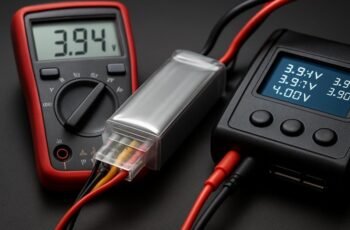
Like a thermostat in a heartbeat, our LiPo storage plan keeps heat and risk in check. We’ll discuss safe voltages, temp ranges, and containment to minimize fire and capacity loss. We’ll balance charge around 3.8–3.85 V per cell, use certified chargers, and maintain controlled environments between 20–25°C with moderate humidity. We’ll outline long-term prep, routine checks, and data-driven maintenance to spot aging packs early. If you want a disciplined, auditable approach, this guide holds the framework.
Key Takeaways
- Store LiPo packs at a stable 3.8–3.85 V per cell and maintain ambient temperatures around 20–25°C to minimize degradation.
- Use dedicated, labeled, non-conductive storage containers with fire-resistant enclosures and spill kits for electrolyte exposure.
- Regularly monitor voltage, impedance, temperature, and swelling; document logs and retire aged or damaged packs promptly.
- Keep packs in controlled environments with 40–60% humidity, proper grounding, static-safe handling, and segregation by chemistry and charge state.
- Follow safe charging/discharging practices using certified chargers, balance cells, and verify calibration during routine inspections.
What Makes LiPo Storage Unique and Why It Matters
Lithium polymer (LiPo) batteries are defined by their flexible, lightweight pouch cells and non-aqueous electrolyte, which together deliver high energy density and rapid discharge capabilities—traits that make storage behavior distinct from other chemistries. We focus on how lithium chemistry drives sensitive storage need: voltage, state of charge, and ambient conditions directly influence internal reactions and impedance. Our data show that even small SOC deviations affect cycle life, while temperature excursions accelerate SEI growth and gas formation, elevating safety risks. Prioritizing storage safety means maintaining controlled SOC ranges, minimizing physical stress, and monitoring for swelling or leakage. This discipline reduces dendrite risk, preserves capacity, and stabilizes performance across cycles. Informed practices align with safety standards, enabling reliable, predictable energy delivery.
Set the Right LiPo Storage Voltage and Temperature
We set clear storage targets by balancing nominal voltage ranges with cell chemistry data to minimize degradation and risk. We’ll outline precise storage voltage targets, define temperature guardrails, and emphasize safe handling practices to prevent thermal or electrical hazards. Read on for the data-driven thresholds and procedures that keep LiPo packs stable and ready for long-term storage.
Storage Voltage Targets
So, what storage voltage and temperature maximize LiPo longevity and safety? We align our targets with recommended voltages for a resting state: typically 3.8–3.85 V per cell, with a maximum of about 4.2 V under charge. We emphasize strict adherence to voltage bands to minimize SEI degradation, lithium plating risk, and capacity fade. Temperature targets center around 20–25°C for storage; exposure beyond 40°C accelerates resistance growth and dendrite formation. We balance practical pack health with safety, avoiding deep discharge and overcharge during long-term idle periods. Our guidance integrates storage etiquette and packaging standards to prevent voltage drift during transit or stacking. Regular verification via calibrated measurement and documented logs supports consistent, data-driven maintenance. Guidelines remain concise, auditable, and bias-free.
Temperature Guardrails
To set the right LiPo storage conditions, we define explicit temperature guardrails that complement our voltage targets. Our approach ties temperature ranges to battery chemistry, minimizing drift in voltage stability and preserving cycle life. We monitor ambient and pack temps, adjusting storage environments to prevent thermal stress and impedance growth.
- Maintain a stable storage range within 0–25°C for most LiPo packs to optimize temperature regulation and voltage stability.
- Avoid rapid temperature shifts; use insulated enclosures and gradual acclimation to prevent condensation and internal stress.
- Periodically verify pack temperature readings against controller alarms to sustain consistent voltage targets and reduce aging effects due to temperature fluctuations.
Safe Handling Practices
How can we guarantee safe handling while setting the right LiPo storage voltage and temperature? We commit to tight controls, documented targets, and verifiable checks. We start by confirming the storage voltage range recommended by the cell manufacturer, then we monitor each pack with a calibrated meter before storage. Temperature should stay within a specified band, typically around room temperature, with ambient and pack temperatures logged continuously. Use insulated, fire-resistant enclosures and non-conductive shelving to reduce heat transfer and short-circuit risk. Maintain rigorous battery ethics: disclose cell chemistry, track lot numbers, and retire aged packs. Label shipments with precise shipping labels, and segregate packs by voltage category. Regular audits and incident reporting ensure continuous safety improvements.
Prepare LiPo Packs for Long-Term Storage
We prepare LiPo packs for long-term storage by charging to the recommended storage level and confirming the cells are balanced, stable, and within safe voltage ranges. We emphasize safe handling and prep, inspecting for damage, avoiding punctures, and using appropriate packaging and storage conditions. We’ll discuss data-backed practices for maintaining pack integrity, minimizing self-discharge, and mitigating risk over time.
Charge To Storage Level
Charging LiPo packs to the storage level is critical for longevity and safety: we aim for about 3.8–3.85 V per cell at rest, or roughly 3.7–3.85 V depending on the pack’s chemistry and manufacturer guidance. We prioritize precise resting voltage targets to minimize leakage, capacity fade, and dendrite risk while accounting for cell balance within packs. Our approach relies on verified charging profiles, accurate monitoring, and documented storage conditions to reduce drift over time. Battery chemistry specifics guide allowable windows, while we debunk storage myths that overrule data. We maintain records for each batch, verify cumulative impedance trends, and schedule periodic checks to confirm target voltages remain stable.
- Use calibrated meters and balance charging when needed
- Store in a cool, dry, ventilated environment
- Recheck voltage periodically to prevent drift
Safe Handling And Prep
Preparing LiPo packs for long-term storage requires careful handling and prepping to preserve cell health and minimize risk. We, as the storage team, follow strict protocols to prevent degradation and incidents. We verify pack voltage is within target storage range and measure individual cell balance, discarding any cell outliers. We document temperature history during transport and storage, ensuring ambient conditions stay within established temperature thresholds to slow chemical aging. We use certified chargers and dischargers to reach a stable storage voltage, then seal packs in moisture-resistant, vented enclosures. Visual inspections for swelling, damaged tabs, or puffing accompany capacitance and impedance checks. We address safety myths by reinforcing grounded handling, away from ignition sources. Our data-driven approach emphasizes traceable procedures, prompt remedial action, and predictable pack longevity.
Safe Charging and Discharging Practices for Storage
What are the saf est practices for charging and discharging lithium polymer cells during storage, and how can we guarantee they remain within safe voltage and temperature limits? We present data-driven, conservative guidelines to maintain voltage stability and minimize degradation. We monitor state-of-charge targets, use weptest-safe chargers, and implement temperature thresholds aligned with manufacturer specs. Consistent storage etiquette reduces drift, while protective circuits limit overcharge and deep discharge. We document voltage and temperature readings, log anomalies, and adjust schedules to preserve cell integrity. If conditions exceed limits, we isolate packs and recondition before reuse. Regular checks limit impedance rise and capacity loss, supporting long-term reliability. Adhering to these practices enhances safety, performance, and lifecycle.
- Maintain voltage stability within prescribed ranges
- Use approved chargers with temp and voltage monitoring
- Log readings and take corrective actions promptly
Space, Containers, and Handling to Protect LiPo Packs
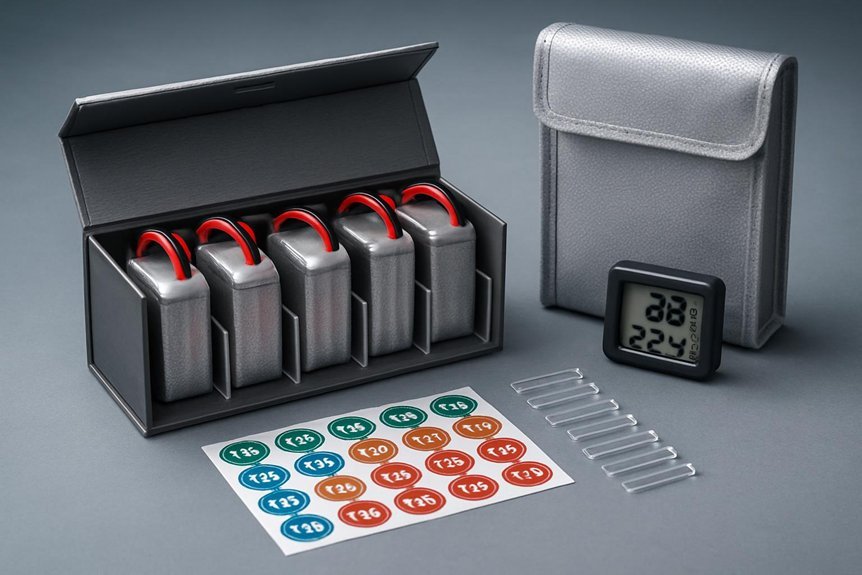
We must keep LiPo packs safe when not in use, so we design spaces, containers, and handling procedures that minimize physical and environmental risks while preserving performance. We outline dedicated storage zones with labeled fire-resistant enclosures, segregated by chemistry class and charge state. Our layout prioritizes approachability for inspection, ventilation, and spill containment, using monitored temperature and humidity controls to reduce degradation. Container labeling is precise: clearly mark capacity, date of receipt, last charge, and hazard notes to facilitate risk assessment and inventory management. We employ impact-rated bins, non-conductive shelving, and spill kits tailored for electrolyte exposure. Handling protocols specify neutral grounding, static-safe gloves, and one-person-at-a-time procedures during transfers. Regular audits verify adherence, updating space safety metrics and container labeling as configurations evolve.
Common LiPo Storage Myths Debunked
Are LiPo storage myths sabotaging safety and performance? We’ll cut through confusion with data-backed clarity, focusing on myth vs reality rather than anecdote. Our analysis shows most storage myths stem from misinterpreting impedance, temperature, and cell state of charge. Charging myths, for example, often assume overcharging causes immediate failure, yet modern packs include BMS protections and tolerance windows that prevent harm when kept within recommended SOC. We emphasize proven ranges and monitoring signals, not rumor. Real risk arises from neglect, improper containment, or extreme temps, not from routine, properly stored packs. By aligning practices with manufacturer data and independent tests, we minimize hazards and preserve capacity over time.
Myth-busting LiPo storage: data-driven safety, not speculation.
- myth vs reality: overgeneralized fears vs verified limits
- charging myths debunked: protections, SOC bands, and safe lower limits
- safety emphasis: data-driven, incident-free storage expectations
Step-by-Step Storage Routine for Hobbyists and Fleets
Step-by-step storage routines keep LiPo packs safe and reliable for hobbyists and fleets alike. We present a precise, data-driven sequence: confirm storage voltage targets per cell (typically 3.8–3.85 V), choose a calibrated charger, and record pack voltage before any long-term hold. Partition packs by chemistry age, capacity, and recommended storage time; segregate damaged or swelling packs from healthy inventories. Use temperature-controlled environments between 20–25°C and humidity near 40–60%, monitoring with a log. Maintain short-term checks after storage, verify pack integrity, and rehearse safety myths to prevent complacency. Document disposal trajectories for end-of-life packs. We emphasize two word discussion ideas and reinforce that safe storage relies on disciplined practice, not assumptions.
Monitoring, Maintenance, and Retirement Criteria
Monitoring and maintenance directly follow proper storage practice by ensuring packs stay within safe, predictable parameters over time. Our approach combines quantitative checks, scheduled conditioning, and documented retirement criteria to protect performance, safety, and value. We base decisions on data: voltage, temperature, impedance, cycle life estimates, and calendar aging. When metrics drift beyond thresholds, we perform impact assessment to quantify risk before implementing mitigation steps. Regular visual inspections catch physical deformations or swelling early, while automated logs reveal subtle trends. Retirement criteria trigger either repurposing or safe disposal to minimize hazard and environmental impact. We emphasize risk mitigation through redundancy, conservative limits, and traceable actions, ensuring all stakeholders understand the rationale and timing.
Data-driven monitoring and clear retirement criteria ensure safe storage, informed decisions, and responsible end-of-life handling.
- Data-driven monitoring cadence and threshold updates
- Clear retirement triggers and disposal pathways
- Documentation and continuous improvement for safety
Frequently Asked Questions
How Does Temperature Variation Affect Lipo Chemistry Over Years?
We see temperature variation accelerates degradation, reducing capacity and increasing impedance over years. We quantify via cycle life models, SEI growth, and Calendar life. We warn readers about thermal runaway risk, and pair safety data with two word ideas, unrelated topics.
Can Lipo Storage Voltage Vary by Brand or Cell Type?
We sail a calibrated fleet, and yes, storage voltage varies by brand variation and cell type. We monitor data, standardize procedures, and warn readers: inconsistencies creep with chemistry; control storage voltage to safeguard performance and safety.
What Are Signs of Hidden Damage in Stored Lipo Packs?
We’ve found hidden damage in stored LiPo packs via swelling, puffing, heat, irregular voltage readings, and compromised connectors; early storage signs include soft spots and puffy wrappers, warranting careful isolation, neutral charging, and professional inspection per safety protocols.
Do Charging Fastness or BMS Affect Storage Longevity?
Yes, charging rate and BMS impact storage longevity; higher rates stress cells and elevate temperature, while a proper BMS manages balancing and safety, mitigating degradation. We recommend moderate charging, strict thermal control, and documented, data-driven monitoring.
How Often Should Storage Conditions Be Revalidated?
We determine that how often storage revalidation should occur depends on usage risk and environment; we revalidate at least quarterly, with rapid changes or suspect readings triggering monthly checks to maintain safety and data integrity.
Conclusion
We’ve laid out a data-driven, safety-first framework for LiPo storage that we can trust. By maintaining 3.8–3.85 V per cell, 20–25°C, and 40–60% humidity, while using labeled, non-conductive containment and certified chargers, we minimize risk and preserve performance. Regular visual and impedance checks keep us proactive, not reactive. We’ll separate packs by age and chemistry, document everything, and follow a disciplined routine—because a well-kept pack today prevents big problems tomorrow, and that’s the bottom line. We’re in this together. Stay sharp.