You may not know that Li-ion and LiFePO4 share similar chemistries yet diverge sharply in safety margins and energy density, shaping how we design for real-world duty cycles. We’ll break down how thermal management, cycle life, and charging behavior differ, so you can weigh TCO and end-of-life considerations with confidence. Let’s align on the trade-offs that matter most for your application before we pick a path forward.
Key Takeaways
- Li-ion offers higher energy density, enabling lighter packs, but is more sensitive to high C-rates and temperature swings than LiFePO4.
- LiFePO4 provides superior thermal stability, longer cycle life at moderate temps, and stronger calendar aging resistance under heat.
- Li-ion requires precise BMS protection and thermal management to manage voltage/impedance under high load; LiFePO4 is more forgiving with safety margins.
- Real-world: Li-ion dominates energy density; LiFePO4 excels in safety, lower degradation at high-rate, and resilience in harsh environments.
- Total cost and lifecycle: LiFePO4 often higher upfront cost but lower replacement and maintenance, offering better long-term TCO in stationary or fleet deployments.
Li-Ion Vs Lifepo4: Which Chemistry Fits Your Project?
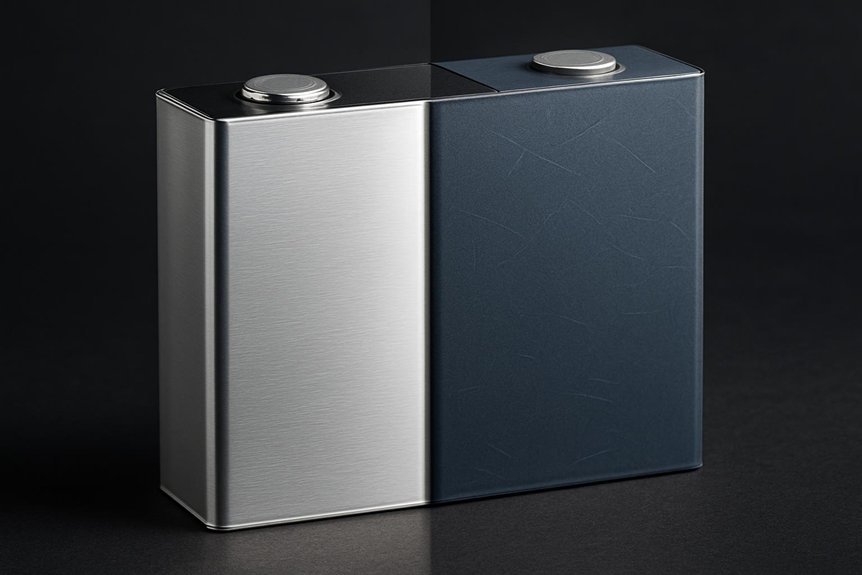
When choosing between Li-ion and LiFePO4, the key consideration is how each chemistry aligns with your project’s priorities: energy density, cycle life, safety, charging behavior, and cost. We compare two lithium chemistry options using objective metrics: specific energy, calendar and cycle life, and failure modes. Li-ion generally offers higher energy density, enabling lighter packs for the same runtime, but LiFePO4 provides superior thermal stability and longer cycle life in many duty cycles. Our lifecycle analysis shows tradeoffs in degradation mechanisms, with LiFePO4 often exhibiting lower capacity fade under high-temperature or high-rate scenarios. Charging profiles differ: LiFePO4 tolerates higher C-rates with robust safety margins, while Li-ion demands precise balancing. Overall suitability hinges on system energy requirements, thermal environment, and total cost of ownership.
Li-Ion and Lifepo4 Basics: Cathode, Anode, and Electrolyte Essentials
What exactly makes Li-ion and LiFePO4 cells tick at the fundamental level? We examine cathode, anode, and electrolyte roles with a neutral chemistry lens and data-driven rigor. In Li-ion, layered oxide cathodes enable voltage windows around 3.7–4.3 V, while graphite anodes host intercalation; LiFePO4 uses olivine-type cathodes with stable phosphate frameworks and a slightly lower voltage, yet superior thermal stability. Electrolytes enable ion transport and SEI formation, balancing conductivity and safety. Market trends show broader adoption in portable power and EVs, while neutrality in chemistry guides performance modeling and lifecycle estimates.
- Cathode structure dictates voltage and capacity
- Anode intercalation controls rate capability
- Electrolyte conductivity drives ion transport
- SEI formation affects longevity
- Material choices influence safety profiles
Safety First: Thermal Stability, Fire Risk, and Protection Features
How do thermal stability, fire risk, and protection features shape battery safety in Li-ion and LiFePO4 chemistries? We present data-driven comparisons of onset temperatures, venting thresholds, and thermal runaway drivers. Li-ion chemistries exhibit higher energy density but tighter thermal margins, increasing fire risk under abuse conditions; LiFePO4 shows superior intrinsic stability with higher safety margins, yet lower energy density. Protection features—cell-level and pack-level—include PCM cooling, fusing, BMS cutoffs, and thermal sensors that reduce subtopic mismatch risks by isolating affected modules. System reliability hinges on fast fault detection and response times, not just component specs. Beware irrelevant focus on isolated cell tests; real safety arises from integrated thermal management, fault analytics, and redundancy rather than single metrics.
Lifespan and Cycle Life: What to Expect Over Years of Use
Aging and cycle life set practical limits on how long Li-ion and LiFePO4 packs perform, and the numbers tell a clear, data-driven story. We compare degradation curves, calendar vs. cycle aging, and how usage patterns shift remaining capacity over years. Both chemistries exhibit gradual capacity fade, with LiFePO4 typically offering slower high-rate degradation but stronger calendar aging under heat. We quantify cycles to 80% DoD, remaining energy, and end-of-life definitions, then translate that into expected year ranges for typical applications.
- Cycle count versus DoD trade-offs
- Temperature and charge rate effects on lifespan
- Impact of aging on efficiency and impedance
- Realistic replacement timelines
- Charging hazards and supply chain considerations
Real-World Performance: Energy Density, Power, and Temperature Effects
Real-world performance hinges on three interrelated metrics: energy density, usable power delivery, and how temperature shapes behavior under typical use. We compare Li-ion chemistries by measuring gravimetric and volumetric energy density under real operating currents, then assess peak and sustained power capability across SOC and temperature ranges. Lifepo4 typically shows stable energy density in moderate temperatures but lower volumetric values at peak loads, while lithium-ion variants exhibit higher energy density but more sensitivity to high C-rates and temperature swings. Thermal stability governs internal resistance growth and voltage sag, influencing usable energy at continuous draw. We quantify derating factors, thermal margins, and cooling requirements to predict runtime under load. In practice, performance differences translate to range, acceleration, and battery-temperature management implications for systems.
Cost and Ownership: Upfront Price, Longevity, and Replacement Costs
We compare upfront costs, lifetime performance, and long-term replacement economics for Li-ion and LiFePO4, using objective data to frame the tradeoffs. We’ll quantify initial price gaps, expected longevity in cycles and years, and the cost implications of replacements within typical vehicle or stationary-use lifespans. Our aim is to outline how higher upfront prices may be offset by longer lifespans or lower maintenance, guiding informed ownership decisions.
Upfront Cost Gap
How do upfront costs compare between lithium-ion and LiFePO4 when considering total ownership? We analyze upfront price differences while framing total cost of ownership. LiFePO4 cells typically cost more per kWh at purchase, but lower packing costs can offset long-term value. Lithium-ion variants show higher initial costs for energy density and higher safety certifications. In practice, total upfront expenditure hinges on system size, power requirements, and integration needs. Our data show comparable initial outlays when matched to use case, with LiFePO4 often skewing lower in longer lifecycle depreciation scenarios. Key points to consider:
- Lifecycle depreciation influences apparent value over time
- Safety certifications affect vendor pricing and insurance
- Pack chemistry drives module pricing variations
- Balance-of-system costs vary by architecture
- Replacement costs shift with cycle stability and warranties
Longevity Comparison
Age and reliability drive longevity economics across chemistries, so we compare Li-ion and LiFePO4 on cycles, degradation, warranties, and replacement costs within total ownership. We quantify cycle life under projective DoD, noting LiFePO4 typically delivers higher cycle counts at similar temperatures, while Li-ion offers higher energy density per cycle with varying cathode chemistries. Degradation pathways differ: Li-ion often shows faster capacity fade with calendar aging, LiFePO4 demonstrates tighter voltage limits but slower calendar loss. Warranties reflect expected life and usable cycles, framing expected replacement timing. Total ownership emphasizes buffer costs and downtime alongside performance. Longevity myths persist—higher upfront price does not always equate to shorter life if degradation is managed. Deeper data shows LiFePO4’s robustness for stationary and medium-cycle use, while Li-ion excels in high-energy applications.
Replacement Economics
Are upfront costs and total ownership effectively balancing act between lithium-ion and LiFePO4 when replacement economics matter most? We quantify total cost of ownership with upfront price, cycle life, and replacement cadence, then contrast safety implications and downtime. Lithium-ion packs often demand higher initial capital but deliver higher energy density, reducing space and weight costs in compact systems. LiFePO4 offers lower replacement frequency and enhanced thermal stability, lowering long-term risk. We model break-even points under varying usage profiles and replacement intervals to reveal true economics.
- Upfront price vs. long-term maintenance
- Cycle life and replacement cadence
- Downtime costs and service intervals
- Safety implications in field operation
- Overall total cost of ownership and risk exposure
Charging and Compatibility: Fast Charging Needs and BMS Considerations
Fast charging raises distinct requirements for lithium-ion and LiFePO4 chemistries, and a robust Battery Management System (BMS) is essential to meet them safely. We examine charging strategies, balancing, and compatibility with standard fast-charge profiles, noting LiFePO4’s higher thermal margin and lithium-ion’s tighter voltage window. Our data show that BMS integration must enforce cell-level monitoring, current limits, and temperature guards to prevent degradation and safety events. Implementing proper cutoffs, Coulomb counting, and cell balancing reduces mismatch losses during high-rate charging. The table below highlights a key design takeaway you can apply across chemistries.
| Aspect | Implication |
|---|---|
| Temperature control | Critical for safe fast charging |
| Current tapering | Maintains cell health |
Best-Use Scenarios: When to Pick Li-Ion Vs Lifepo4 for Your Case
When choosing between Li-ion and LiFePO4 for a given application, we start by aligning chemistry to mission requirements and constraints. We compare energy density, cycle life, safety margins, and operating conditions to decide where each chemistry excels. Our guidance emphasizes practical use cases, quantified tradeoffs, and risk-aware design.
- High-energy needs with moderate thermal risk favor Li-ion for space-limited packs
- Long-cycle life and enhanced thermal stability point to LiFePO4 in stationary or harsh environments
- Tight safety constraints justify LiFePO4 in fleets, kiosks, and low-maintenance deployments
- Fast discharge/acceleration needs lean toward Li-ion, with robust BMS oversight
- Temperature variability mandates evaluated thermal stability and cooling strategies for both chemistries
Ultimately, battery safety and thermal stability drive the final selection for a given duty cycle.
Environmental Impact and Recyclability: Sourcing and End-Of-Life
We compare sourcing materials and end-of-life recycling for Li-ion and LiFePO4 to quantify environmental footprints and material loops. Our data show differing supply chain risks and recycling efficiencies that influence total lifecycle impacts. By focusing on sourcing integrity and post-use recovery, we can identify practical improvements for sustainability in each chemistry.
Sourcing Materials Lifecycle
Sourcing materials for lithium-ion and LiFePO4 batteries entails evaluating environmental impacts across extraction, processing, and end-of-life pathways, since supply-chain choices directly affect emissions, water use, and ecosystem integrity. We quantify material sourcing through lifecycle data, mapping upstream inputs to downstream performance, and compare supply chain resilience between chemistries. Our focus remains on securing responsible, traceable inputs while minimizing risk to communities.
- Transparent sourcing certifications and supplier audits
- Minimized ore grades via efficient processing, reducing waste
- Diversified, geographically balanced supply chains
- Emission controls in refining and fabrication stages
- Robust end-to-end traceability for critical minerals
These findings guide procurement strategies, underscore material stewardship, and inform policy framing without discussing End-Of-Life Recycling.
End-Of-Life Recycling
What happens to lithium-ion and LiFePO4 batteries at end of life, and how do recycling pathways shape environmental outcomes and material recovery? We analyze end-of-life flows, showing how process choices affect emissions, material yield, and risk. Li-ion feeds into pyrometallurgy and hydrometallurgy with variable cobalt/nickel recovery; LiFePO4 routes emphasize phosphate management and iron recovery. Recyclability economics drives optimization of sorting, pretreatment, and reagents, while disposal regulations constrain handling and reporting. A data-driven view reveals that higher upfront collection rates improve cradle-to-cradle loops and reduce virgin material demand. Below, a concise visualization highlights key players and outcomes.
| Feedstock | Process | Outcome |
|---|---|---|
| Li-ion | Pyro/Hydro | Metal recovery, emissions |
| LiFePO4 | Hydromet | Phosphorus/iron recovery |
| Mixed streams | Pre-sorting | Improved recyclability economics |
Quick Decision Framework: a Simple Checklist to Choose the Right Battery
Ever wonder which battery type best fits your project? We’ve built a quick decision framework to map requirements to the right chemistry, backed by data and constraints. We compare energy density, cycle life, safety margins, and total cost of ownership, then filter by project scale and timing. Our approach emphasizes bias toward cost and supply chain realities, preventing overreliance on marketing promises. Use this checklist to converge on Li-ion or LiFePO4 based on objective thresholds.
- Define required energy density for your load profile
- Estimate total cost of ownership over project life
- Assess supply chain stability and lead times
- Evaluate operating temperature and safety requirements
- Check end-of-life recycling and support options
Frequently Asked Questions
Which Chemistries Best for Lightweight, High-Energy Drones?
We recommend lithium-ion chemistries like NMC or NCA for lightweight propulsion due to superior energy density, but LiFePO4 offers safety and cycle life; weigh tradeoffs for peak energy density, cycle life, and thermal stability in drone design.
How Do Li-Ion and Lifepo4 Compare in Extreme Cold?
Ironically, yes, we’ll say Li-ion outperforms in extreme cold, though Lifepo4 stays steadier. We compare voltage, capacity, and cycle life, noting battery performance drops; you’ll see temperature sensitivity shapes flight endurance and reliability in cold conditions.
Do Cycle Life Guarantees Vary by Manufacturer for Each Chemistry?
We’ve observed cycling warranties do vary by manufacturer for each battery chemistry, with notable manufacturer variance in guarantee terms. In short, battery chemistry guarantees aren’t uniform across brands, so scrutinize cycling warranties and related data before purchase.
Which Chemistry Tolerates Higher Charging Temperatures Best?
We tolerate higher charging temperatures with Li-ion chemistries, but lifepo4 shows distinct thermal stability. Temperature tolerance depends on charging methods, cell design, and safeguards; we found Li-ion often handles higher temps before degradation accelerates, when properly managed.
How Do Disposal and Recycling Differ Between Li-Ion and Lifepo4?
Disposal differences between Li-ion and LiFePO4 reflect chemistries: LiFePO4 typically permits safer, simpler recycling with fewer hazardous materials, while Li-ion requires stricter handling and diverse recovery streams; recycling processes emphasize cathode to precursor recovery for both.
Conclusion
We’ve mapped the tradeoffs like a data-driven compass: Li-ion delivers density and highway performance, but with tighter thermal guards and higher fire risk; LiFePO4 stays cool, safer, and longer-lived, at the cost of energy density. Picture two batteries as different journeys—one sprint-ready, the other endurance-built. Your choice hinges on duty cycle, temperature, charging pace, and lifecycle costs. Use our checklist, weigh TCO, and align with safety margins to choose the chemistry that keeps your system reliable and efficient.