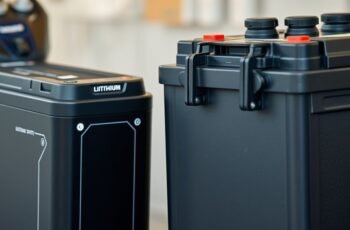
When comparing lithium-ion and NiMH batteries for power tools, we recognize that each offers distinct performance characteristics that can substantially impact usability and efficiency. While lithium-ion batteries are praised for their high energy density and rapid charging capabilities, NiMH options remain a cost-effective alternative with simpler maintenance. Understanding their differences in lifespan, safety, and environmental impact is essential for making a well-informed choice—yet, evaluating which suits specific applications depends on more nuanced factors that merit further examination.
Key Takeaways
- Lithium-ion batteries offer higher energy density, longer runtime, and faster charging compared to NiMH batteries in power tools.
- NiMH batteries are heavier, less efficient, and have a shorter lifespan but are more established and easier to recycle.
- Lithium-ion batteries provide better temperature stability and safety features, making them suitable for heavy-duty applications.
- NiMH batteries are cost-effective, simpler to maintain, and perform adequately for light-duty or less demanding tasks.
- Choice depends on tool compatibility, performance needs, cost considerations, and environmental factors.
How Do Lithium-Ion and NiMH Batteries Differ in Power Tool Performance?
While both lithium-ion (Li-ion) and nickel-metal hydride (NiMH) batteries are commonly used in power tools, they differ markedly in their performance characteristics. Lithium-ion batteries are especially lighter, reducing overall tool weight and enhancing maneuverability, which benefits user fatigue during extended use. Their higher energy density enables longer runtime per charge, though this depends on compatible charging infrastructure that supports rapid and efficient recharging. In contrast, NiMH batteries tend to be heavier with lower energy density, impacting portability and runtime. Additionally, NiMH batteries require more frequent maintenance and have a more established, yet less flexible, charging infrastructure. These differences critically influence performance, with Li-ion offering superior power-to-weight ratio and more adaptable charging options, making it the preferred choice for modern power tools.
Which Battery Technology Offers Longer Runtime Per Charge?
To determine which battery technology provides longer runtime per charge, we need to compare their energy densities and how effectively they store and deliver power. Battery management systems also play a critical role in optimizing performance and preventing degradation over time. Analyzing these factors helps us understand which option offers sustained power for demanding applications.
Energy Density Differences
Lithium-ion batteries generally provide a higher energy density compared to NiMH batteries, meaning they can store more energy per unit of weight or volume. This results in longer runtime per charge, making them more efficient for power tools. The increased energy density stems from lithium’s lightweight properties and high electrochemical potential. However, this advantage impacts battery recycling processes and environmental impact; lithium-ion batteries require specialized recycling methods due to hazardous materials, influencing sustainability efforts. Conversely, NiMH batteries, with lower energy density, deliver shorter runtimes but are easier and safer to recycle, often with less environmental concern. Consequently, while lithium-ion batteries offer superior energy density, considerations around battery recycling and environmental impact are vital when evaluating overall performance and sustainability.
Battery Management Systems
Which battery management system (BMS) ultimately extends the runtime per charge more effectively? Lithium-ion batteries generally benefit from advanced BMS that optimize battery chemistry and adhere to strict charging standards. These systems monitor voltage, temperature, and state of charge, preventing over-discharge and thermal runaway, therefore maximizing usable energy. NIMH batteries, with simpler BMS, lack sophisticated control, leading to less efficient energy use. The table below illustrates key differences:
| Aspect | Lithium-ion BMS | NIMH BMS | Impact on Runtime |
|---|---|---|---|
| Battery Chemistry | Advanced, allows precise control | Less complex | Longer, more reliable charges |
| Charging Standards | Strict, supports fast charging | Lenient, slower charging | Faster, more efficient charging |
| Monitoring & Safety | Continuous, enhances lifespan | Basic safety features | Extended runtime per cycle |
How Do Charging Times and Lifespan Compare Between Lithium and NiMH Batteries?
When comparing charging times and lifespan, lithium-ion and NiMH batteries exhibit notable differences in recharge speed and durability. Lithium batteries generally charge faster and support more recharging cycles before capacity degrades, impacting overall lifespan. Understanding these distinctions helps optimize usage and maintenance strategies for power tools.
Charging Speed Differences
How do the charging times and lifespan of lithium batteries compare to NiMH counterparts? Battery chemistry plays a key role here, with lithium-ion cells enabling faster charging due to their higher charge acceptance rates. Lithium batteries typically support rapid charging protocols, reducing downtime, especially when supported by advanced charging infrastructure. In contrast, NiMH batteries rely on different electrochemical processes that necessitate more gradual charging to avoid overheating and capacity loss. This inherent difference means lithium batteries generally recharge more quickly, often within 1-2 hours, while NiMH cells may require 3-4 hours or more. The efficiency of charging infrastructure, including compatible chargers designed for each chemistry, further influences these times, with lithium systems benefiting from optimized fast-charging capabilities.
Battery Life Expectancy
Lithium-ion batteries generally outperform NiMH cells in regards to lifespan, primarily due to differences in their electrochemical stability and charge management. Lithium cells exhibit superior energy absorption capabilities, allowing them to sustain higher charge cycles with minimal capacity loss over time. Their stable chemistry reduces degradation, which extends overall battery life and supports more efficient battery recycling processes. NiMH batteries, while robust, tend to experience capacity fade more quickly, especially after numerous charge cycles. Lithium-ion’s longer lifespan translates into fewer replacements and less environmental impact, emphasizing their sustainability. The enhanced electrochemical stability also helps mitigate issues like memory effect, common in NiMH batteries. Overall, lithium-ion technology offers a more durable, eco-friendly solution with significant advantages in longevity.
Usage and Recharging Cycles
Although lithium batteries typically recharge faster and have longer overall lifespans, their charging cycles tend to be more efficient, resulting in fewer full discharges over time. Lithium’s higher battery capacity allows for more charge cycles before significant capacity loss, enhancing overall efficiency. Additionally, lithium batteries support faster charging times, reducing downtime in power tool applications. From a charging safety perspective, lithium batteries incorporate advanced management systems to prevent overcharging and thermal runaway, extending cycle life. In contrast, NiMH batteries generally require longer recharge periods and experience more rapid capacity degradation with frequent cycles.
- Lithium batteries support higher battery capacity and quicker recharge times
- Fewer full discharges improve cycle longevity
- Enhanced charging safety mechanisms reduce risks during recharging
What Are the Cost Differences and Value Considerations for Each Battery Type?
When comparing the costs of lithium-ion and NiMH batteries for power tools, it’s essential to take into account both upfront expenses and long-term value. Lithium-ion batteries generally have a higher initial cost due to complex manufacturing processes and smaller battery sizes needed to achieve desired power output. However, they often provide greater energy density, leading to longer run times and fewer replacements over time. NiMH batteries, on the other hand, typically have lower upfront costs, but their larger size and lower energy density can result in increased replacement frequency and reduced operational efficiency. Over the lifespan of the tool, the higher manufacturing cost of lithium-ion batteries can be offset by their superior longevity and performance, providing better overall value despite the initial investment.
How Do Temperature Tolerance and Safety Features Vary Between Lithium and NiMH Batteries?
Lithium and NiMH batteries exhibit notable differences in temperature resilience, affecting their performance and safety in various environments. We examine their heat tolerance limits and integrated safety mechanisms to understand how each type mitigates thermal risks. This comparison highlights essential considerations for applications where temperature extremes are a factor.
Temperature Resilience Differences
Temperature resilience plays a critical role in battery safety and performance, especially for power tools operated in diverse environments. Lithium batteries generally offer superior thermal stability, maintaining consistent performance across a broader temperature range. This resilience reduces risks during battery charging and prevents thermal runaway incidents. Conversely, NiMH batteries are more sensitive to temperature fluctuations, which can accelerate capacity fade or cause overheating during high-temperature conditions. The differences impact safety features, as lithium batteries incorporate advanced thermal management systems, while NiMH packs rely on simpler designs.
- Lithium batteries excel in thermal stability, reducing overheating risks during operation and charging
- NiMH batteries are more prone to performance degradation at temperature extremes
- Both technologies require specific temperature controls to maximize safety and longevity
Safety Mechanisms Comparison
The safety mechanisms embedded within lithium and NiMH batteries differ considerably, largely due to their distinct thermal tolerances and chemical compositions. Lithium batteries incorporate advanced safety features such as thermal cutoff switches and integrated pressure vents to prevent thermal runaway, which is essential given their higher energy density. NiMH batteries rely more on their chemical stability and inherent resistance to overcharge, reducing the risk of catastrophic failure. These safety features influence charging infrastructure requirements, with lithium batteries demanding more sophisticated controls and monitoring systems. Additionally, battery recycling protocols vary; lithium batteries require specialized processes to safely manage toxic materials, whereas NiMH batteries are comparatively easier to recycle due to less hazardous chemicals. Understanding these differences helps optimize safety and sustainable disposal practices.
Heat Tolerance Limits
Battery safety features are closely linked to their thermal tolerance, which directly impacts performance and risk management. Lithium batteries typically operate within a narrow temperature range (around -20°C to 60°C), with excessive heat risking thermal runaway and safety hazards. NiMH batteries, however, tolerate higher temperatures (up to 45°C), reducing risks during overheating but increasing potential degradation over time. This difference influences manufacturing costs, as lithium batteries require advanced cooling systems and safety mechanisms to mitigate heat-related failures, affecting battery disposal procedures. Conversely, NiMH’s higher heat tolerance simplifies design but accelerates capacity loss.
- Lithium batteries demand sophisticated safety features to prevent thermal runaway during high temperatures
- NiMH batteries benefit from higher heat tolerance but pose challenges for long-term stability
- Proper heat management influences overall manufacturing costs and disposal safety protocols
Which Battery Is Better Suited for Heavy-Duty vs. Light-Duty Power Tools?
When selecting power tool batteries, understanding their suitability for different workloads is essential. For heavy-duty applications, lithium-ion batteries excel due to their higher energy density, allowing for longer runtime and better heat management under intensive use. They are generally lighter relative to capacity, reducing fatigue during prolonged tasks, and their charging compatibility supports fast-charging cycles, minimizing downtime. Conversely, NiMH batteries tend to be heavier and less efficient in high-demand situations, making them less ideal for heavy-duty tools. However, they perform adequately in light-duty tasks where weight and charging speed are less critical. Overall, lithium-ion batteries are better suited for demanding, continuous use, while NiMH batteries fit casual, lighter workloads where cost and simplicity matter more.
How Do Environmental Impacts and Recycling Options Differ for Lithium and NiMH Batteries?
Although lithium-ion and NiMH batteries both offer rechargeable options, their environmental impacts and recycling processes differ markedly. Lithium-ion batteries contain valuable metals like lithium and cobalt, making recycling essential but complex due to battery manufacturing intricacies and safety concerns. Conversely, NiMH batteries utilize nickel and rare earth metals, which are easier to recover but pose their own recycling challenges due to chemical stability.
- Lithium-ion recycling demands advanced techniques to address battery safety and material recovery efficiency.
- NiMH batteries generally face fewer recycling challenges but require established collection systems.
- Both types highlight the importance of sustainable battery manufacturing and proper disposal to mitigate environmental harm. Understanding these differences helps inform responsible usage and disposal practices for consumers and industry alike.
What Maintenance and Care Tips Can Extend the Life of Your Power Tool Batteries?
Proper maintenance and care can considerably extend the lifespan of power tool batteries, guaranteeing ideal performance over their operational life. Effective battery storage is critical; storing batteries in a cool, dry environment prevents capacity loss caused by temperature fluctuations. Regularly monitoring power consumption helps identify inefficient usage, which can prematurely deplete batteries. Avoid deep discharges, especially for lithium-ion types, as they can degrade the cells, reducing overall cycle life. Maintaining a consistent charge level during storage—preferably around 40-60%—minimizes capacity fade. Additionally, using chargers designed for specific battery chemistries prevents overcharging and overheating. Implementing these practices optimizes battery health, minimizes performance decline, and guarantees cost-effective operation over time.
Which Battery Technology Is More Compatible With Modern Cordless Tool Systems?
Lithium-ion batteries have become the standard for modern cordless tool systems due to their superior energy density, lightweight design, and longer cycle life. They offer better compatibility with current tools, enabling faster charging and higher power output. Additionally, their widespread adoption has prompted advancements in battery recycling, reducing environmental impact and supporting sustainability. NiMH batteries, though reliable, often lag in energy capacity and are less integrated into newer tool designs, limiting their compatibility. Lithium-ion systems also benefit from standardized form factors, simplifying replacement and upgrade processes. Their compatibility extends to smart technology integrations, such as battery management systems that enhance safety and efficiency. Overall, lithium-ion batteries align more closely with the evolving demands of modern cordless tools, emphasizing performance, environmental responsibility, and ease of use.
How Should You Choose Between Lithium and NiMH Batteries for Your Specific Needs?
When selecting between lithium and NiMH batteries for your tools, it’s essential to analyze your specific usage patterns and performance requirements. Lithium batteries excel in high energy density, lightweight design, and faster charging, making them ideal for demanding tasks. Conversely, NiMH batteries offer cost-effective, reliable performance with lower self-discharge rates, suitable for moderate applications. Consider the environmental impact as well; lithium’s manufacturing sustainability and battery recycling processes are evolving, but recycling remains more established for NiMH. Evaluating these factors helps guarantee you choose a battery type aligned with your operational needs and environmental values. Ultimately, understanding the trade-offs between energy capacity, sustainability, and recyclability guides informed decision-making tailored to your tools and usage scenarios.
Frequently Asked Questions
Are Lithium Batteries More Environmentally Friendly Than Nimh Batteries?
We believe lithium batteries are generally more environmentally friendly than NiMH, thanks to advanced recycling processes that reduce harmful waste, but proper battery disposal remains essential for minimizing environmental impact across both types.
How Do Storage Requirements Differ for Lithium and Nimh Batteries?
Ever wondered how storage needs differ? Lithium batteries demand controlled temperature storage and specific charging methods to maximize lifespan, while NiMH batteries need dry, cool environments and regular partial charges to prevent capacity loss.
Can Lithium Batteries Be Safely Used in Extreme Temperature Conditions?
We find lithium batteries generally have limited extreme temperature resilience without proper battery thermal management, risking thermal runaway or capacity loss. Advanced thermal controls are essential for safe, reliable operation in harsh conditions.
What Are the Weight Differences Between Lithium and Nimh Batteries?
We find lithium batteries lighter than NiMH, saving weight and enhancing portability. With higher battery capacity and faster charging speed, lithiums outshine NiMH in efficiency, making them a sleek, lightweight choice for tech-savvy users craving performance.
How Do Manufacturer Warranties Compare for These Battery Types?
We find manufacturer warranties typically favor lithium batteries due to their longer lifespan and higher charging efficiency, offering better performance over time. Nimh warranties are often shorter, reflecting their comparatively limited cycle life and lower charging efficiency.
Conclusion
In choosing between lithium-ion and NiMH batteries, we see a balance of power, cost, and sustainability. Like selecting the right tool for a job—whether a precision screwdriver or a heavy-duty impact wrench—your decision hinges on specific needs. Lithium-ion batteries, with their high energy density, are akin to a high-performance engine, while NiMH offers simplicity and affordability. Understanding these nuances helps us optimize tool performance and environmental responsibility.