We’re weighing deep cycle lithium against AGM with a data-driven lens: lifecycle counts, charging efficiency, and thermal management dominate each option’s value. Lithium offers higher cycle endurance and better performance with active cooling, but comes with higher upfront costs and tighter temp monitoring needs. AGM provides robust bulk charging and lower initial price, yet carries greater parasitic losses and efficiency penalties at high rates. The trade-offs hinge on duty cycle, cooling capability, and total cost—let’s quantify them.
Key Takeaways
- Deep cycle lithium offers higher cycle life and slower capacity fade at similar DoD, with better energy density and managed charging temperatures.
- AGM is cost-effective upfront but has lower round-trip efficiency and higher parasitic losses at high-rate charging.
- Lithium benefits from active cooling and higher-C charging, while AGM requires robust cooling at higher currents and is more tolerant of bulk, slower charging.
- DoD and temperature jointly drive usable energy and heat; aggressive DoD magnifies degradation for both, but AGM tolerates deeper DoD with slower wear.
- Economic framing should weigh upfront module cost, replacement downtime, cooling load, and warranty/value when choosing between, or combining, chemistries.
Decide Visibly: Should You Choose Lithium Or AGM First?
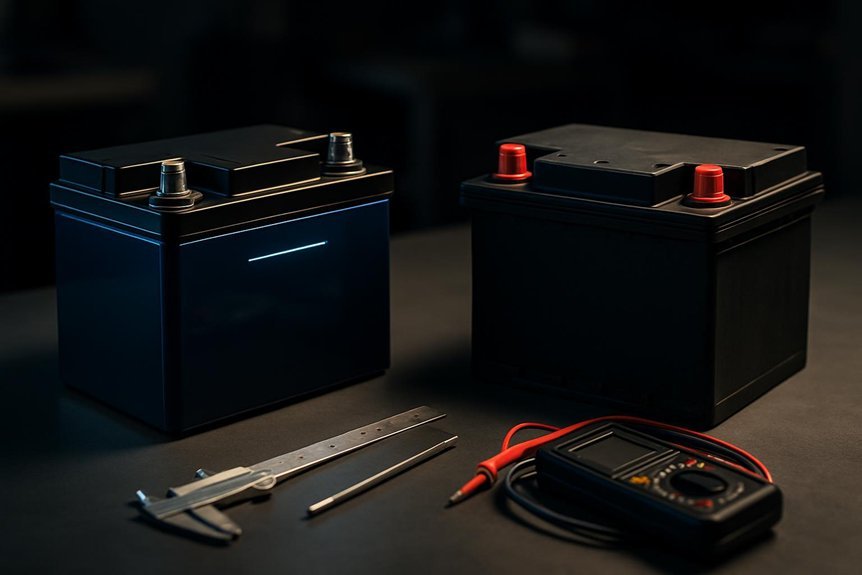
Decide visibly: Should you choose lithium or AGM first? We present a data-driven lens to help you prioritize based on application, cost curve, and thermal behavior. Our approach centers on system goals: end-user duty cycle, peak discharge needs, and temperature exposure. Lithium myths often revolve around upfront cost and thermal runaway fears; we quantify warranty-adjusted TCO and cycle stability to counter them. AGM myths, by contrast, tend to overlook high-rate performance and depth-of-discharge limits; we address these with charge efficiency data, ambient-temp effects, and aging trends. We’ll help you map load profiles to chemistries, then validate with real-world, thermally monitored tests. In short, decide with clarity: align chemistry choice to your thermal and duty requirements, not rumors.
Lithium Vs AGM: Lifecycle, Efficiency, And Charging Differences
Lithium and AGM differ notably in lifecycle length, round-trip efficiency, and charging behavior, with implications for system duty cycles and thermal management. We present a concise, data-first comparison to inform design choices.
- Lithium lifecycle benefits: higher cycle counts, slower capacity fade, and predictable degradation curves under similar DoD.
- AGM efficiency: typically lower round-trip efficiency, with greater parasitic losses under high-rate charging.
- Charging differences: lithium favors higher-C rate charging with managed temperature, while AGM is more tolerant of slower, bulk charging but sensitive to overvoltage.
- Thermal sensitivity: lithium maintains performance with active cooling; AGM requires robust cooling at higher currents to prevent voltage sag and reduced capacity.
In short, lithium lifecycle advantages translate to longer duty cycles; agm efficiency drives thermal-aware, conservative charging strategies.
Real-World Performance: Temperature, DoD, And Safety
How do temperature, depth of discharge (DoD), and safety interact to shape real-world performance in lithium and AGM systems? We examine how ambient and cell temperatures drive internal resistance, cycle life, and capacity fade, while DoD alters usable energy and heat generation. Safety considerations hinge on thermal runaway risk, venting behavior, and fault tolerance, with lithium systems showing higher sensitivity to overheat but better resilience under controlled DoD. Our data show temperature impact dominates early-life loss; aggressive DoD magnifies degradation for both chemistries, yet AGM tolerates deeper cuts with slower wear. Below is a concise comparison.
| Factor | Effect |
|---|---|
| Temperature | Drives resistance, efficiency, and longevity |
| DoD | Modulates usable capacity and heat output |
Total Cost Of Ownership: Upfront Vs Long-Term Value
When evaluating total cost of ownership, the upfront price must be weighed against long-term efficiency, cycle life, and maintenance needs under realistic operating conditions. We present a concise, data-driven cost comparison focused on lifecycle value, balancing initial capital with reliability and end-of-life recovery.
1) Initial module cost versus projected cycles and depth of discharge
2) Battery management, cooling load, and thermal losses shaping total energy throughput
3) Replacement frequency, downtime impact, and labor costs over the system’s life
4) End-of-life handling, recycling value, and warranty effectiveness on lifetime economics
Across the comparison, lithium options typically deliver lower ballast losses and higher cycle counts, improving lifecycle value despite higher upfront cost. Maintenance intensity and thermal margins strongly influence total cost outcomes.
Practical Decision Framework: Match Use Case And Budget
In practical terms, we align use case requirements with budget constraints by mapping performance targets to empirical ballast, cycle life, and thermal margin data. We evaluate battery chemistry options against required depth of discharge, ambient operating temps, and recharge cadence. Our framework weights energy density, parasitic losses, and safety margins to select a credible baseline, then trims through charging profiles and cycle endurance forecasts. We quantify impact on total cost of ownership, reliability, and thermal management, ensuring margins remain stable across real-world excursions. We prefer modular architectures that accommodate future capacity additions without compromising safety. By pairing concrete use-case scenarios with validated data, we minimize overdesign while preserving margin for peak loads. This disciplined approach strengthens decision confidence and aligns procurement with measurable performance targets.
Frequently Asked Questions
How Do Lithium and AGM Perform Under Extreme Cold?
We perform better in extreme cold with lithiums maintaining higher usable capacity and faster bursts, while AGM sags more and delivers lower high current; both reduce capacity, but lithium handles high current more efficiently in chilly conditions.
Which Battery Type Handles High Current Bursts Better?
We handle high current bursts better with lithium often, delivering higher peak power and cooler thermal rise; while AGM shows robust cold performance and reliability, lithium’s cold performance improves with proper management for bursts.
Can I Retrofit AGM With Minimal System Changes?
We can’t just swap; there’s a retrofit risk. We can retrofit AGM with minimal system changes, but retrofit challenges and system impedance rise with wiring, BMS, charging profiles. We’d optimize thermal management, monitor temps, and validate performance data.
What Are Recycling and Disposal Considerations for Each?
We follow recycling programs and disposal regulations for both, prioritizing safe handling, traceability, and compliant waste streams; our data-driven approach tracks chemistries, thermal risks, and end‑of‑life processing to minimize environmental impact and optimize facility throughput.
Which Warranties Commonly Cover Lifepo4 Vs AGM Packs?
We typically see longer warranties for LiFePO4 packs, with lithium warranties often 5–10 years, while AGM warranties commonly 2–5 years; both lengths depend on manufacturers, usage, and thermal management, but lithium warranties frequently emphasize cycle life durability.
Conclusion
We’re balancing duty cycles, cooling, and cost like a tightrope between two peaks. Lithium shines with high cycle life and fast charging when temps are controlled; AGM steadies bulk charging with lower upfront cost but higher parasitic losses over time. The data favors lithium where temperature monitoring and performance at high C matter; AGM wins where budget is king and cycles are modest. In short, match the use case to the price of reliability.


