We compare capacity, voltage, and real-world runtime, we weigh charge speed against device needs, we assess size, weight, and travel fit. We connect safety features to durability, we evaluate ports, cables, and compatibility, we price value across use cases. We aim to balance energy per dollar with practical performance, we test under typical loads to reveal true throughput, we keep the discussion grounded while we show where the trade-offs lie and what to scrutinize next.
Key Takeaways
- Compare energy capacity (Ah/Wh) alongside weight to assess practical runtime for your needs.
- Evaluate real-world performance by considering average operating voltage and discharge profile, not just labeled capacity.
- Check voltage stability, thermal management, and safety protections for safe, reliable use under load.
- Assess form factor, weight, durability, and portability for your travel and mounting requirements.
- Review charging efficiency, port compatibility, and real-world charging speed versus heat and device negotiation.
Key Criteria for Choosing a Portable Lithium Battery Pack
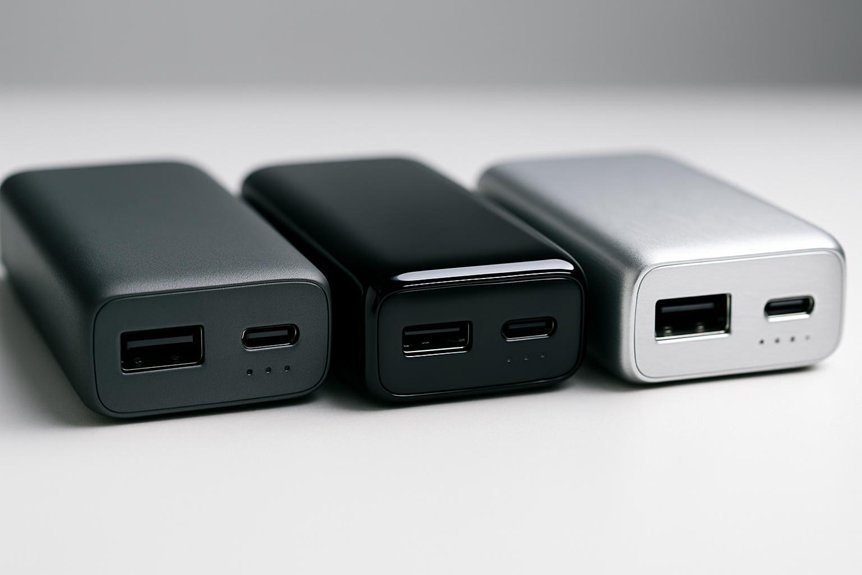
Choosing a portable lithium battery pack hinges on clear, practical criteria: capacity, discharge rate, chemistry, size and weight, charging options, and safety features. We evaluate capacity to meet expected runtime without excessive bulk, while discharge rate (C-rate) determines peak power delivery without voltage sag. Chemistry choices—lithium iron phosphate, manganese, cobalt variants—affect cycle life, thermal behavior, and safety margins. Size and weight influence portability and mounting compatibility, so we balance energy density against form factor. Charging options, including input current, wall adapters, and USB-C, impact recharge time and convenience. Safety features—overcurrent, short-circuit, overtemperature protections, and proper venting—minimize risk during use and transport. Irrelevant topic and filler content unnecessarily cloud decisions; our focus remains on practical, objective tradeoffs.
Capacity, Voltage, and Real-World Runtime Explained
We’ll outline how capacity and real-world runtime relate to usable energy, focusing on how this translates to practical run times for typical loads. We’ll also examine how voltage characteristics influence device compatibility and performance in real-world scenarios. By linking capacity, voltage, and runtime, we provide a precise framework for comparing portable packs.
Capacity and Runtime Basics
Capacity and runtime depend on three core factors: capacity rated in amp-hours (Ah) or watt-hours (Wh), the pack’s nominal voltage, and the load you place on it. We analyze how these interact to shape usable energy, predict runtime, and identify constraints. Our goal is to quantify behavior without overpromising, focusing on practical, testable outcomes.
- Capacity limits: Ah/Wh define total energy; higher values extend runtime but add weight.
- Voltage accuracy: Nominal voltage guides device compatibility and regulation; deviations affect performance margins.
- Thermal management: Heat rise under load limits sustained output and safety protocols, influencing usable capacity.
We measure under representative loads, document deratings, and compare packs to illuminate real-world performance versus rating.
Voltage Impact On Use
How does voltage shape usable energy and real-world runtimes? We examine how voltage directly limits capacity in practical use, not just labeled ratings. Higher nominal voltage cells deliver more energy per cell, but system voltage, regulation, and conversion losses determine usable energy at the load. We track voltage fluctuation under load, temperature, and aging, since small swings shift instantaneous available capacity and efficiency. Real-world runtimes depend on discharge profile, not peak capacity alone, so we compare packs by average operating voltage during typical use. We also consider charging cycles: repeated voltage cycling degrades capacity and alters internal resistance, reducing runtime over time. In short, voltage stability and managed charging cycles yield more predictable, repeatable runtimes than nominal specifications suggest.
Charge Speed and How It Powers Devices
Charge speed directly determines how quickly a portable lithium battery pack can replenish its energy and, in turn, how long devices stay powered between charges. We analyze how rate, efficiency, and thermal management determine practical performance, not just label specs. Our focus is on how charge speed translates to real-world usefulness, balancing rapid replenishment with device safety and cycle life. We explore how higher currents impact portability usability without compromising longevity or heat limits.
- Fast-charging profiles vs. thermal constraints and device compatibility
- Impact of DC-DC efficiency on usable power under load
- Trade-offs between top-end current, battery chemistry, and cycle durability
Compact Form Factors: Size, Weight, and Travel Fit
Size, weight, and travel fit matter as much as energy capacity when evaluating portable lithium battery packs. We compare compact form factors by quantifying dimensions, mass, and charge architecture to assess travel compatibility. Our analysis prioritizes real-world handling, portability, and bag fit, not just nominal capacity. The table below summarizes representative options and their practical implications for travelers and commuters.
| Model | Dimensions (L×W×H) | Weight | Travel Implications |
|---|---|---|---|
| A | 90×60×22 mm | 180 g | Easy to pack, minimal bulk |
| B | 100×65×25 mm | 230 g | Moderate footprint, versatile carry |
| C | 110×70×25 mm | 290 g | Higher weight, stable grip |
| D | 120×75×30 mm | 350 g | Bulkier, restricted carry |
| E | 80×50×20 mm | 140 g | Ultra-compact, highest travel compatibility |
Essential Safety Features You Should Expect
Essential safety features define a portable lithium battery pack’s reliability and user trust. We argue that predictable safeguards reduce failure risk and support informed use. Our analysis focuses on mechanisms, standards, and user education to prevent incidents and extend life. By validating each feature, we ensure dependable operation in real scenarios while maintaining regulatory alignment and traceable performance data.
Essential safety features build trust by reducing risk through proactive, standards-aligned safeguards and clear user guidance.
- Built-in overcurrent, short-circuit, and thermal protection that triggers rapid shutdown and fault reporting.
- Isolated cell monitoring with real-time temperature and voltage telemetry to support proactive maintenance and informed charging decisions.
- Clear labeling, accessibility of safety instructions, and educational prompts that empower users to recognize faults and follow proper handling.
Ultimately, essential safety and user education drive safer, more resilient packs for everyday needs.
Durability and Build Quality You Can Rely On
We evaluate durability through Build Material Integrity and Drop-Test Reliability to provide a clear performance baseline. Our analysis focuses on enclosure materials, joints, and connector robustness under real-world handling. We’ll compare how these factors translate to long-term resilience and consistent safety behavior across models.
Build Material Integrity
Durability and build quality are the backbone of dependable portable packs, so we scrutinize materials, joints, and enclosure design to assure rugged performance under typical field use. We focus on how construction resists environmental stress, cyclic loads, and temperature variation, preserving function and safety. Our assessment centers on build integrity and material fatigue indicators, ensuring consistent performance over the pack’s life cycle. Tight tolerances, fastener quality, and sealing methods prevent ingress and loosening. We quantify variability in material properties, supplier consistency, and batch-to-batch performance to reduce latent failures. Our goal is to identify issues before they manifest in field conditions, enabling reliable operation and predictable service intervals.
- Material selection and batch consistency
- Joint integrity under thermal cycling
- enclosure sealing and fastener durability
Drop-Test Reliability
How well do portable lithium packs stand up to real-world drops, and what does that imply for long-term reliability? We evaluate drop-test reliability by assessing how impact events affect internal components, enclosure integrity, and thermal interfaces. Our durability testing isolates variables such as drop height, surface, and orientation to quantify variance in state of health after impact. We compare shell deformation, connector looseness, and battery cell encapsulation integrity to establish fail thresholds. We prioritize repeatability and statistical significance over anecdotal results. This approach reveals that units with robust shock absorption, reinforced corners, and secure bus connections demonstrate superior impact resistance and lower post-test impedance drift. Informed by these metrics, we translate findings into practical reliability expectations for sustained use and safe charging after accidental drops.
Ports and Charging Versatility: Cables, QC, and Compatibility
What charging versatility do we actually get from these portable lithium packs, and how well do their ports, cables, and standards align with real-world use? We assess real-world interoperability by examining port types, charging standards, and cable互operability, highlighting compatibility quirks that affect everyday charging. Our emphasis is on predictable performance, not just spec sheets, with emphasis on cross-device behavior and spec adherence.
- Port compatibility and standard support: USB-C PD, Quick Charge, and supporting adapters for common devices.
- Cable互operability and quality: cable gauge, current rating, and heat management during fast charging.
- Real-world constraints: impedance, cable length, and device negotiation that cause slower top-ups than advertised.
Price Ranges and Value Across Common Use Cases
Price ranges for portable lithium packs vary widely by capacity, feature set, and build quality, but real value hinges on how well a model meets typical use cases rather than on headline specs alone. We perform a disciplined price comparison across capacities, from compact 10–20 Ah models to 40–60 Ah systems, weighting cycle life, safety features, and efficiency. Our value assessment emphasizes usable energy per dollar, not peak ratings, and accounts for ancillary costs like cables, adapters, and warranty terms. In common use scenarios—emergency kits, travel, worksite power, and daily gadget charging—costs scale with expected load duration and replenishment frequency. We advise matching budget to expected duty cycle, avoiding premium premiums for marginal feature gains that don’t materially improve real-world performance.
Real-World Benchmarks: Everyday Performance and Guidelines
From price considerations in the prior section, we now turn to real-world performance and practical guidelines that matter in everyday use. We focus on how portable charging behavior aligns with energy density, cycle life, and thermal stability, translating lab metrics into usable expectations. Our assessments emphasize repeatable results, not hype, so you can forecast reliability under common load profiles.
- Real-world energy throughput varies with discharge rate; higher drains reduce effective energy density and runtime, shaping charging strategies.
- Thermal management governs lifespan and performance; modest temperatures preserve capacity, sustain portable charging efficiency, and minimize safety risk.
- Cycle life correlates with depth of discharge and charging cadence; conservative DOD and gradual charging extend usable life without compromising convenience.
Frequently Asked Questions
How Durable Are Packs Under Extreme Temperature Conditions?
We’ve observed limited endurance; durability testing shows cells degrade under extreme temperature effects, reducing capacity and cycle life. We quantify performance shifts, thermal runaway risks, and impedance rises, then advise mitigations based on rigorous, controlled, repeatable testing.
Do Battery Packs Lose Capacity When Exposed to Sunlight?
Sunlight acts like a ticking clock on our cells; yes, battery packs experience sunlight degradation and capacity fade. We analyze photochemical stress, UV exposure, and thermal effects to quantify losses, guiding safer usage and precise lifetime predictions.
Can Packs Be Refurbished or Repaired After Failure?
We can answer: refurbishment feasibility varies by pack; many modules aren’t fully refurbishable, and repairability limits hinge on cell integrity and BMS design. We assess chemistry, safety, and warranty to guide refurbishment feasibility and repairability limits for readers.
Which Brands Offer the Best Warranty Terms?
We’ll trust brands with the best warranty that covers extreme temperature exposure. We evaluate reliability, support, and claim ease, and we’ll guide you to options offering the best warranty terms for endurance under harsh conditions.
Are There Safety Certifications Beyond Ce/Ul to Look For?
Yes, there are safety labeling and certifications beyond CE/UL we value. We inspect safety labeling details, third-party tests, and certifications beyond CE/UL to verify robust fire, thermal, and mechanical protections for portable lithium battery packs.
Conclusion
We’ve weighed capacity against portability, like cargo versus curb weight, so you don’t pick volume at the expense of mobility. Juxtaposing high-energy packs with compact, rapid-charge models shows how real-world runtime meets travel-fit constraints. We balance safety features, build quality, and compatibility against price, illustrating value through usable energy per dollar. In short, smarter choices hinge on context—how you move, what devices you power, and how you manage heat, not just nominal specs.