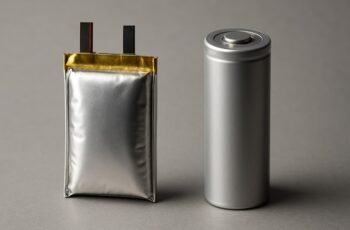
Lithium iron phosphate promises stability, yet lithium-ion delivers density; we weigh these trade-offs as engineers and users. We’ll compare chemistry, safety margins, and lifecycle costs to understand real-world impacts. Our goal is to quantify how thermal management, charge protocols, and usage patterns shape performance and replacements. The answer isn’t simple, but a careful assessment will guide our choice when efficiency, safety, and total ownership are on the line.
Key Takeaways
- LiFePO4 offers lower energy density but superior thermal stability and longer cycle life than common Li-ion chemistries.
- Li-ion provides higher energy density and faster charging potential, enabling smaller packs for the same runtime.
- Safety and aging: LiFePO4 is less prone to thermal runaway, while Li-ion requires tighter thermal management and protection.
- Degradation: LiFePO4 typically shows slower capacity fade under moderate cycling; Li-ion can be more variable with calendar aging.
- Use-case fit: LiFePO4 suits long-life, safety-focused applications; Li-ion suits compact, high-energy-demand devices.
LiFePO4 vs Lithium-Ion: Basic Differences That Matter
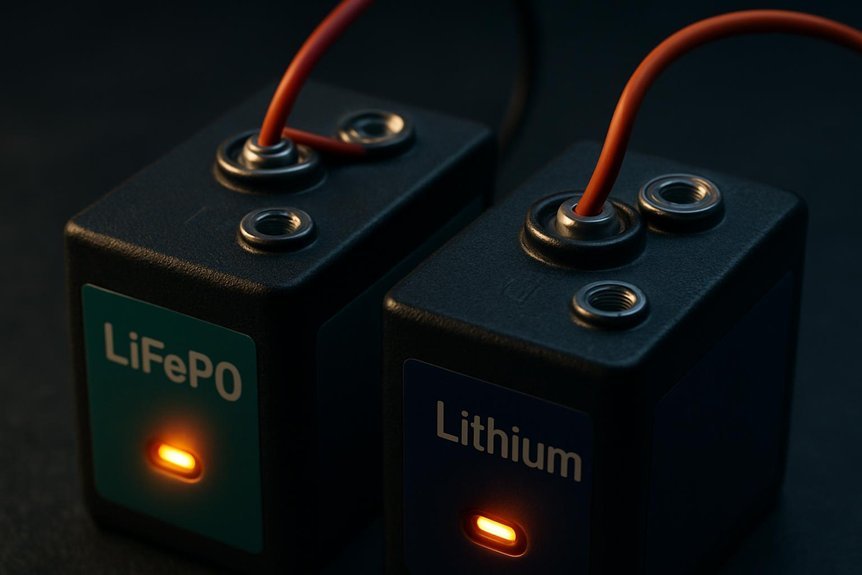
LiFePO4 and Lithium-Ion differ in chemistry, performance, and safety, shaping how each battery type suits specific applications. We compare cathode chemistry, energy density, and cycle life to reveal fundamental distinctions that guide engineering choices. LiFePO4 offers robust thermal stability, lower energy density, and long cycle life under benign operating conditions. Lithium-Ion broadly emphasizes higher energy density and faster charging potential but introduces tighter thermal management needs. We assess practical implications for system sizing, safety margins, and fail-safes. Attention to lithium plating risk informs charging strategies, especially at low temperatures and high current draws. We also examine electrolyte volatility, recognizing that solvent blends and salt formulations influence aging behavior and reliability. Taken together, these factors determine suitability for specific, mission-critical applications.
How LiFePO4 and Li-Ion Chemistry Affects Real-World Performance
What does chemistry really mean for how LiFePO4 and Li-Ion perform in the field? We examine how electrode materials, phase behavior, and ionic transport shape real-world results. LiFePO4 delivers stable mid-range voltages with high cycle counts, yet lower energy density can constrain range-critical applications. Li-Ion chemistries optimize energy density and power, but performance hinges on electrolyte formulation and SEI integrity. Temperature, state of charge, and current draw reveal differing degradation pathways; LiFePO4 tends toward slower capacity fade under moderate cycling, while Li-Ion chemistries exhibit more pronounced variability. We assess two key factors: lifespan variability across cells and batches, and electrolyte safety under fault or abuse conditions. Ultimately, field performance reflects material chemistry, thermal management, and system-level design choices.
Cost and Total Ownership: Upfront vs. Long-Term
When evaluating upfront and long-term costs, we must balance initial purchase price, energy density, and lifecycle expenses to gauge total ownership. We compare LiFePO4 and Li-Ion through a cost lens: upfront investment, maintenance schedule, and replacement cadence. Over time, LiFePO4 often offers lower maintenance costs and longer service life, shifting the cost balance in its favor for durable applications. Li-Ion may incur higher replacement frequency and more protection requirements, elevating long-term expenses. The table below highlights three factors across four scenarios to sharpen our cost comparison.
| Scenario | Upfront Cost | Long-Term Cost | Maintenance Schedule |
|---|---|---|---|
| Typical residential | Li-Ion higher | LiFePO4 lower | More frequent checks |
Energy Density, Weight, and What It Means for Your Devices
We examine how energy density translates to real-world device performance, comparing how LiFePO4 and lithium-ion pack energy per mass and per volume. Weight implications drive usage patterns, influencing run times, form factors, and cooling needs. Our look focuses on actionable distinctions for device designers and users, highlighting how density and weight shape practical outcomes.
Energy Density Impacts Devices
Energy density directly influences how much power a device can store per unit weight or volume, shaping overall performance and form factor. We examine how Lifepo4 and lithium-ion chemistries differ in practical terms, focusing on energy density and cycle life. Higher energy density enables smaller or longer-lasting power reserves, but gains may trade off with thermal management and safety margins. Lifepo4 typically delivers lower gravimetric energy density than many lithium-ion formulations, influencing device weight and compactness. Conversely, certain Li-ion variants offer denser energy storage yet can exhibit more pronounced capacity fade under high-cycle life demands. We assess how these differences translate into real-world endurance, charge behavior, and reliability. Understanding energy density alongside cycle life helps us tailor technology choices to device requirements, lifecycle expectations, and user needs.
Weight Implications For Usage
How does weight influence performance and form factor when choosing Lifepo4 versus lithium-ion batteries? We quantify weight as a proxy for energy density and system mass, which directly affects enclosure size, thermal management, and payload. Lifepo4 delivers lower gravimetric energy density yet offers advantages in cycle life and robustness, reducing overall system mass through fewer replacements over time. Lithium-ion typically achieves higher energy per kilogram, enabling smaller housings for the same runtime but at the cost of heavier cooling and protective hardware. For portable devices, heavier packs can strain handholds and mountings, while lighter packs enable slimmer form factors. Short term storage considerations and high temperature performance constraints inform battery selection, where temperature affects capacity and aging more noticeably in Li-ion. We balance energy density against durability for optimal usage.
Battery Safety: Thermal Stability, Fire Risk, and Mitigation
What governs battery safety in practice is how materials, design, and operation interact to influence thermal stability, fire risk, and mitigation strategies. We assess LiFePO4 and Li-ion chemistries by heat generation, heat transfer, and containment. Thermal runaway remains the central risk, triggered by internal shorts, overcharge, or mechanical abuse that overwhelm cooling. We compare cell architectures, electrolyte volatility, and separator integrity to gauge susceptibility and propagation pathways. Mitigation combines robust thermal management, stringent charging controls, and active/passive safety features such as venting, current interrupt devices, and fire-resistant housings. We emphasize monitoring for temperature gradients, impedance shifts, and cell-to-pack imbalances to preempt failures. Effective mitigation relies on predictable behavior under fault conditions and rigorous design margins across operating envelopes.
Lifespan and End-of-Life: How Long Batteries Really Last
Determining lifespans for LiFePO4 and Li-ion batteries requires a rigorous accounting of capacity fade, power capability, and degradation mechanisms under real-world use. We quantify cycle life, calendar aging, and end of life thresholds to compare longevity between chemistries, accounting for temperature, depth of discharge, and load profiles. Our analysis reveals distinct aging pathways: LiFePO4 tends toward stable capacity with slower calendar aging, while Li-ion cells exhibit higher initial capacity loss but retain usable energy longer under optimized conditions. We assess end of life as a function of remaining capacity, peak power, and safety margins, translating results into practical expectations for lifespan longevity.
- Real-world cycling patterns shape, compress, or extend usable life.
- Temperature and state of charge drive aging rates in parallel.
- Calendar aging causes capacity drift even at rest.
- Depth of discharge influences total cycle count differently.
- End of life criteria determine replacement timing and cost.
Charging Habits: What You Need to Know About Fast and Regular Charging
Fast and regular charging habits shape how LiFePO4 and Li-ion cells behave in real use, even after lifespans and aging patterns are accounted for. We analyze how C-rate, temperature, and voltage ceilings interact with chemistry to influence internal resistance, capacity retention, and heat generation. Fast charging increases peak current, elevating instantaneous stress on electrodes and electrolyte, which can accelerate degradation if abuse thresholds are breached. Regular charging promotes gradual formation of stable SEI layers and minimizes thermal excursions, extending practical cycle life. We must consider charger compatibility, profile consistency, and thermal management to prevent drift in state-of-charge accuracy. In practice, optimized fast charging requires precise current limits, temperature monitoring, and end-of-charge termination. Regular charging remains the baseline for predictable, controlled aging trajectories.
Which Battery Should You Use? Choosing LiFePO4 or Lithium-Ion for Your Use Case
When deciding between LiFePO4 and traditional lithium-ion chemistries, we must map your application’s load profile, safety requirements, and lifecycle expectations to the cells’ intrinsic properties. We weigh energy density, cycle life, and thermal tolerance against planned use, replacement intervals, and risk tolerance. LiFePO4 offers superior thermal stability and longer cycle life in steady loads, while conventional lithium-ion delivers higher energy density for compact systems. Your decision hinges on planning criteria and warranty coverage considerations, plus maintenance cadence and charging flexibility. Matching chemistry to use case minimizes total cost of ownership and downtime.
- Stable, long-lived cycles under constant loading
- Compact packs with higher energy density demands
- Rapid response needs with broader temperature tolerance
- Predictable warranty coverage tied to usage patterns
- Lifecycle-driven replacement planning and service windows
Frequently Asked Questions
How Do Lifepo4 and Li-Ion Respond to Deep Cycling Differently?
We respond that Li-ion broadly tolerates deep cycling less gracefully than LiFePO4, which preserves capacity and safety margins longer; Li-ion exhibits higher energy density but risks thermal runaway with deeper cycles, demanding stringent safety considerations and management.
Can Lifepo4 Handle Extreme Cold Better Than Li-Ion?
We can say yes: LiFePO4 handles extreme cold better than Li-ion under deep cycling, though performance still drops due to reduced ionic mobility; we mitigate with thermal management, avoidance of deep cycling, and proper charging protocols.
Which Chemistry Scales Better for High-Drain Devices?
“Like a high-speed train,” we answer: Higher-rate chemistries scale better for high-drain devices. We analyze high rate capability and Thermal management, noting Li-ion generally outperforms LiFePO4 under aggressive discharge, though beyond-temperature constraints matter.
Do Manufacturing Sustainability Factors Differ Significantly?
We believe manufacturing sustainability factors do differ substantially, with Li-ion often facing stricter supply chain resilience concerns. Manufacturing sustainability varies, demanding rigorous sourcing, emissions accounting, and waste management to maintain resilient supply chains and optimize lifecycle impacts.
What Maintenance Practices Extend Each Battery’s Lifespan?
We’ll extend lifespan with careful maintenance cadence and strict storage guidelines, ironically noting how simple steps beat flashy tech; we analyze, optimize, and adjust practices to maximize reliability and cycle life across both LiFePO4 and lithium-ion batteries.
Conclusion
We’ve weighed the tradeoffs, and the choice hinges on your priorities. LiFePO4 buys safety, longevity, and cost predictability, while Li-Ion offers energy density and faster charging for space- and weight-constrained needs. In practice, match chemistry to use case, manage thermal factors, and plan for lifecycle costs. Think of it as two gears in a machine: LiFePO4 is the long-haul gear, Li-Ion the sprint gear, each turning toward your exact requirements.