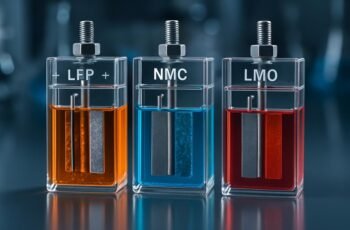
We’ll evaluate lithium battery chemistry with a technical lens, weighing high energy density, light weight, and strong power delivery against safety concerns and cost pressures. We’ll examine how fast charge/discharge, cycle life, and thermal management affect reliability, while noting raw-material volatility and end-of-life challenges. Our assessment highlights tradeoffs for buyers and makers alike, and it leaves a practical question open: how do we balance performance with safety and sustainability as we push for broader adoption?
Key Takeaways
- Lithium chemistry delivers high energy density and lightweight construction for longer runtimes with minimal weight penalty.
- It offers strong power density and stable C-rate performance suitable for peak-load applications.
- Safety sensitivities and thermal runaway risks require robust management, driving cost and system complexity.
- Material scarcity, recycling challenges, and charging speed limits impact total ownership and lifecycle economics.
- Environmental, regulatory, and supply-chain factors shape deployment choices and long-term sustainability.
What Makes Lithium Battery Chemistry Stand Out
Lithium battery chemistry stands out because it delivers high energy density, lightweight construction, and efficient charge-discharge behavior, enabling long-lasting power in compact form factors. We examine the defining attributes that contribute to this edge, focusing on materials, architecture, and performance metrics. Our analysis centers on ion transport, electrode stability, and thermal management, while avoiding speculative tangents. We quantify capacity, cycle life, and rate capability to establish objective benchmarks. We acknowledge how manufacturing tolerances, safety safeguards, and quality control impact real-world results. In this context, we address potential distractions, labeling them as irrelevant topic or off topic discussion when they do not advance measurable performance. By maintaining clear boundaries, we present a concise picture of how chemistry design choices translate to durable, high-performance energy delivery for compact devices.
Pros of Lithium Battery Chemistry: Power, Runtime, and Weight
What makes lithium battery chemistry compelling for power, runtime, and weight is its combination of high energy density, favorable specific capacity, and low mass per stored energy. We examine how this translates to real performance: power density supports peak loads without excessive voltage sag, while energy density enables longer runtimes per cycle. The balance minimizes weight while preserving usable capacity, enhancing system efficiency. We quantify benefits through scalable energy storage, consistent C-rate response, and predictable thermal behavior, allowing accurate design margins. Our assessment emphasizes how weight reduction complements higher energy content to extend runtime without sacrificing reliability. In practice, this chemistry offers superior general utility for portable and stationary applications, delivering meaningful gains in power density, energy density, weight, and runtime across varied operating envelopes.
Cons of Lithium Battery Chemistry: Safety, Cost, and Resource Limits
Even though lithium battery chemistry offers strong performance, its drawbacks center on safety, cost, and resource limits that constrain widespread deployment. We examine how these factors shape practicality, not just theory, with a focus on longevity vs cost and charging speed limits as key tensions.
Lithium battery limits: safety, cost, and resources shaping real-world deployment and charging tradeoffs.
1) Safety sensitivities, thermal runaway risks, and incident mitigation drive engineering costs and system complexity.
2) Cost pressures stem from material scarcity, manufacturing quality controls, and end-of-life recycling, influencing total ownership.
3) Resource limits constrain raw material availability, geopolitical exposure, and supply chain resilience across markets.
4) Charging speed limits balance durability, efficiency, and safety, often requiring safeguards that temper performance gains.
Together, these elements frame the tradeoffs between performance and long-term affordability in real‑world deployments.
Safety, Cost, and Environmental Impacts: How They Shape Your Options
How do safety, cost, and environmental factors jointly constrain choice and performance in real-world lithium battery deployments? We quantify tradeoffs across chemistry, form factor, and application, recognizing safety margins, fault tolerance, and thermal management. Cost drivers include raw materials, manufacturing, lifecycle, and end-of-life handling, while environmental impacts hinge on supply chains, emissions, and waste streams. We assess risk-adjusted performance metrics, balancing energy density, cycle life, and reliability against total cost of ownership and regulatory exposure. Safe disposal and recycling infrastructure directly affect post-use value and environmental liability, guiding system sizing and procurement. Mining ethics influence supply resilience and stakeholder acceptance, shaping vendor selection and long-term contracts. Together, these factors refine options toward safer, cost-effective, and responsibly sourced configurations.
What Lithium Battery Chemistry Means for Buyers, Makers, and the Planet
Lithium battery chemistry dictates a portfolio of performance, risk, and value that buyers, makers, and the planet must negotiate together. We’ll frame the implications clearly, with focus on supply chains, processing, and lifecycle outcomes that affect decisions now.
1) We assess performance versus safety tradeoffs for end-use markets, guiding design choices and supplier selection.
2) We examine material availability, pricing volatility, and risk management to minimize interruptions in supply.
3) We evaluate recycling economics, end-of-life handling, and circularity to maximize value and reduce waste.
4) We align regulatory, environmental, and social considerations to balance cost, performance, and resilience for all stakeholders.
Frequently Asked Questions
How Long Do Lithium Batteries Last in Harsh Climates?
We answer: in harsh climates, lithium battery lifespan under stress shortens significantly, typically by 20–50% depending on temp, cycling, and SOC. We assess how climate impacts our degradation models, stressing thermal management to preserve cycles and lifespan.
Can I Safely Recycle Used Lithium Battery Packs?
We can’t simply recycle used lithium battery packs at home; you should use certified facilities to ensure recycling safety and proper lithium battery disposal, reducing risks from thermal events and hazardous materials. We’ll guide you to compliant, safe options.
Do Lithium Batteries Degrade With Fast Charging?
Yes, fast charging accelerates degradation. We measure it via capacity fading and impedance rise, with temperature impact amplifying both effects; higher temps speed electrolyte reactions and side reactions, while aggressive C-rates markedly shorten cycle life.
Which Lithium Chemistry Is Best for EVS?
We think EV chemistry trade-offs point to NMC and NCA as balanced choices, with Tesla-friendly LFP for budget fleets; fast charging impacts favor robust thermal management. We, readers, weigh performance, safety, longevity, and recycling when deciding.
Are There Health Risks From Lithium Battery Production?
Yes, there are health risks from lithium battery production. We analyze production hazards, environmental impact, and worker safety, noting emissions, chemical exposure, and injury potential. We urge mitigation strategies to reduce worker risk and minimize environmental consequences.
Conclusion
We balance the scales of lithium chemistry with measured judgment. Its high energy density, light weight, and solid runtime paint a compelling portrait, yet safety, cost, and resource limits cast long shadows. As buyers and makers, we must weigh performance against resilience, lifecycle, and recycling demands. By forecasting thermal behavior, cost curves, and supply risks, we chart a disciplined path—advancing innovation while curbing risks—ensuring technology serves both progress and the planet.