We confront power tool lithium battery safety directly, focusing on identifying compatible chemistries, voltages, and capacities and verifying labels, part numbers, and packaging before use. We store packs cool, dry, and upright in labeled compartments with restricted access, and maintain inventory logs. We monitor temperatures during charging and use the correct charger to prevent spikes. If swelling or damage appears, we isolate packs and document the event—this sets the stage for what comes next.
Key Takeaways
- Identify and verify compatibility between power tool batteries and chargers by checking model numbers, chemistry, voltage, and capacity.
- Store Li-ion packs in a cool, dry, ventilated area with dedicated shelving and labeled compartments; inspect for swelling, leaks, or corrosion regularly.
- Use the correct charger to limit current/voltage, monitor pack temperature during charging, and avoid high SOC spikes.
- Keep batteries upright, away from heat and direct sunlight; separate from combustibles and ensure adequate ventilation to prevent thermal events.
- In case of damage or overheating, immediately isolate the pack, transfer to a fire-resistant container, and involve qualified personnel for evaluation before reuse.
Identify Your Battery and Charger: Compatibility and Safety Basics
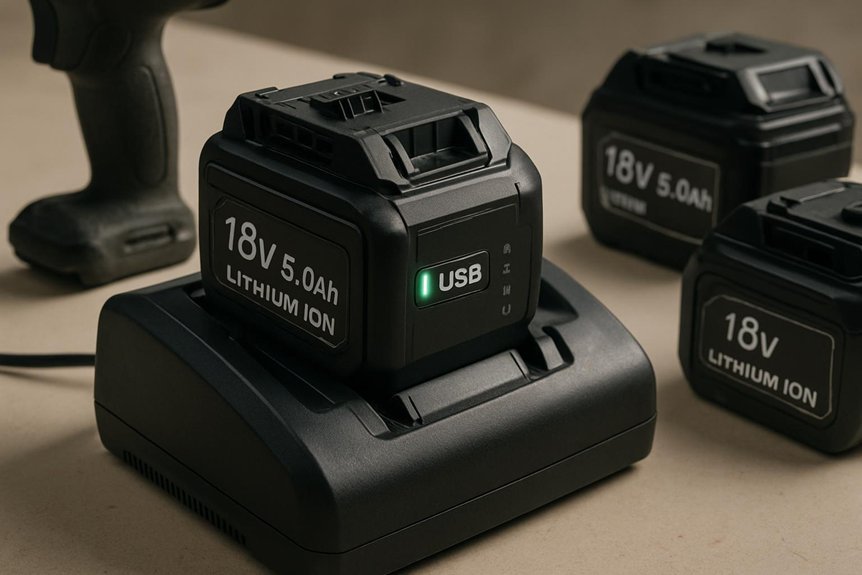
To identify your battery and charger, start by confirming model compatibility with your tool’s specifications and the charger’s labeled chemistry, voltage, and capacity. We focus on precise checks: Identify labels on both pack and charger, verify compatibility through part numbers, and match chemistries, voltages, and capacities. Packaging safety matters; inspect seals, vents, and integrity for any compromise. We document brand identity by using the original manufacturer indicators and avoid third‑party substitutions that obscure data. Alignment ensures safe charging, minimizes overheat risk, and preserves performance. We avoid mismatches that could trigger fault conditions. When in doubt, rely on the tool’s manual and the charger’s instruction sheet. Consistent labeling and documented compatibility simplify future maintenance and support.
Safe Handling, Storage, and Workspace Habits
We’ll cover safe storage, handling, and workspace habits to minimize risk with lithium battery packs. We’ll outline practical, disruption-free practices for securing tools, preventing short circuits, and keeping workspaces clean and organized. Let’s establish clear, concise guidelines that readers can apply immediately to improve overall safety.
Safe Storage Practices
Safe storage prevents damage and reduces fire risk by keeping lithium battery packs in a cool, dry place with stable temperature and adequate ventilation. We follow strict controls for handling, storage, and workspace setup, ensuring consistent conditions across our operations. For battery storage, we limit exposure to heat sources and direct sunlight, and we avoid stacking packs that may deform cells. We implement dedicated shelving with labeled compartments to prevent cross-contact and mix-ups. Safe placement requires upright orientation where possible and clear separation from combustibles. We maintain inventory logs with batch numbers, expiration dates, and charge states, discarding damaged cells per regulatory guidance. Regular inspections identify swelling, leaks, or corrosion early, enabling immediate containment and preventive action.
Workspace Safety Habits
Are you ensuring every move in the workspace follows rigorous safety habits for safe handling, storage, and daily operations? We adopt strict workplace routines that minimize risk and maximize reliability. We perform immediate, visible checks on battery condition before use, and we document results to support a clear quality check process. Handling is deliberate: two-handed grips, unplugged tools during transport, and separation from heat sources. Storage emphasizes containment, ventilation, and temperature control to prevent degradation and thermal events. We conduct ongoing risk assessment for each task, adjusting procedures when conditions change. We maintain clear labeling, restricted access, and orderly layouts to reduce clutter. Training, briefings, and post-task reviews ensure continuous improvement and consistent safety performance.
Charging Practices to Minimize Wear and Extend Life
We’ll cover smart charging habits and practical longevity practices to minimize wear on our lithium batteries. By prioritizing proper charge timing, current limits, and temperature awareness, we help extend pack life without compromising performance. Let’s outline targeted steps readers can adopt to keep tools reliable and batteries durable.
Smart Charging Habits
Smart charging habits minimize wear and extend life by controlling current, voltage, and temperature during each cycle. We approach charging deliberately: monitor pack temperature, avoid overcurrent, and respect voltage windows. Protection circuits guard cells from overcharge and thermal excursions while laser safety considerations guide reflective exposure analysis in our tool environment. We favor staged charging, balancing, and cooldown pauses to preserve capacity and safety. Consistent, manufacturer-recommended chargers reduce impedance stress and voltage overshoot, extending cycle life.
| Step | Action | Rationale |
|---|---|---|
| 1 | Monitor temperature | Prevents thermal runaway |
| 2 | Use correct charger | Limits current and voltage |
| 3 | Avoid high SOC spikes | Protects cells |
| 4 | Rest between cycles | Reduces heat buildup |
| 5 | Inspect protection circuits | Ensures reliability |
Battery Longevity Practices
Prolonging battery life hinges on disciplined charging practices that manage current, voltage, and temperature across each cycle. We, as technicians, emphasize controlled CC/CV charging profiles, avoiding high C-rates that accelerate wear. We recommend charging to a precise target voltage specified by the battery chemistry, and keeping the ambient temperature within the manufacturer’s band to limit impedance growth. We also advocate partial state-of-charge strategies when storage is long, minimizing full-discharge events that trigger deep-cycle degradation. Regular calibration checks for battery management systems ensure accurate protection thresholds. Recordkeeping of charge cycles helps track wear trends and forecast replacement timing. Follow battery chemistry-specific guidelines, adhere to dedicated charging equipment, and observe recycling guidelines to minimize environmental impact at end of life.
Temperature Awareness: What Conditions Help or Hinder Performance
Temperature largely governs lithium battery performance in power tools: too hot or too cold, and capacity, voltage stability, and cycle life suffer. We, as users, monitor ambient and cell temperatures to keep within safe ranges. Temperature regimes influence internal resistance, chemical activity, and self-discharge, altering available energy under load. Cold conditions reduce voltage and deliverable power, while heat accelerates degradation and shortens cycle life through accelerated SEI growth and electrolyte breakdown. We minimize heat impact by avoiding prolonged high-current use in hot environments, distributing workloads, and using tools in shaded or ventilated spaces. We store cells at moderate temperatures before use and follow charging guidelines aligned with manufacturer specs. Proper thermal management preserves consistency, reliability, and safety, enabling predictable performance across tool tasks.
Recognizing Battery Damage and When to Replace
We’ve seen how temperature affects battery health, and now we focus on recognizing damage and knowing when to replace. We assess damage by identifying physical deformation, punctures, swelling, corrosion, or leakage. Inspect terminals for heat blistering, discoloration, or loose connections. Unusual odor, audible hissing, or rapid discharge indicates internal failure. Performance changes—rapid voltage drop, diminished run time, or inconsistent power—signal degradation beyond acceptable limits. If the pack exhibits inconsistent charging, swollen cells, or visible swelling on the case, treat it as a safety risk and isolate it. Follow manufacturer guidelines for safe handling, storage, and disposal. When to replace is clear: irreversible swelling, multiple fault cycles, or any evidence of leakage warrants replacement. Prioritize replacing defective packs promptly to maintain tool safety and performance.
Safe Transport, Stacking, and Shipping Considerations
How can we ensure lithium battery packs are moved and stored safely? We approach safe transport by adhering to manufacturer specifications, packing with temperature control, and using rated containment to prevent short circuits. We assess stacking considerations to minimize pressure damage: align cells, avoid overloading, and limit vertical stacking height per container. For shipping safety, we segregate packs from incompatible materials, prevent edge-to-edge contact, and apply cushioning to reduce vibration during transit. We verify packaging integrity, labeling, and documentation to satisfy regulatory compliance. Handling procedures require trained personnel, documented transfer logs, and pre-trip inspections for leakage or swelling. By standardizing processes across carriers, warehouses, and routes, we lessen risk during movement and storage while maintaining traceability and compliance.
What to Do Immediately If a Battery Heats or Fails
If a battery begins to heat or shows signs of failure, stop handling it immediately and separate it from other packs. We then initiate our failure response by isolating the pack in a nonflammable area, away from combustibles, and powering down any connected tool if safe. Do not attempt to charge, discharge, or transport the pack during this event. Inspect for physical damage, odor, or venting, and document observations for later analysis. Place the battery in a suitable fire-resistant containment, such as a metal or ceramic container, and alert relevant personnel. Monitor temperatures and ensure there is ventilation. After cooling, evaluate the pack with qualified personnel before any reuse or disposal. Verify that safety procedures are updated to prevent recurrence of immediate overheating.
Frequently Asked Questions
Can Mixed-Brand Chargers Damage a Lithium Tool Battery?
Mixed-brand chargers can cause incompatible charging and potentially damage a lithium tool battery. We advise using the original charger or a certified equivalent designed for that battery chemistry and voltage to minimize risks and preserve longevity.
Do Batteries Degrade Faster in High Humidity Environments?
Batteries aging faster in high humidity environments is possible; humidity impact can accelerate corrosion and impedance rise. We’ve observed performance declines in moist conditions, so we recommend keeping packs dry, monitoring voltage, and storing at stable temperatures.
Are There Signs of Subtle Capacity Loss Before Swelling Occurs?
Yes. Signs of capacity decline can appear subtly before swelling, including voltage sag, higher internal resistance, and reduced run time. Subtle degradation may precede visible signs; monitoring charge curves and cycle counts helps detect impending capacity loss early.
Can You Recycle or Repurpose Old Tool Batteries Safely?
Yes, we can recycle or repurpose old tool batteries safely. We provide recycling options and repurposing strategies, preferring certified facilities and proper disassembly. We’ll guide you through safe handling, compliance, and leveraging second-life applications for cost-effective results.
Do Protective Cases Affect Cooling During Charging?
Yes, protective casing can impede cooling and reduce charging efficiency. We’ll explain how protective casing and its materials influence cooling efficiency, urging mindful case selection to maintain safe, rapid charging while avoiding overheating.
Conclusion
We’ve seen how a calm routine preserves power and safety. Picture a workshop: cool air, clear labels, batteries stacked upright like orderly soldiers. When a pack heats, we act fast—contain, isolate, and document—so the fire doesn’t spread its grip. We charge with the right charger, watch temperatures, and replace damaged cells before they bite back. By keeping meticulous logs and honest inspections, we keep our tools humming and our hands unscathed. Safety isn’t luck; it’s practiced habit.