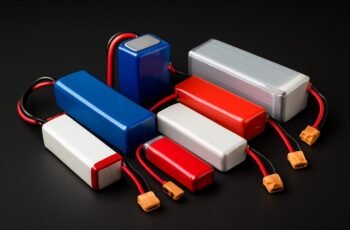
You want reliable power for your projects, and LiFePO4 batteries can deliver steady performance with protection, long life, and clear capacity ratings. From compact 12V packs to rugged 400Ah systems, there are choices that fit RVs, boats, off-grid setups, and golf carts. But which specs matter most—voltage, cycle life, weight, or enclosure—and how do you compare BMS features and temperature ranges across models? Consider these 10 options as you decide, and stay tuned for practical comparisons.
Key Takeaways
- LiFePO4 options with long cycle life (2,000–15,000+) and strong thermal stability for reliable, long-term powering of projects.
- High energy density and flat discharge curves maximize usable capacity and minimize voltage sag during use.
- Wide operating temperature ranges and built-in BMS protect against overcharge, overdischarge, and short circuits.
- 12V and 24V configurations available, plus modular 100–400Ah packs for scalable power and storage.
- Rugged, waterproof enclosures and accessories enhance field usability for RVs, boats, solar, and outdoor setups.
Battery Voltmeter & Capacity Power Meter for LiFePO4 Battery Monitor
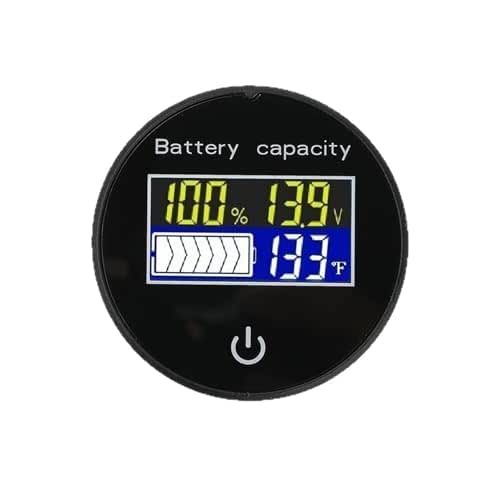

If you’re building or testing LiFePO4 projects, this Battery Voltmeter & Capacity Power Meter is a standout pick because it delivers real-time 10–100V monitoring, plus capacity, power, and temperature readings in one compact unit. You get a 10–100V LCD display for precise, stable measurements across 12V, 24V, 36V, 48V, and 96V systems. It supports LiFePO4 chemistry, tracks battery capacity and power, and reports temperature, all in a lightweight, durable package. Easy to use with minimal setup, this monitor fits labs and field use, and its compact 5.2 cm square form saves space.
Best For: engineers, technicians, enthusiasts, and educators working on LiFePO4 projects who need real-time, multi-range voltage and capacity monitoring in a compact, durable unit.
Pros:
- Real-time 10–100V monitoring with capacity, power, and temperature readings in one device
- Supports LiFePO4 chemistry and multiple system voltages (12V, 24V, 36V, 48V, 96V)
- Lightweight, compact 5.2 cm square form factor with easy setup for lab or field use
Cons:
- Manual measurement tolerance noted (±1–2 cm in the notes)
- Slight display/image differences may occur between item and photos
- Includes only 1 unit per package, with batteries not required (limits some testing scenarios that need multiple meters)
Waterproof Battery Box with Anderson Plug, 12V, 30A

This Waterproof Battery Box with Anderson Plug delivers plug-and-play versatility for shore-to-camper setups, RVs, and outdoor rigs. You’ll place 30Ah/20Ah/10Ah batteries (also 18Ah, 16Ah) inside, compatible with Lifepo4, RV, camping, boat, trailers, and hunting uses. It works with Anderson plugs and supports solar charging, making outdoor power more flexible. Expect dual QC3.0 for fast charging plus PD support, and 30A overload protection to extend battery life. The 12V marine case, 18.5 x 36.5 x 26 cm, is compact yet rugged, waterproof and dustproof. Includes 30A Anderson plug, terminals, battery box, and dual chargers for diverse charging needs. Warranty: 30 days.
Best For: Outdoor enthusiasts and mobile setups (RVs, campers, boats, trailers, hunting trips) needing a rugged, weatherproof 12V power box with fast charging options and flexible battery compatibility.
Pros:
- Versatile battery compatibility (30Ah/20Ah/18Ah/16Ah/10Ah) including LiFePO4, great for various setups.
- Waterproof and dustproof rated casing with rugged 12V marine enclosure; suitable for harsh outdoor environments.
- Dual QC3.0 and PD charging support plus 30A overload protection for battery longevity and flexible charging options.
Cons:
- 30-day warranty period may be short for long-term use.
- Size and weight could be bulkier for ultra-compact setups.
- Requires compatible batteries and potentially separate solar/ charging accessories for full solar integration.
LFP 12V 400Ah 4800Wh Battery System
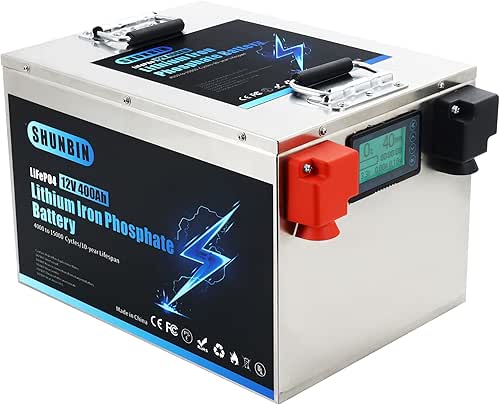
The LFP 12V 400Ah 4800Wh Battery System stands out for long-cycle longevity, delivering up to 15,000 deep cycles and a potential 10-year lifespan. You’ll power solar setups, motorhomes, boats, or golf carts with confidence, thanks to its Lifepo4 chemistry and integrated BMS protection. With 12V, 400Ah capacity, it handles high-temperature resistance, waterproofing, and anti-drop design for rugged use. You gain broad operating ranges: charging -10 to 60°C, discharging -20 to 60°C, and storage -20 to 60°C. It’s compact yet durable, weighing 36 kg, ready for safe, reliable, rechargeable performance across diverse applications. Includes a fast charger for quick readiness.
Best For: Individuals or enterprises needing a rugged, long-life 12V LiFePO4 battery system for off-grid power in solar setups, motorhomes, boats, or golf carts.
Pros:
- Extremely long cycle life up to 15,000 cycles with potential 10-year service life
- Wide operating temperature ranges for charging, discharging, and storage
- Integrated BMS provides protection and safety in rugged environments
Cons:
- Heavy at 36 kg, which may impact installation and handling
- Higher upfront cost typical of LiFePO4 systems
- Requires compatible charging equipment and system integration for optimal use
24V LiFePO4 Battery 30Ah for Electric Golf Cart
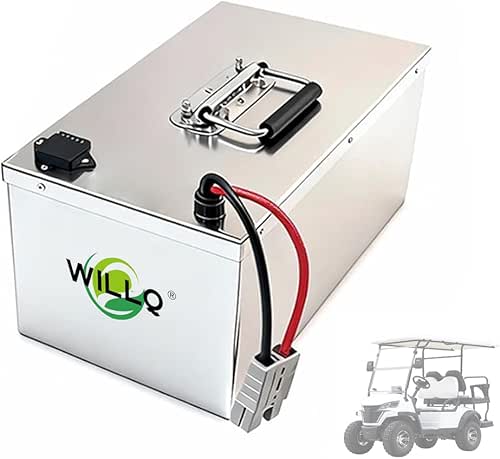
For golf cart owners seeking reliable, long-lasting power, the WILLQ 24V 30Ah LiFePO4 battery delivers with a compact, lightweight design. This 24V, 30Ah pack holds about 750Wh and supports motors from 50W to 720W, making it versatile for golf carts, RVs, boats, or solar setups. It uses LiFePO4 cells, weighs around 9 kg, and measures 254 × 225 × 152 mm. A built-in smart BMS guards against overcharge, over-discharge, and temperature swings while balancing cells. Charge at 29.2V, 2–3A; operating temps span -4°F to 140°F. Deep cycle exceeds 2000+ cycles with 95% efficiency, maintenance-free. Includes 29.2V charger and 30-day Amazon return.
Best For: golf cart owners and outdoor enthusiasts needing a compact, high-cycle 24V LiFePO4 battery for golf carts, RVs, boats, or solar setups.
Pros:
- Lightweight, compact design (≈9 kg, 254 × 225 × 152 mm) for easy modular setups.
- Long cycle life (2000+ cycles) with high efficiency (≈95% during charging) and low maintenance.
- Built-in smart BMS protects against overcharge/discharge, temperature extremes, and short circuits.
Cons:
- Charging current is limited to 2–3A, which may slow replenishment for larger setups.
- Requires a 29.2V charger specific to this pack; 3-pin charge port may limit compatibility with some chargers.
- Operating temperature range (-20°C to 60°C) may constrain performance in extreme environments without proper enclosure.
12V LiFePO4 100Ah Battery with BMS, 1280Wh
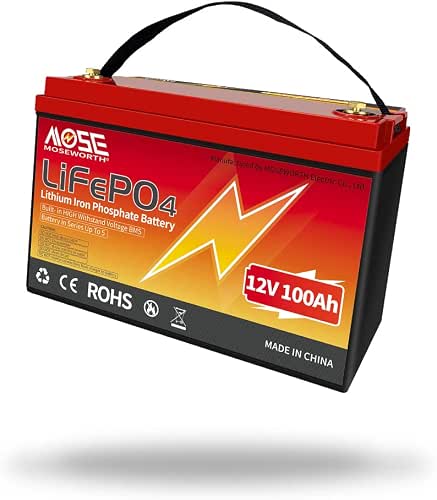
If you need a compact 12V LiFePO4 option with solid protection, the V LiFePO4 100Ah Battery with BMS delivers 1280Wh in a lightweight package. You’ll get 12V at 100Ah, with a Series/Parallel BMS for flexible configs, and over 10,000 recharge cycles for long-lasting use. It suits trolling motors, solar, van life, and off-grid power, reducing weight and boosting efficiency. Expect safer operation than sealed lead acid, thanks to comprehensive protections (over/under charge, overcurrent, short circuit, temp cutoffs). Winter performance remains strong, and support includes a 2-year warranty plus professional engineering assistance from MOSEWORTH. Brand: DM12200-V3.
Best For: Individuals needing a compact, safe 12V LiFePO4 battery with high cycle life for trolling motors, solar setups, van life, and off-grid power.
Pros:
- Lightweight and compact with high energy density
- Robust protection suite (over/under charge, overcurrent, short circuit, temperature cutoffs)
- 10,000+ recharge cycles and 2-year warranty with professional support
Cons:
- Higher upfront cost than lead-acid alternatives
- Requires BMS-managed configurations for series/parallel setups
- Availability may vary by region and retailer
LiFePO4 Battery 24V 12-60Ah for Camping
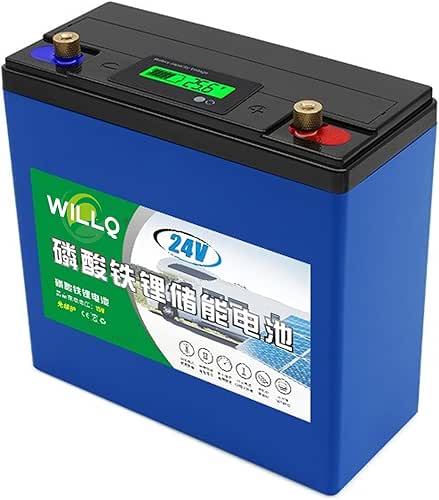
Looking for reliable, portable power for camping? This LiFePO4 Battery 24V 12-60Ah fits the bill. With nominal 25.6V and a 24V discharge, it supports 12–60Ah options to match your load. It’s a deep-cycle, lightweight alternative to AGM, ideal for solar setups, RVs, boats, and outdoor outings. The built-in BMS guards against overcharge, over-discharge, and temperature extremes, while cell balancing extends life beyond 2000 cycles. Available capacities include 12, 18, 25, 30, 48, and 60Ah; weights scale from about 2.7 kg to 15.5 kg. Packaging is simple; batteries aren’t included.
Best For: Outdoor enthusiasts needing lightweight, scalable 24V LiFePO4 power for camping, RVs, boats, or solar backup.
Pros:
- Lightweight, compact compared to AGM options.
- Wide capacity range (12–60Ah) to match varying loads.
- Built-in BMS with safeguards and cell balancing for long cycle life.
Cons:
- Batteries are not included in packaging (requires separate purchase).
- Higher upfront cost than traditional lead-acid options.
- Weight increases with higher capacities (up to ~15.5 kg for 60Ah).
12V LiFePO4 Battery 1400Wh Deep Cycle RV Marine

This 12V LiFePO4 1400Wh battery is ideal for RVs, boats, and marine setups needing reliable deep-cycle power with strong cycle life. You’ll get 112Ah or 84Ah options, suitable for 1400W motors, and a wide operating range from -20°C to 60°C. With up to 95% discharge efficiency and ≤3% idle self-discharge, it stays efficient. Expect up to 2000 full cycles and a 5–7 year life. The aluminum shell and integrated BMS guard against overcharge, over-discharge, overload, and short circuits. Charge fully in 5–7 hours; store at 80% and recharge every 3 months. Compatible with RV, solar, boat, and trolling motors.
Best For: RVs, boats, and marine setups needing reliable deep-cycle power and long cycle life with a compact, lightweight 12V LiFePO4 option.
Pros:
- High cycle life up to 2000 full charge/discharge cycles and 5–7 year life.
- Wide operating range (-20°C to 60°C) with high discharge efficiency (up to 95%).
- Integrated BMS protection (overcharge, over-discharge, overload, short circuit) and robust aluminum shell.
Cons:
- Maximum constant discharge current limited to 30A, which may constrain high-current use.
- Specific weight not provided; only dimensions given, which could affect installation planning.
- Charging time and storage guidance may require attention to maintain 80% storage and quarterly charging.
12V LiFePO4 Battery with Built-in BMS (100-200Ah)

This 12V LiFePO4 battery with a built-in 200A BMS is ideal if you need reliable, heavy-duty power for RVs, boats, and off-grid setups. You’ll choose from 100–200Ah capacities, all using automotive-grade LiFePO4 cells for high energy density and stable performance. The integrated BMS protects against overcharge, overdischarge, overcurrent, and short circuits, so you can charge confidently and discharge freely. Expect up to 90% usable capacity, fast charging, and a flat voltage curve staying above 12V. With >4000 cycles and a compact footprint, it suits RVs, marine, camping, trolling motors, and off-grid projects. Safe, eco-friendly materials complete the package.
Best For: RV owners, boaters, and off-grid enthusiasts who need reliable 12V LiFePO4 power with a built-in BMS for heavy-duty use.
Pros:
- Built-in 200A BMS provides robust protection against overcharge, overdischarge, overcurrent, and short circuits
- High usable capacity (up to ~90%) and flat discharge curve that stays above 12V
- Long cycle life ( >4000 cycles ) and suitability for frequent cycling
Cons:
- Maximum constant discharge current limited to 30A by the BMS
- Larger capacities (especially 180–200Ah) have bigger physical footprints
- Requires professional installation and adherence to lithium battery handling guidelines
Lithium YTX30L-BS 12V 14Ah Battery for Vehicles
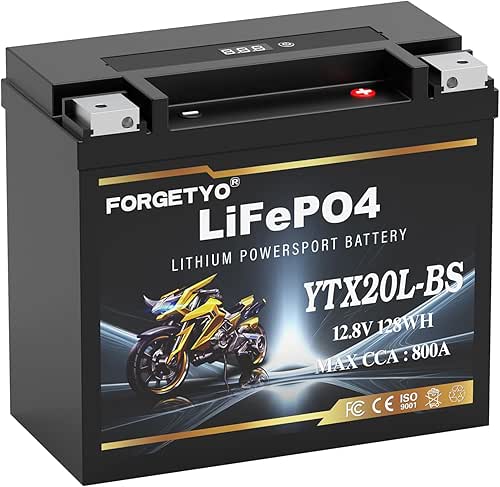
If you need a lightweight, long-lasting replacement for your motorcycle or small vehicle, the Lithium YTX30L-BS 12V 14Ah battery stands out with its LiFePO4 chemistry and strong cycle life. You get 12V nominal, about 12–14Ah, and 154Wh in a compact 6.9 x 3.4 x 6.1-inch case, weighing 3.7 pounds. With a G3 terminal layout (Left Negative, Right Positive) and 850 CCA, it replaces lead-acid at a fraction of weight, delivering faster starts and longer service. It includes BMS protection, supports wide charging temps, and fits many YTX30L family vehicles, snowmobiles, watercraft, and small equipment. No maintenance required.
Best For: riders and small-vehicle owners needing a lightweight, long-life LiFePO4 replacement for motorcycles, ATVs, UTVs, watercraft, snowmobiles, and similar equipment that use a YTX30L-BS or compatible battery format.
Pros:
- Significantly lighter than lead-acid, with comparable or better crank performance (850 CCA) and longer cycle life.
- Maintenance-free with integrated BMS for over-charge/discharge protection and cell balancing.
- Wide charging and operating temperature ranges support flexible charging and use in various environments.
Cons:
- Higher upfront cost relative to traditional lead-acid batteries.
- Requires correct fitment (polarity, dimensions, and terminal layout) to ensure proper installation.
- Availability of exact compatibility (YTX30L-BS and similar models) may vary by retailer or region.
12V 100Ah LiFePO4 Battery Storage Box (Explosion-Proof)

Looking for a rugged, explosion-proof storage solution for your 12V 100Ah LiFePO4 battery? The V 100Ah LiFePO4 Battery Storage Box from HulkGoo is a large-capacity, fireproof, and waterproof storage bag designed to protect your battery during charging. It features a heavy-duty reinforced circular handle and wrap-around grips for easier transport, plus a double zipper for secure sealing. It withstands heat up to 3000°F and uses multilayer fireproof material. While not just a protector, it doubles as a fashion bag with Eagle and Flag design cues and 7×24 online support. Dimensions: 14 x 9.5 x 7.8 inches.
Best For: rugged users needing a large-capacity, fireproof and waterproof storage solution for a 12V 100Ah LiFePO4 battery, with easy transport and secure sealing.
Pros:
- Large capacity fits 12V 100Ah LiFePO4 batteries with extra space for cables and accessories
- Fireproof and waterproof multilayer material protects against heat up to 3000°F and moisture
- Heavy-duty reinforced circular handle and wrap-around grips for easier, safer transport
Cons:
- Dimensions (14 x 9.5 x 7.8 inches) may be snug for some battery configurations or extra protective padding
- Double zipper and construction may add weight; not the lightest option for portability
- Fashion-oriented design (Eagle and Flag) may not appeal to all users seeking a utilitarian look
Factors to Consider When Choosing Lifepo4 Batteries
When you’re selecting LiFePO4 batteries, consider battery chemistry benefits and how they affect safety, longevity, and overall performance. You’ll want to weigh capacity versus weight, plus cycle life expectations, so you’re not surprised by real-world durability. Also check the BMS protection features and the operating temperature range to guarantee reliable use in your environment.
Battery Chemistry Benefits
Battery chemistry benefits: LiFePO4 offers a long cycle life, strong thermal stability, and a flat discharge curve that keeps voltage steady and usable capacity high. You’ll typically see 2,000 to 15,000 cycles, depending on use, far outperforming many other Li-ion chemistries. Thermal safety is strong, with lower risk of thermal runaway, so operation stays safer even under heat. The flat discharge curve means you get most of the rated energy as usable capacity—roughly 90%, not the 50% you might see with some lead-acids. Nominal voltage sits at 3.2V per cell, and packs are commonly configured to 12V, 24V, or higher, with built‑in BMS protection for overcharge, over-discharge, and shorts. Deep-discharge tolerance and weather resilience further support reliable outdoor and mobile applications.
Capacity Versus Weight
Capacity isn’t just about how long your LiFePO4 pack lasts—it’s about how heavy you’re willing to carry for that runtime. When you increase capacity, the weight climbs too, affecting portability and mounting options. Higher capacity packs, like 60–100 Ah, weigh several kilograms more than 12–20 Ah packs, changing your vehicle’s payload and balance. The energy density of LiFePO4 means larger Ah ratings add usable energy (Wh) without an outsized explosion risk, but total weight still scales with capacity. To compare capacity-to-weight, calculate Wh per kilogram to see how much usable energy you gain per unit of weight for each model. In many options, capacity gains yield diminishing weight efficiency beyond a point due to fixed BMS and packaging, so match capacity to your actual runtime needs.
Cycle Life Expectations
Cycle life for LiFePO4 batteries hinges on how you use and care for them. Your cycle count depends on DoD, with shallower discharges delivering more cycles than deeper ones. Typical ranges span from about 2,000 up to 15,000 full cycles, and premium cells often land near the 4,000–15,000 mark depending on DoD and management. A built-in BMS and solid temperature control are key to maximizing life, since overcharge, overdischarge, or overheating can dramatically shorten longevity. LiFePO4 chemistry maintains stability across a broad temperature window, tolerating -20°C to 60°C for charging and discharging with less degradation than some chemistries. Manufacturers rate cycles at specific DoD and controlled C-rate, but real life varies with charging practices, load profiles, and environment.
BMS Protection Features
A solid BMS is your first line of defense in LiFePO4 packs, guarding against overcharge, overdischarge, short circuits, and overcurrent to keep both cells and connected gear safe. A reliable unit also includes cell balancing to maintain uniform voltage across cells, boosting longevity and steady performance. Temperature monitoring is typically integrated, so charging and discharging pause if temperatures exceed safe limits. Look for under/over-voltage cutoffs and auto-recovery after faults, which protect the battery and your equipment without manual resets. Spec sheets should reveal maximum continuous discharge/charge currents, commonly in the 30A–50A range, shaping how you size packs for high-demand use. Ensure the BMS supports your configuration, wiring, and protection needs to prevent unforeseen failures during operation.
Operating Temperature Range
Operating temperature range is a core consideration because it directly affects performance, longevity, and safety. Lifepo4 cells perform best within a typical -20°C to 60°C (-4°F to 140°F) window, though exact limits vary by cell and BMS. You’ll often see a narrower charging window because charging outside recommended temps accelerates degradation and risk. Cold reduces capacity and efficiency, while high temps speed aging and can raise thermal runaway risk if the BMS isn’t actively balancing and cooling. Some designs target optimal performance between 0°C and 45°C, with storage tolerances down to -20°C or -40°C for limited periods. Your built‑in BMS helps enforce temperature safeguards, balancing temperatures across the pack to maintain safe, reliable operation.
Charging Rate Limits
Charging rate is often limited by the BMS and cell balance, with typical recommended currents ranging from 0.2C to 0.5C for many LiFePO4 packs. You’ll want to account for the BMS’s role in enforcing limits, balancing cells, and preventing overcharge or short circuits during charging. Overcharging protection matters, so exceeding rated current or voltage can degrade cells or trigger safety shutoffs. Larger capacity packs usually tolerate higher maximum currents, such as 10A–30A or more, depending on design. Temperature also shapes limits: charging drops at extreme temperatures, with optimal rates near 0–40°C. A built-in BMS helps enforce limits, supports proper balancing, and guards against unsafe conditions. When selecting, verify the recommended charge current and how it scales with capacity and operating temperature.
System Voltage Compatibility
When selecting LiFePO4 batteries, matching system voltage across components matters just as much as capacity and charging limits. You’ll want nominal voltages to align across the pack, BMS, charge controller, and inverter—12V, 24V, or 25.6V/29.4V charging scenarios matter for proper charging and operation. Series configurations raise total voltage while keeping capacity, while parallels boost capacity without changing voltage. Your real-world operating ranges must fit your equipment’s input across charging and discharging temps, including challenging environments. A compatible voltage rating helps optimize efficiency, cycle life, and safety for solar, RV, marine, or off-grid setups. Plan for inverter and controller compatibility to avoid overvoltage or undercharge conditions, then verify your system’s voltage path from source to load.
Physical Size Fit
Choosing LiFePO4 batteries means checking how well they fit your space. LiFePO4 cells come in various form factors, so you’ll see compact packs around 188×83×187 mm up to larger units about 532×207×215 mm, which affects enclosure fit. Capacities from roughly 10Ah to 400Ah change overall dimensions and weight for the same voltage, so you must plan room for both size and heft. Nominal voltages are typically 12V or 24V, with charging voltages near 14.4–14.6V for 12V and 29.4–29.6V for 24V, influencing rack and compartment compatibility. BMS adds thickness and mounting considerations, impacting internal layout and heat management. Extreme operating and storage temps (-20°C to 60°C) dictate enclosure material, ventilation, and mounting, ensuring performance fits your space.
Frequently Asked Questions
How Long Do Lifepo4 Batteries Last in Daily Use?
LiFePO4 batteries last about 2,000–5,000 cycles, roughly 5–15 years with daily use. They’re lightweight and stable, so you’ll enjoy long life, unlike other chemistries that fade quickly; you’ll notice steady performance with regular charging.
Are Lifepo4 Cells Safe for Homes and Outdoors?
Yes, lifepo4 cells are safe for homes and outdoors when properly installed, vented, and protected from damage; you’ll benefit from stable chemistry, low weed risk, good thermal stability, and long life, but follow manufacturer guidelines and safety practices.
Do Lifepo4 Batteries Require Special Charging Equipment?
Yes, you need charging gear designed for LiFePO4 chemistry. About 95% of users see longer cycle life when using a proper charger. Use a LiFePO4-specific charger, monitor temperature, and avoid overcharging or deep discharging.
Can Lifepo4 Be Recycled and How to Dispose of It?
Yes, LiFePO4 batteries can be recycled, and you should dispose of them at a certified e-waste or battery recycling facility. Don’t throw them in regular trash; follow local guidelines and package them safely for transport.
What Maintenance Is Needed for Lifepo4 Packs?
You’ll keep LiFePO4 packs thriving with simple care: inspect cells for swelling monthly, keep them within 0–60°C, balance regularly, prevent deep discharge, use a compatible BMS, and store charged between 40–60% when idle for long periods.
Conclusion
When you’re selecting LiFePO4 cells, you want steady power, long life, and clear ratings you can trust. Compare voltage, capacity (Wh and Ah), cycle life, weight, and enclosure fit, and don’t skip BMS protections or temp ranges. Pick modular or rugged packs for easy scaling. Think about your project’s load, space, and charging needs. Pro tip: lock in a trusted vendor and double-check warranty. And yes, even in a neon-drenched future, reliable power still rules.