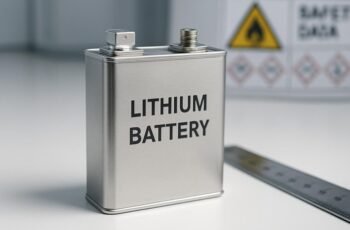
This sounds like the single most important safety topic you’ll ever ignore—until a spark changes everything. We’ll walk you through how to handle, charge, and store car lithium starter batteries with clear, cautious steps. We’ll cover inspections, compatible chargers with temperature control, and venting precautions before any connection. If you’re serious about preventing fires, leaks, or damage, keep our guidance close and stay with us as we outline practical, risk-aware practices. Now, let’s begin with the essentials.
Key Takeaways
- Inspect for damage, swelling, or corrosion before use and avoid charging if any signs are present.
- Use a compatible charger with automatic temperature control and safety cutoff; monitor voltage and avoid extensions.
- Charge in a well-ventilated area, away from heat sources, with a fire extinguisher nearby and proper PPE.
- Disconnect accessories and secure the unit before charging; follow manufacturer guidelines and serial documentation.
- If overheating or venting occurs, move to a safe area, discontinue charging, and seek professional inspection afterward.
Why Car Lithium Starter Batteries Need Extra Safety Care
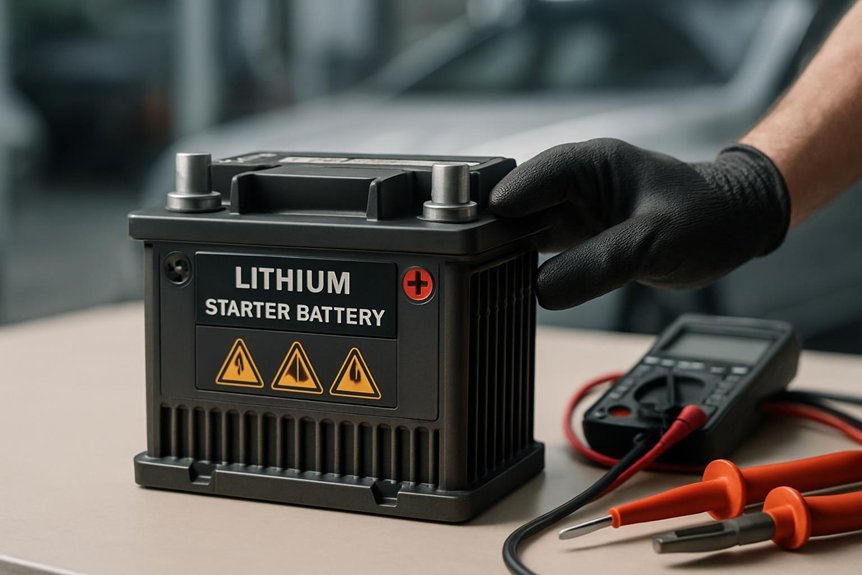
Car lithium starter batteries require extra safety care because they pack high energy in a compact package. We approach this topic with clear, risk-aware reasoning and tell you what matters most. We know that higher energy density means sharper thermal and electrical responses, so proper handling, storage, and installation reduce failure chances. We monitor battery efficiency as a key performance indicator, noting that efficiency losses can indicate internal issues or exposure to extreme conditions. We also consider warranty considerations, verifying coverage terms that pertain to misuse, charging protocols, and environmental limits. Our guidance emphasizes protective measures, controlled charging, and routine inspections to catch signs of degradation early. By staying disciplined, we preserve reliability, safety, and long-term value in your system.
Safety Basics Before Charging Car Lithium Starters
Are you prepared to charge safely? We are gathering essential precautions before connecting any car lithium starter. Our steps are precise: inspect the battery’s chemical composition, confirm no damage, and verify compatibility with the charger. We avoid shortcuts, ensuring vents, terminals, and case remain intact. Always work in a well-ventilated area, wear eye protection, and keep a class appropriate fire extinguisher nearby. Proper battery recycling protocols should be clear, and any discarded components handled per local regulations. We document serial numbers, electrolyte status, and seals to track safety history. Before charging, disconnect accessories, secure the unit, and inspect for signs of swelling. Table offers quick checks and actions to streamline decisions.
| Checkpoint | Condition | Action |
|---|---|---|
| Visual | Case integrity | Don’t charge if cracks exist |
| Connections | Clean, tight | Reconnect or replace as needed |
| Venting | Clear | Move to open space |
| Documentation | Labels present | Record for safety logs |
How to Charge Car Lithium Starters Properly to Prevent Heat
We’ve already checked the safety basics, so now we focus on charging without overheating. We approach charging methodically, using manufacturer specifications as our baseline. Begin with a stable, dedicated power source and a clean, dry workspace; remove clutter that could cause stray sparks. Verify polarity before connection and avoid improvisation or extensions that introduce resistance. Use a charger with automatic temperature control and a safety cutoff; monitor voltage and current closely, staying within recommended ranges. If the battery warms during initial hookup, disconnect and reassess; overheating is a leading risk. Inspect cables for wear, and replace damaged components promptly. Avoid irrelevant topic distractions; focus on proper procedure. Remember, careless charging habits can create heat buildup, which is exactly what we’re trying to prevent.
Storage Guidelines for Cold and Hot Climates
We outline clear cold-weather storage tips and hot-climate handling basics to keep our lithium starter batteries safe. When temperatures shift, we monitor charge levels, avoid prolonged exposure, and follow manufacturer guidelines to minimize risk. We’ll discuss practical steps to protect performance and reduce failure in extreme conditions.
Cold-Weather Storage Tips
Temperature fluctuations can degrade a car lithium starter battery if it’s stored improperly, so we follow strict cold-Weather guidelines to minimize risk and preserve capacity. We begin by disconnecting the battery from loads when storage spans weeks, preventing parasitic drain. Store in a cool, dry location with stable temperatures, ideally around 4–15°C, and avoid damp basements or uninsulated garages. Check a full charge before storage, since depleted packs are more vulnerable to deep discharge. Apply winter charging only when necessary, avoiding frequent partial cycles that stress chemistry. Maintain free airflow and protect terminals from corrosion with corrosion-inhibiting covers. Inspect connections monthly, reseal as needed, and monitor for swelling or unusual warmth. Understanding cold start risks helps us plan maintenance windows and schedule timely recharging.
Hot-Climate Handling Basics
When hot climates pose storage challenges, we start by reducing parasitic drain and maintaining safe limits on temperature exposure. We approach hot-climate handling with disciplined routines that protect battery health, focusing on controlled heat and steady monitoring. We acknowledge dusty shelves as a risk vector for condensate and contamination, so we keep storage areas clean and ventilated.
1) Limit exposure to beyond-specified temperature ranges, using enclosures with heat shields.
2) Schedule periodic voltage and moisture checks, documenting readings to avoid vague acronyms in notes.
3) Rotate stocks to minimize aging effects, and remove any items showing signs of corrosion or dust buildup.
Safe Handling and Mounting Considerations for Lithium Starters
How should we handle and mount lithium starter batteries to minimize risk and maximize reliability? We approach handling with deliberate steps: inspect for damage, use proper personal protective equipment, and avoid dropping or puncturing packages. Transport only in upright, secure positions, and keep terminals insulated during movement. Mounting requires rigid, vibration-damping mounting points and hardware compatible with lithium chemistry. Tighten fasteners to manufacturer specifications, avoiding over-torque that could crack housings. Route cables away from fans, belts, and heat sources, using correct gauge conductors and secure fasteners. Ensure polarity is correct and insulation remains intact after installation. Use a purpose-built battery management system, monitor temperatures, and verify charge state before operation. Consider vehicle applications like alternative fuel platforms and appropriate tire sizing to accommodate weight shifts and loading. Regularly recheck connections after maintenance.
Ventilation and Environment to Reduce Risk
We’re emphasizing adequate ventilation and a controlled environment to minimize risks with car lithium starter batteries. Poor air exchange or confined spaces can allow flammable vapors to accumulate, so we follow strict ventilation practices and monitor conditions. By identifying hazards and maintaining a proper environment, we reduce ignition risk and support safe operation.
Adequate Ventilation Practices
Adequate ventilation is essential to minimize the risks associated with car lithium starter batteries. We’ll approach this with precision, ensuring airflow remains steady and unobstructed, reducing gas buildup and heat retention. Our aim is to maintain a safe environment and monitor for changes that could indicate evolving battery chemistry dynamics or corrosion prevention concerns.
- Ensure continuous, unobstructed ventilation around the battery area, using vents or fans that move air away from ignition sources.
- Schedule routine checks of seals, joints, and housing for leaks, corrosion, or swelling, addressing issues immediately.
- Position the battery in a well-ventilated, cool location, away from direct sunlight and moisture to support stable chemistry and safer operation.
Controlled Environment Hazards Avoidance
Ensuring a controlled environment reduces exposure to hazards in our battery setup by combining ventilation discipline with clean, stable surroundings. We approach controlled environment hazards avoidance with deliberate checks: verify airflow paths remain clear, monitor temperature and humidity, and seal work areas from ignition sources. We avoid unrelated topic distractions and focus on relevant parameters that influence gas accumulation, chemical vapors, and electrolyte exposure. We implement containment for accidental leaks, use drip trays, and position batteries away from clutter, heat sources, and direct sunlight. Regular inspections track cabinet integrity, gasket seals, and ventilation performance. We document deviations and corrective actions to prevent unsafe conditions. If we notice an irrelevant pairing of equipment or signals, we reassess layout promptly to maintain a safe, predictable workspace.
Recognizing Warning Signs of Trouble Early
Recognizing warning signs early isn’t optional—it’s essential for preventing fires, leaks, or sudden failures in a car lithium starter battery system. We monitor the indicators with calm, systematic checks, avoiding unnecessary alarm while ensuring safety. By staying alert, we protect the vehicle, passengers, and nearby property. Our approach blends observation with documentation, recognizing patterns rather than reacting to a single cue. Remember that an unrelated topic can complicate interpretation, so we confirm findings against baseline behavior.
- Look for unusual heat, swelling, or odor, and record the time and conditions.
- Note crusting, leakage, or corrosion at terminals, then test connections.
- Observe irregular voltage readings or rapid discharge, and cross-check with service history.
If concerns arise, follow the review protocol and avoid impulsive actions; tangential concept awareness matters.
Emergency Steps If a Battery Overheats or Vents
We should act immediately if we notice venting or unusual heat from the battery. First, we move to a safe distance, isolate the vehicle, and follow the manufacturer’s cooling guidelines while monitoring for evolving symptoms. If exposure occurs, we use protective gear and call emergency services for further instructions, then document the incident and seek professional inspection.
Venting Symptoms and Response
When a battery vents or overheats, act quickly and calmly to minimize risk. We’ll guide you through recognizing venting symptoms and the proper response steps to take, so you stay safe and protect equipment. Early signs signal pressure release and chemical exposure risk, so treat every hint as serious until confirmed otherwise.
- Observe for hissing sounds, increasing heat, or steam/smoke, and note locations of any odor or corrosion.
- Move away from all ignition sources, illuminate the area, and prepare protective gear before approaching.
- Initiate containment by disconnecting power if safe, then ventilate the space and call for professional assistance as needed.
Immediate Cooling Procedures
If a battery overheats or vents, act immediately with a controlled cooling approach to minimize risk. We’ll prioritize emergency cooling using nonflammable methods and avoid water on open flames. Move vehicles to a safe, well-ventilated area if possible, then deactivate the system and disconnect power if safe to do so. Use a Class D or universal fire extinguisher only if there’s active ignition; otherwise, cool from a safe distance. Apply cool, non-abrasive measures—ice packs or cool water in a controlled, indirect way—never pour water directly onto hot cells. Monitor for re-ignition and document the incident for thermal safety review. Afterward, ventilate the area and seek professional assessment to prevent recurrence. Prioritize risk awareness and orderly, rapid response.
Common Myths and Real-World Troubleshooting for Performance
Common myths about car lithium starter batteries can lead to risky or ineffective fixes, so we start by separating fact from fiction and then map practical troubleshooting steps. We speak in a calm, measured tone to guide you through real-world performance issues with confidence. Our approach emphasizes myth debunking and troubleshooting realism, focusing on verifiable causes rather than fear or hype. We examine symptoms, reproduce tests, and document results to avoid guessing. By staying disciplined, we minimize risk and maximize clarity.
- Verify voltage under load before assuming a fault, and record readings for trend analysis.
- Check cables, terminals, and connections for corrosion or looseness, tightening and cleaning as needed.
- Isolate the cause by testing with compatible tools, then implement targeted fixes rather than broad replacements.
Regular Maintenance Checklist to Extend Life
Regular maintenance is our first line of defense in extending the life of car lithium starter batteries. We start with a clear maintenance schedule that fits your usage pattern and climate. Inspect terminals for corrosion and tighten connections only to the manufacturer’s torque spec. Check electrolyte or insulation levels as applicable, noting any moisture intrusion or swelling signs. Keep the battery case clean and dry, avoiding exposure to heat sources. Schedule regular voltage checks and load tests to identify capacity loss early. Monitor charging system performance and ensure alternator and regulator operate within spec. Document findings to track battery longevity trends and intervene promptly for emerging faults. We prioritize safety, so replace damaged packs and follow proper disposal protocols.
Frequently Asked Questions
Can Lithium Starters Be Jump-Started With Lead-Acid Vehicles?
Yes, we don’t recommend it; we avoid cross-compatibility risks. Jump start compatibility is limited. We proceed with caution, check charging safety, isolate packs, and use proper adapters. We’ll minimize danger and confirm procedures before attempting any connection.
Do Lithium Starters Require Special Chargers Beyond Standard BMS Units?
We answer yes, lithium starters need special chargers beyond standard BMS units. We’re careful, methodical, and risk-aware, like threading a needle through fog. We consider lithium safety and charging compatibility before connecting anything to your system.
How Do I Know if a Battery Is Compatible With My Vehicle Model?
We can perform a compatibility check by comparing your vehicle model against the battery’s specifications, ensuring voltage, capacity, and terminal layout match. We’ll document vehicle model matching steps and confirm fit before installation, minimizing risk.
Are There Specific Disposal Rules for Lithium Starter Batteries?
Yes, there are disposal regulations and recycling programs we follow. We handle lithium starter batteries with utmost care, never throw them away. We coordinate with local authorities, ensure proper packaging, and follow documented disposal regulations for safe recycling.
What Warranty Coverage Applies to Lithium Starter Batteries?
We offer warranty terms that cover manufacturing defects, with clear coverage limits. We conduct compatibility testing and specify service intervals; exclusions may apply. We’ll guide you through claim steps, timelines, and required documentation to guarantee proper support.
Conclusion
We’ve covered essential safety practices for car lithium starter batteries, from inspection to charging, storage, mounting, and emergency steps. By staying vigilant, we minimize risks and protect both people and equipment. If something seems off, don’t rush—disconnect, ventilate, and seek expert guidance. Remember, a well-managed system is our best safeguard against surprises. Think of safety as the compass that keeps our operations on the right track, steering us away from heat, leaks, and dangerous temptations.