We take LiPo safety seriously and want to guide you through careful, practical steps for charging, storing, and handling these packs. We’ll outline proper containment, labeling, and traceability, plus the signs of trouble and safe disposal paths. Our approach is precise and technically grounded, with attention to fireproof surfaces, monitored charging, and proper PPE. If you’re responsible for risk mitigation, you’ll want to see how each precaution fits into your setup and where gaps often emerge.
Key Takeaways
- Use a dedicated LiPo charger with correct cell count, voltage, balance mode, and overcurrent/overtemperature protection; never charge unattended.
- Charge on a non-flammable surface, away from clutter, monitor temps and voltages, and terminate if any cell deviates from target.
- Store LiPo packs in a cool, dry place (about 20°C) in fireproof containers, at partial charge (3.7–3.85 V per cell).
- Inspect for swelling, punctures, or odors; isolate damaged packs and handle with PPE in non-flammable containment.
- Follow local disposal/recycling guidance, label containment, segregate damaged packs, and use approved facilities for end-of-life LiPo batteries.
Charge LiPo Batteries Safely: Step-by-Step Guide
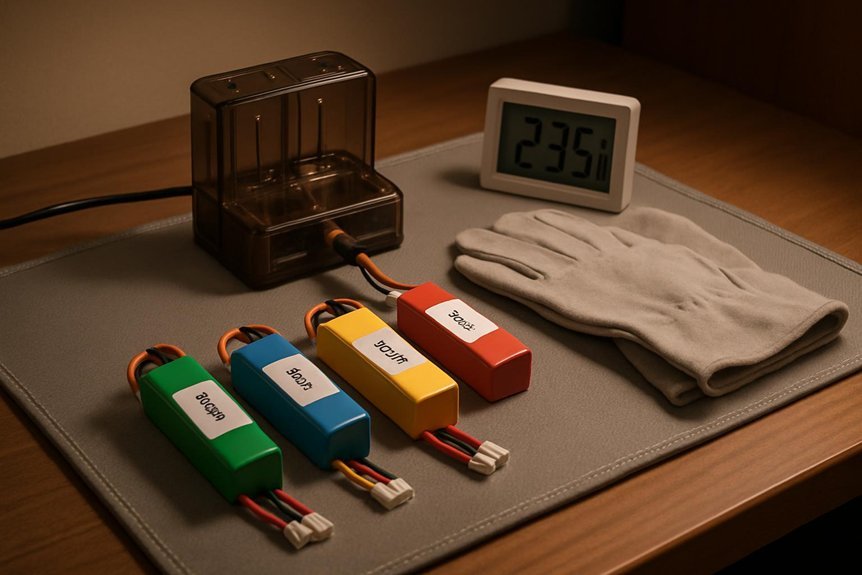
To charge LiPo batteries safely, we start with a strict setup: use a charger designed for LiPo cells, set the correct voltage per cell, and monitor the charge closely. We confirm cell count, balance mode, and timing before connecting. We keep the pack on a non-flammable, fireproof surface and away from clutter. During charging, we observe voltage monitoring readings, terminate if any cell deviates from the target range. We use a dedicated charger with overcurrent and overtemperature protection, and avoid parallel charging unless the device supports it safely. We never leave charging unattended for long periods. We inspect connectors for secure seating and ensure leads have no exposed conductors. After completion, we cool the pack before handling and store it properly. safe charging, voltage monitoring.
Store LiPo Packs Correctly to Extend Life
How should we store LiPo packs to maximize their lifespan and safety? We store LiPo packs in a cool, dry environment with stable temperatures, ideally around 20°C (68°F). Keep packs in a purpose-built fireproof container or metal tin when not in use, and avoid exposure to direct sunlight, heat sources, or freezing conditions. Store at a partial state of charge, commonly around 3.7–3.85 V per cell, to reduce stress during storage. Use labeled, insulated bags for transit and storage to prevent accidental shorting. Regularly inspect packaging integrity and connector leads for damage. Implement a documented routine for periodic rebalancing and reconditioning, as needed. Remember, storeing lithium safely supports life extension and minimizes aging effects and failure risk.
Recognize Warning Signs of LiPo Trouble
We should stay alert for any signs that a LiPo pack is failing or poses a hazard. Early indicators include swelling, heat buildup beyond normal runtime, and a noticeable odor suggesting electrolyte leakage. Voltage irregularities, such as sudden dips, spikes, or cells that drift out of balance, signal internal instability. Puffed or deformed packs, bulging seams, or any puncture marks demand immediate cessation of use and safe handling. Listen for crackling or hissing sounds during charging or monitoring, which point to gas buildup. Surface dust or residue around terminals can indicate leakage. In all cases, practice hazard recognition by isolating the pack, removing it from service, and seeking expert inspection. Maintain danger awareness and follow established safety procedures to prevent thermal runaway risks.
Handle Damaged or Puffing LiPo Cells Safely
If a LiPo cell is damaged or appears puffed, stop using it immediately and isolate the pack to prevent further risk. We then perform a swift risk assessment to determine residual hazards, including venting, heat, and leakage potential. Next, we move to safe handling, wearing gloves and eye protection, placing the pack in a fireproof container. We segregate damaged units from healthy ones to maintain quality control and minimize cross-contamination. We never puncture or attempt repairs. We monitor for continued swelling, heat, or odor and follow local disposal regulations for LiPo cells.
| Step | Action | Outcome |
|---|---|---|
| 1 | Isolate | Reduces exposure |
| 2 | Inspect | Assesses severity |
| 3 | Dispose | Enforces safety |
DIY LiPo Tinkering: Safe Maker Practices
We’ll start with proper handling procedures, emphasizing clean workspaces, gloves or no gloves as needed, and I/O careful packaging of LiPo packs. We’ll cover safe charging practices, using appropriate chargers, balanced charging, and monitoring voltage and temperature with conservative limits. Finally, we’ll highlight fire safety awareness, including accessible extinguishing methods and immediate response steps to contain a thermal event.
Proper Handling Procedures
How can you keep LiPo work safe from the start? We insist on disciplined handling, clear boundaries, and documented procedures. Our team follows standardized abuse tests, tool checks, and dedicated workspaces to prevent cross-contamination of materials. We reference case studies and historical incidents to reinforce best practices, not to sensationalize risk. Always inspect cells and connectors before use, store packs in fireproof enclosures, and transport them in purpose-built containers. Maintain strict separation between charging, disassembly, and storage areas, with proper labeling and lockout controls. Use ESD-safe tools, grounded mats, and eye protection. Have a documented emergency plan, readily accessible neutralizing materials, and a verified battery disposal protocol. Regular audits ensure adherence and continuous improvement.
Safe Charging Practices
Safe charging practices are essential to prevent thermal runaway and guarantee reliable LiPo performance. We guide readers through disciplined procedures that minimize risk while maximizing cell longevity. Always use a proper charger, balance every cycle, and monitor voltage and temperature during charging. Set charging parameters to manufacturer recommendations, and verify connector integrity before linking packs. Never unattended charging, and keep packs on nonflammable surfaces away from heat sources. In practice, implement a dedicated LiPo charging station with fire containment and an appropriate fire extinguisher reachable within seconds. Safe charging requires routine inspection, disciplined workflow, and clear labeling.
| Parameter | Recommended Setting | Critical Guardrail |
|---|---|---|
| Safety margin | 5–10% above rated capacity | Avoids peak stress |
| Temperature | 20–25°C target | Prevents thermal buildup |
| Environment | Dry, ventilated area | Reduces gas accumulation |
Fire Safety Awareness
Why is fire safety non-negotiable when tinkering with LiPo packs, and what concrete habits keep those risks in check? We approach fire safety with disciplined routines, clear boundaries, and rapid response. We prioritize containment, monitoring, and rapid escalation to minimize harm and damage. Our practice integrates practical drills, validated procedures, and pre-job checks to protect people and gear. We emphasize centralized alarms, proper storage, and immediate communication if anomalies appear.
- Establish fire drills and practiced response steps before work
- Keep smoke alarms tested and accessible, with clear exit routes
- Work in a non-combustible, ventilated space with suitable containment
- Have extinguishing means appropriate for LiPo fires and know its limitations
Emergency Response and Proper LiPo Disposal
We’ll outline the immediate emergency steps, proper containment, and when to seek professional help if a LiPo pack shows signs of swelling, fire, or fuel leakage. We’ll cover disposal guidelines that minimize environmental impact and reduce reactivity risk, including when to use approved waste streams and how to label and store batteries awaiting disposal. We’ll also highlight safe handling practices to prevent damage, minimize ignition sources, and ensure responders understand their roles during incidents.
Emergency Response Steps
In an emergency, we act quickly and methodically to minimize damage and prevent injury: disconnect the battery from power sources if it’s safe to do so, move away from flammable materials, and call for emergency help if there’s smoke, heat, or a fire.
- Safely isolate the cell or pack and discontinue charging
- Use appropriate fire suppression for lithium fires: Class D or water mist when safe
- Evacuate nearby personnel and ventilate if possible
- Report incident details to responders and document container condition
We focus on emergency response and fire containment, enforcing strict exclusion of noncritical actions. Maintain situational awareness, avoid opening the pack, and prioritize personal safety while coordinating with responders.
LiPo Disposal Guidelines
LiPo disposal requires a controlled, safety-first approach that prioritizes containment, proper labeling, and compliant disposal pathways; when in doubt, we halt activities and initiate emergency protocols per established guidelines. We outline clear disposal steps to prevent environmental harm and fire risk. After a battery reaches end-of-life, we seal it in a dedicated disposal container, minimizing movement and heat generation, then label with hazard information and date. Separate damaged packs from intact ones to prevent cascading failure. We follow local regulations for battery recycling, arranging transport to an approved facility. Use designated recycling symbols on containers and documentation to communicate material composition. Never incinerate or puncture packs; never mix with regular trash. Our protocol emphasizes rapid reporting, containment, and compliant, traceable recycling pathways.
Safety During Handling
If a battery sustains damage or heat buildup occurs, we act immediately to contain, assess, and mitigate risk while preventing escalation to fire or toxic exposure. Our Safety during Handling emphasizes disciplined, repeatable procedures that minimize hazard and protect people and property. We prioritize Safety awareness and strict Handling protocols to reduce incidents and ensure proper LiPo disposal when required.
- Inspect for swelling, punctures, or venting; isolate and tag the pack
- Use non-flammable containment and personal protective gear; never handle with bare hands
- Move to a supervised, ventilated area; avoid water or conductive materials
- Follow approved disposal or recharge guidance with documentation and reporting
Adhering to these steps preserves safety, supports responders, and maintains regulatory compliance.
Frequently Asked Questions
Are Lipo Batteries Safe for Small Indoor Devices?
We say yes, but with caveats: lipo batteries can be used in small indoor devices if you monitor fragile packaging and charging hazards, use proper chargers, and maintain ventilation, temperature control, and battery integrity at all times.
Can I Recycle Lipo Packs at Home or Curbside?
Yes, we can’t recycle LiPo packs at home; curbside disposal isn’t appropriate. We follow recycling legality and safety guidelines, so we use certified collection points or hazardous-waste programs, not home disposal. Please contact local authorities for compliant options.
How Often Should I Calibrate a Lipo’s Voltage Indicator?
We calibrate a lipo’s voltage indicator monthly to ensure calibration frequency accuracy; we’re not joking about safety, so we check, test, and document results to maintain voltage indicator accuracy and avoid risky misreads.
Do Temperature Changes Affect Lipo Performance Immediately?
Temperature sensitivity does cause immediate performance changes during ambient shifts, so we monitor cell temps constantly. We warn about charging hazards and thermal runaway, because rapid temp swings can degrade cells and threaten safety, especially under load.
Is It Safe to Mix Brands or Chemistries in One Pack?
Mixing brands or chemistries in one pack isn’t safe; incompatibility risks can compromise performance and safety. We advise against it due to certification requirements and potential thermal/runaway issues, and we’ll prioritize standardized, properly tested configurations for safer operation.
Conclusion
We’ve seen how a careful, methodical routine—charging on fireproof surfaces, using a proper LiPo charger, and never leaving batteries unattended—prevents small risks from becoming big problems. The coincidence is this: the moment you prioritize proper storage, labeling, and traceable disposal, you naturally align with safety culture and compliance. When warning signs appear, your prepared response keeps everyone safer. Stay vigilant, document every step, and discharge the cycle of danger before it begins.