We’ll walk you through the essentials of lithium battery disposal safety, from identifying battery types to proper storage and emergency steps. Our approach is thorough, compliance-focused, and proactive, so you can establish clear procedures, label everything correctly, and keep incidents low. We’ll outline practical steps for handling, inventory, and choosing recycling options, while staying prepared for damaged or leaking cells. There’s more to cover, and what we’ll share next will help you implement a safe, accountable program.
Key Takeaways
- Segregate by chemistry and state of charge; store damaged units separately in fire-resistant, labeled containers until disposal.
- Use nonconductive, leak-proof containers and avoid mixing polarities or loose cells; maintain cool, dry storage with dedicated battery bins.
- Promptly isolate damaged or leaking batteries, power down devices if safe, and ventilate the area to prevent exposure.
- Document intake, batch numbers, disposal dates, and schedule pickups with licensed recyclers; ensure chain-of-custody and compliance records.
- Do not use water on spills; contain leaks with approved absorbents on nonflammable surfaces, and transport with proper labeling for recycling.
Why Lithium Battery Disposal Matters for Safety and the Environment
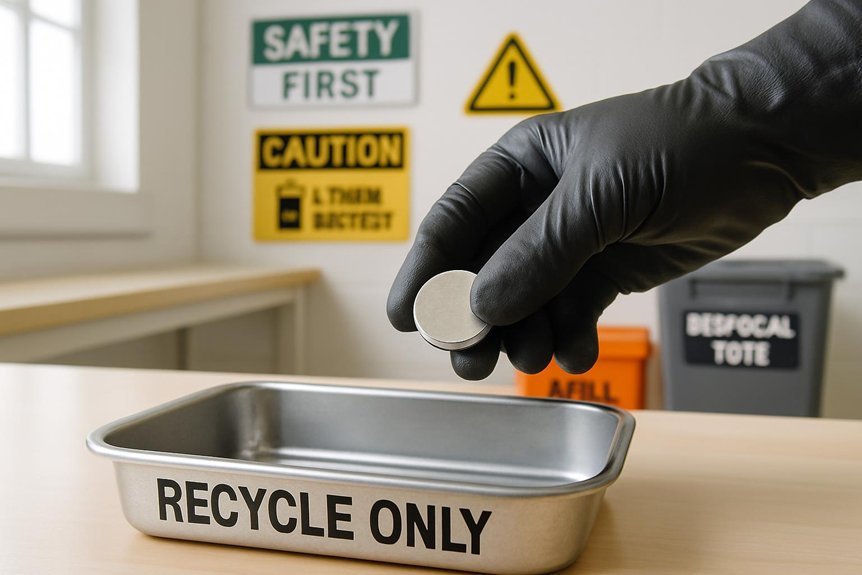
Disposal of lithium batteries matters for safety and the environment because improper handling can cause fires, chemical leaks, and toxic exposure—risks we must prevent. We outline clear obligations for responsible disposal, emphasizing disposal ethics and statutory compliance. We train teams to segregate batteries by chemistry, cap size, and state of charge, preventing short-circuits during storage and transit. Our protocols minimize spill risk, ensure proper labeling, and secure containers for transport to licensed facilities. We assess the ecosystem impact of every disposal action, prioritizing recycling to recover critical materials and reduce landfilling. We document chain-of-custody, verify certifications, and conduct periodic audits to verify ongoing adherence. By choosing safe, compliant practices, we safeguard people, ecosystems, and communities while supporting a circular economy.
Identify Lithium Battery Types (Li-Ion, Li-Fepo4, Li-Polymer) and Signs of Damage
What are the main lithium battery types you’ll encounter—Li-Ion, LiFePO4, and Li-Polymer—and how can you quickly spot signs of damage? We’ll identify lithium battery types and assess condition before disposal. Li-Ion cells offer high energy density but can suffer from swelling, heat, or voltage loss; LiFePO4 provides stability and reduced thermal risk; Li-Polymer uses a gel or polymer electrolyte and may flex or incur puncture damage. Signs of damage include unusual warmth, visible swelling, leakage, corrosion, unusual smells, or rapid voltage decline. Always verify labeling, especially when unfamiliar packaging appears, and treat any uncertain unit as potentially hazardous. If in doubt, isolate the battery and consult guidance to avoid risk, complying with safety and disposal standards.
Safe Handling and Storage Until Lithium Battery Disposal
We prioritize safe storage practices, proper handling techniques, and adherence to hazardous waste guidelines to prevent accidents and contamination. We’ll outline clear, compliant steps for securing batteries, insulating terminals, and separating damaged units from intact ones. If you’re unsure about disposal requirements, we’ll guide you to follow local regulations and manufacturer recommendations to minimize risk.
Safe Storage Practices
How should we store lithium batteries safely before disposal? We prioritize safe storage by separating damaged or swollen cells from intact packs and placing them in approved, nonconductive containers. We keep batteries cool, dry, and away from heat sources, flames, or metal objects that could cause short circuits. Use a dedicated secondary containment tray or battery bin labeled for lithium products, with clear access to the area but restricted entry for unauthorized personnel. Avoid mixing polarities and never store loose cells loose in drawers or bags. Implement routine inspections for signs of leakage, corrosion, or venting, and replace compromised units promptly. Maintain an inventory log with batch numbers and disposal dates to support compliant battery containment and lifecycle management.
Proper Handling Techniques
Proper handling starts with proactive, consistent practices that minimize risk during storage and transport until disposal. We, as stewards of safety, outline straightforward steps for safe handling techniques that align with disposal etiquette and regulatory expectations. Always inspect batteries for damage, leaks, or swelling before moving them; isolate compromised units in non-conductive, vented containers and label them clearly. Maintain appropriate temperature and humidity, avoid stacking, and use secondary containment to prevent cross-contamination. Implement clear waste classification at the point of collection to ensure correct packaging, labeling, and routing. Train staff on spill response, charging limits, and prohibited actions to reduce thermal runaway risk. Document inventory, transfers, and disposal milestones to support traceability and compliance. Following these practices, we minimize hazards and support responsible end-of-life management.
Hazardous Waste Guidelines
Hazardous waste guidelines require rigorous, proactive handling and storage practices to protect people and the environment before lithium batteries are disposed. We, as stewards of safety, outline clear, compliant steps you should follow. First, segregate batteries by chemistry and state, label containers, and use leak-proof, corrosion-resistant drums. Second, stabilize damaged cells per manufacturer instructions, avoiding short-circuits and metal tools that could spark. Third, store indoors in vented, temperature-controlled areas with spill containment and access controls. Fourth, document intake, lot numbers, and disposal timelines to ensure traceability and regulatory alignment. Finally, contract licensed recyclers and verify certificates, audits, and incident reporting procedures. By enforcing these practices, we minimize hazardous waste exposure and meet disposal timelines, protecting workers, communities, and the environment.
Step-By-Step Prep for Lithium Battery Disposal or Recycling
Before we start, we gather and organize all necessary information and materials to ensure a safe, compliant disposal or recycling process. We outline applicable regulations, identify battery types, and confirm suitable collection points. We assign roles, designate a clean, ventilated workspace, and prepare containers that are nonconductive and clearly labeled. We review shipping and handling guidelines, safety data sheets, and local drop-off schedules to align with Recycling logistics. We implement battery etiquette, ensuring terminals are insulated with nonconductive tape and batteries are stored upright to prevent short circuits. We separate damaged, swollen, or leaking cells for urgent handling, and we create a traceable chain of custody. We verify documentation, track quantities, and schedule pickups to minimize exposure and maximize safe recovery of materials.
How to Choose Lithium Battery Recycling Options and Programs
Choosing the right lithium battery recycling option starts with a clear understanding of local programs, capabilities, and compliance requirements, so we can select a path that minimizes risk and maximizes material recovery. We assess what materials we can recover, whether the program handles different chemistries, and the required preparation steps. We verify credentials, data handling policies, and carrier restrictions to ensure safe transport. We distinguish legitimate options from battery recycling myths that can lead to improper disposal. We consider program enrollment considerations, including fees, drop-off vs. pickup, and documentation needed for compliance reporting. We prioritize programs that offer transparent reporting, chain-of-custody, and validation of recovered materials. Finally, we align choices with regulations and internal safety standards to sustain responsible recycling outcomes.
What to Do if a Battery Is Damaged, Leaking, or Exposed
We’ll outline how to respond if a battery is damaged, leaking, or exposed, focusing on safe handling and immediate containment. We’ll follow strict protocols for damaged battery handling and leaking battery safety to protect people and the environment. If you’re unsure, stop what you’re doing and consult our safety guidelines before proceeding.
Damaged Battery Handling
If a lithium battery is damaged, leaking, or exposed, act quickly and calmly to prevent a thermal event or chemical exposure. We’ll help you respond safely, prioritizing disposal safety and damaged handling to minimize risk. First, isolate the device from others and avoid touching the terminals or exposed材料; wear gloves and eye protection if available. Do not try to puncture, crush, or discharge the battery. Move the item to a non-flammable, ventilated area away from heat sources. If there’s a visible leak, use proper containment—prefer a non-conductive tray with absorbent material—and refrain from using water on the spill. Contact local hazardous waste programs or the manufacturer for disposal instructions. Document the incident for compliance records and follow your organization’s reporting procedures.
Leaking Battery Safety
What should you do immediately when a lithium battery is damaged, leaking, or exposed? We act quickly and calmly to prevent harm. First, isolate the location and prevent others from touching the battery. If safe, power down devices and remove the battery with nonconductive gloves. Avoid crushing, puncturing, or applying heat. Ventilation helps; open nearby windows or use a fan if needed. Use nonmetal tools to contain any liquid and place the battery on a nonflammable, absorbent surface. Implement leak containment measures with approved absorbents and follow established spill response procedures. Do not mix different battery chemistries. Store damaged units separately in a fire-resistant container until disposal. Report the incident to the proper authority and document findings for compliance and root-cause analysis.
Frequently Asked Questions
How Do I Identify Counterfeit Lithium Batteries Before Disposal?
We identify counterfeit lithium batteries by inspecting packaging, labels, and coatings, checking for irregular cell markings, and verifying with the supplier; we’ll avoid counterfeit devices and evaluate disposal risks to protect people and the environment.
Can I Dispose of Damaged Batteries in Regular Trash?
Yes, you should not put damaged batteries in regular trash. We strongly advise proper disposal; disposal legality varies by locality, and tamper risks are significant. We’ll guide you to compliant, proactive, safe disposal options.
What Safety Gear Is Essential for Handling Compromised Cells?
We need appropriate safety gear: wear chemical-resistant gloves (nitrile or neoprene), eye protection, and a face shield, plus insulated sleeves; ensure proper ventilation. We’ll use glove types guidance and ventilation needs to minimize exposure and risk.
Are There Hazards When Disposing of Old Laptop Batteries?
We’re playing it safe from the get-go: yes, there are hazards when disposing of old laptop batteries. We conduct a hazard assessment, follow packaging guidelines, and stay compliant, proactive, and thorough in every disposal step.
How Do I Recycle Batteries From Devices With Non-Removable Packs?
We recycle devices with non-removable packs by engaging certified programs, replacing safety considerations for sealed cells with proper handling, and following guidelines. We’ll help you navigate recycling non removable packs, prioritizing safety considerations for sealed cells, and compliance.
Conclusion
We know disposal rules better than anyone, yet here we are pretending they’re optional. Our teams never skip labeling, segregation, or inventory logs, right? We stay compliant, proactive, and thorough, because safety isn’t negotiable—it’s a backbone. So we’ll wrap damaged or leaking cells in fire‑resistant containment, document every intake, and coordinate licensed recycling with proper certificates. If irony sneaks in, it’s only to remind us that sloppiness costs lives and the planet. We’ll execute, always.