We approach LiFePO4 charging with a methodical, standards-aligned mindset, using a dedicated, BMS-compatible charger and a careful CC/CV profile that respects cell voltage, current limits, and balance control. We monitor temperature, impedance, and voltage changes, tapering current as cells approach full charge and terminating per-cell voltage per spec. We keep packs cool and balanced, document deviations, and anticipate distinct charging phases. There’s more to align and verify before we proceed.
Key Takeaways
- Use a BMS-compatible charger with proper termination, balance control, and temperature sensing to protect LiFePO4 packs.
- Monitor voltage, current, and cell temperature; taper current and cap voltage per cell to avoid overcharge and overheating.
- Follow distinct charging phases: start with CC, transition to CV, then taper to near zero current; watch for phase signals.
- Ensure balanced charging early and continuously to minimize cell imbalance and heat buildup.
- Document and verify every charge cycle with objective data, watching for voltage drops, current anomalies, or temperature spikes.
Lifepo4 Charging at a Glance: Key Differences That Matter
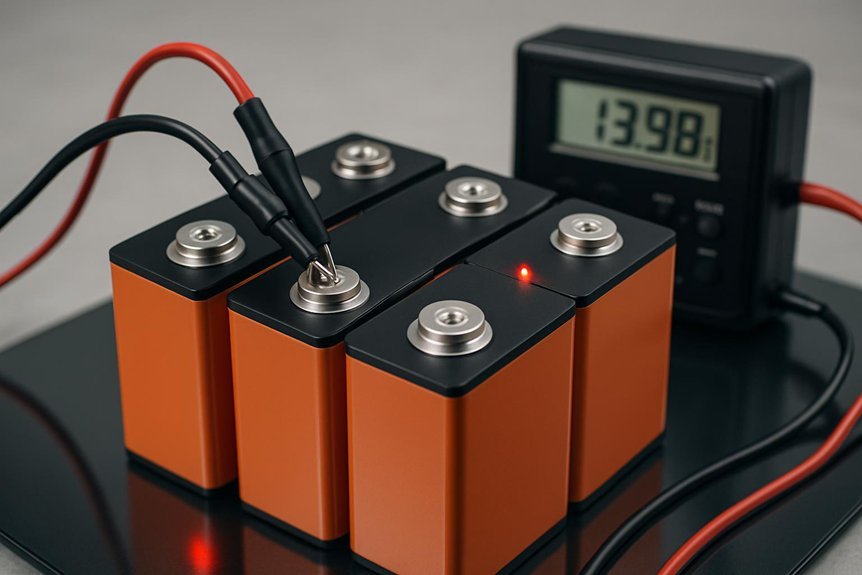
Charging LiFePO4 cells differs in several critical ways from other chemistries. We present a concise, technical contrast that highlights what matters for safe, effective charging. We align our guidance with the chemistry’s stable plateau, flat voltage profile, and robust cycle life, while noting limits that affect real-world performance. We address lifepo4 myths by clarifying voltage behavior during charging stages and the minimal risk of thermal runaway under normal conditions. We counter charger myths by stressing the importance of using a dedicated BMS-compatible charger with proper termination and balance controls, rather than generic units. Our focus remains practical: charging current, termination voltage, and temperature considerations that preserve capacity and longevity without overcomplication. We communicate clearly, without fluff, so readers can apply these differences confidently.
Choose the Right Lifepo4 Charger: Criteria and Features You Need
Choosing the right Lifepo4 charger requires aligning charger capabilities with your pack’s voltage, current, and safety needs; we’ll focus on what matters most—termination accuracy, balance control, and temperature handling—so you can select a unit that maintains performance and longevity. We approach criteria methodically: verify voltage compatibility with pack chemistry, confirm current regulation aligns to C-rate without overheating, and assess termination methods for reliable full charge detection. Balance control should minimize cell imbalance during charging cycles, with balanced charging across all cells. Temperature handling is vital; include thermal sensing and safe shutoff at threshold deviations. Evaluate the system holistically by inspecting certifications and build quality. Choosing power supply compatibility, and Safety certification, ensures consistent operation under real-world conditions and long-term reliability.
Read Lifepo4 Charge Curves: What You’Ll See and What It Means
We’ll walk you through what the charge curve shows, focusing on the distinct phases and how to spot voltage behavior that signals each stage. You’ll see how to interpret voltage drops during charging and why these patterns matter for safe, efficient LiFePO4 operation. This framework helps us relate curve features to practical decisions about charging current, termination, and overall cell health.
Charge Curve Phases Explained
A LiFePO4 charging curve unfolds in distinct phases, each with characteristic voltage, current, and duration that jointly determine how quickly and safely a pack reaches full charge. We analyze how these phases interact to form a reliable charging schedule and reveal how cell impedance shifts as chemistry responds to state of charge. In practice, phase transitions signal when to taper current and adjust voltage ceiling, ensuring safe termination at full capacity.
- Phase identification and timing
- Current tapering strategy
- Voltage limits and termination
- Impedance trends and safety checkpoints
Interpreting Voltage Drops During Charging
What do the voltage drops you observe during LiFePO4 charging really signify about the cell’s state of charge and health? We interpret voltage behavior as a diagnostic signal, not a random fluctuation. When we see a drop under a constant-current stage, it reflects internal resistance shifts, contact losses, or momentary polarization effects that alter the cell’s instantaneous open-circuit potential. During that phase, interpreting voltage requires context: current level, temperature, and cell history. Consistent, small drops may indicate healthy chemistry converting to higher-state SOC; abrupt, repeated dips signal charging anomalies, possible impedance growth, or electrolyte limitations. We document timing, magnitude, and recovery to barcoding confidence in capacity estimates. In practice, we correlate voltage drops with scheduled impedance checks to distinguish normal transients from fault conditions.
Safe, Practical Charging Steps for Lifepo4 Packs
To safely charge LiFePO4 packs, we start with a clear understanding of each cell’s voltage limits and the charger’s capabilities. We outline a practical, repeatable process that minimizes risk and maximizes performance. Our steps emphasize correct parameters, monitoring, and disciplined routines, not guesswork. We prioritize safe charging and battery safety at every stage, ensuring cell balance and charger limits are respected.
- Verify charger compatibility with LiFePO4 chemistry and set proper CC/CV profiles
- Initiate charging at the recommended current, then taper to a safe final voltage per cell
- Monitor voltage, current, and temperature with alarms for anomalies
- Disconnect if any fault occurs and recheck before resuming
These practices keep charging precise, predictable, and safe for every pack.
Keep Lifepo4 Packs Cool and Balanced: Temperature and Balancing Basics
We’ll outline Temperature Management Basics, highlighting how consistent ambient and pack temperatures influence voltage stability and cycle life. We’ll cover Balancing for Longevity, explaining why cell balance affects overall pack health and how regular balancing minimizes capacity loss. We’ll also share Cool-Flow Charging Tips to maintain ideal temps during charging, reducing heat buildup and extending Lifepo4 lifespan.
Temperature Management Basics
- Ensure LiFePO4 battery management starts with keeping packs cool and balanced. We address temperature management with precise monitoring and deliberate heat handling, avoiding runaway conditions and capacity fade.
- Deploy temperature sensors at cell and pack levels to detect gradients
- Calibrate thresholds for charging, discharging, and ventilation
- Route heat dissipation pathways to maximize convection and conduction
- Map ambient, surface, and internal temps to inform cooling strategies
We emphasize consistent ventilation and active cooling when needed, pairing it with load profiling to minimize spikes. Our methodical approach uses real-time data to modulate charging currents and timing, preserving cell integrity. By tracking thermal margins, we prevent hotspot formation and ensure uniform aging. Temperature data guides preventive maintenance, not reactionary fixes, strengthening long-term reliability.
Balancing for Longevity
Balancing for longevity hinges on keeping Lifepo4 packs cool while maintaining tight cell voltage parity. We approach balancing as a precision process, aligning cell voltages within tight tolerances to prevent uneven aging. We monitor individual cell temps and states, using cell-level data to guide subtle balancing actions that minimize parasitic losses. Our focus is on controlled, low-impact balancing that avoids thermal spikes and stress, preserving pack integrity and extending life. Balanced aging emerges when cells share charge evenly across cycles, reducing differential aging and capacity fade. We emphasize pack safety by ensuring proper enclosure ventilation, temperature monitoring, and fault detection that triggers protective shutdown if imbalances exceed thresholds. In practice, we favor proactive balancing during mid-discharge or rest periods to maintain optimal performance.
Cool-Flow Charging Tips
To keep Lifepo4 packs cool while maintaining voltage parity, we start with controlled, low-signature charging strategies that minimize heat generation and thermal gradients. We implement cool flow techniques by modulating the charge rate and separating high- and low-current stages to limit peak heating. Our approach emphasizes consistent temperature monitoring and adaptive termination to preserve balance without overheating.
- Maintain a conservative charge rate during initial stages to reduce heat load
- Use active cooling or ambient management when temperatures rise
- Segment the charge profile to keep thermal gradients minimal
- Validate balance early and continuously to avoid rebalancing heat
This disciplined workflow ensures reliable operation, reduces wear, and preserves capacity through precise temperature and balance management.
Spot the Signs: Healthy vs. Problematic Lifepo4 Charging
Spotting healthy versus problematic LiFePO4 charging starts with clear, observable signs: during normal charging, voltage and current follow a steady, predictable curve, tapering smoothly as cells reach full capacity, while faults manifest as unexpected voltage surges, prolonged absorption phases, or erratic current behavior. In practice, we monitor the charge curve for consistency, verify that the charge current decays toward zero as the CV stage ends, and check temperature stability to avoid runaway. Spotting warning signs requires comparing actual data to manufacturer specifications and prior cycles, not subjective impressions. When anomalies appear, we perform troubleshooting charging by validating conductor integrity, relay operation, and BMS communication. Document deviations, reproduce measurements, and re-test to confirm fault isolation before continuing.
Frequently Asked Questions
How Long Can a Lifepo4 Pack Sit Unused Without Charging?
A LiFePO4 pack can sit unused for about 4–6 weeks at room temperature, but we recommend recharging before storage to minimize lithium safety risks; store at a controlled storage temperature, check voltage, and avoid deep discharge.
Can Lifepo4 Cells Be Charged With a Solar Charger Simultaneously?
Yes, we can safely charge LiFePO4 cells with a solar charger simultaneously. We prioritize charging safety, ensure proper solar integration, monitor voltages and temps, and use a regulated MPPT charger to avoid overvoltage or overcurrents.
Do Lifepo4 Packs Require Venting During Charging?
We don’t typically vent during charging for LiFePO4 packs; proper venting isn’t normally required unless a fault occurs. We assess venting during charging risk, and confirm solar charging compatibility while maintaining balanced cell temperature and pressure monitoring.
What Impact Do High Parasitic Loads Have on Charging Efficiency?
High parasitic loads reduce charging efficiency by diverting power; we measure efficiency as output energy vs input. We mitigate this by isolating loads during charging, optimizing converter efficiency, and monitoring parasitic draws to keep charging accuracy and performance solid.
Is Bluetooth/Gsm Monitoring Needed for Effective Lifepo4 Charging?
Battery monitoring isn’t strictly required, but bluetooth monitoring and gsm monitoring greatly enhance safety and accuracy. We’ll log cell voltages, temperatures, and SOC, then alert anomalies, optimize charging profiles, and maintain consistent performance across cycles.
Conclusion
We charge LiFePO4 with discipline, precision, and care. We follow CC/CV profiles, monitor voltage, current, and temperature, and stay within safe limits. We choose a BMS-compatible charger, ensure proper termination and balance, and verify each cell’s health early and often. We maintain cooling, calibrate thresholds, and document deviations. We seek consistency, avoid shortcuts, and respect the pack’s safety margins. We measure progress, anticipate phase changes, and confirm full, balanced readiness before use.