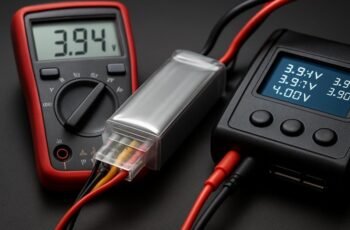
We plan, we map, we verify; we pair loads with a scalable lithium pack and a compatible inverter. We’ll size for peak and continuous draw, leave headroom for surges, and ensure BMS signals are respected. We’ll wire with heavy-gauge DC, fuse properly, route away from heat, and keep DC and AC buses isolated. We’ll check charger compatibility, venting, and safety disconnects. If each step holds, we’ll stay on track—but gaps will appear where we’ll need to tighten procedures and validate with real-world tests.
Key Takeaways
- Plan loads and cushion: map essential, comfort, and peak draws; translate to watt-hours/day with a 25–30% efficiency cushion.
- Size inverter and PV: match peak/continuous loads with inverter capacity; include DC/AC safety, venting, fusing, and BMS signals.
- Battery pack config: compare 3S vs 4S for voltage/current; ensure BMS manages balance, protection, and thermal monitoring.
- Wiring and safety: use heavy-gauge wiring with proper fusing, separation of DC/AC, secure grounding, and labeled terminations.
- Documentation and troubleshooting: maintain readings, enclosure checks, safety checklists, and repeatable fault-reset procedures.
Decide What You Need for RV Lithium Power
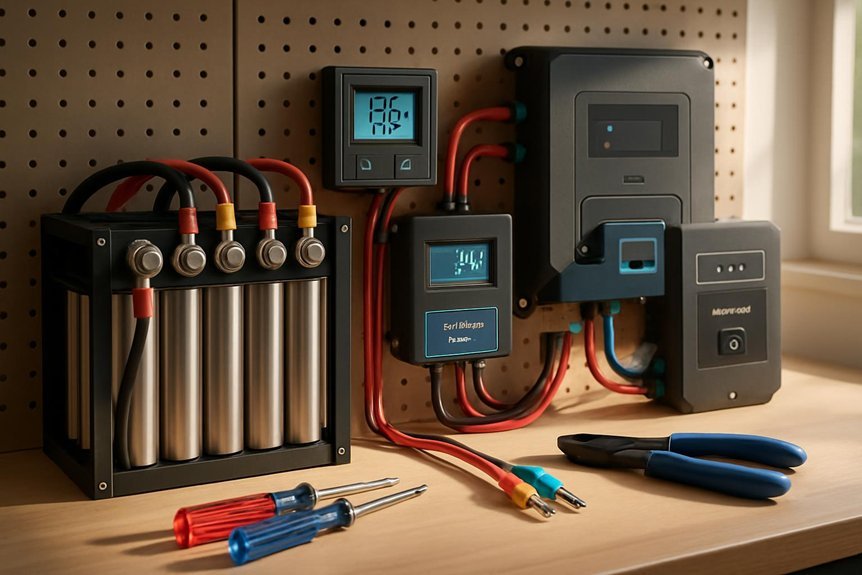
Decide what you need for RV lithium power by mapping your actual usage first. We approach this systematically, outlining daily loads, peak draws, and seasonal variances. We start with essential lighting, refrigeration, fans, and communication gear, then add comfort items like heating or cooling, entertainment, and charging for devices. We translate each load into watt-hours and hours per day, producing a total daily energy demand and a 25–30% cushion for inefficiency and aging. From there, we draft planning benchmarks that guide battery sizing, inverter capacity, and photovoltaic input. We compare steady-state versus peak draws to prevent undersizing. Finally, we define charging strategies, balancing solar and shore power, to sustain the calculated baseline without overprovisioning expensive components.
Plan Your Load and Battery Size for Off-Grid Days
To plan our off-grid days, we start by sizing the load and the battery around actual usage and predictable variability. We map daily dv and peak draw to determine minimum capacity and reserve, then add a safety margin for weather and timing gaps. We also verify charger compatibility with the chosen battery chemistry and inverter input. This disciplined approach keeps the system reliable without overbuilding.
Sizing loads and battery from actual use, with a safety margin for variability and weather.
- We prioritize planning capacity that matches real patterns, not ideal assumptions.
- We confirm charger compatibility early to prevent bottlenecks during travel.
- We document a scalable plan that adapts to new appliances and changing routines.
Compare RV Lithium Packs: 3S vs 4S, BMS, and Brands
We’re comparing 3S and 4S pack configurations to match our inverter load and charging strategy, focusing on voltage, capacity, and efficiency. We’ll examine how the BMS manages cell balance, safety, and pack protection, and why it matters for long-term reliability. Finally, we’ll review brand-driven differences in spec clarity, warranty, and support to guide a practical purchase decision.
3S vs 4S Tradeoffs
Why choose 3S or 4S for RV lithium packs? We’re evaluating voltage, current, and pack health to guide RV battery choices that support inverter sizing and daily use. 3S modules simplify wiring, reduce balancing stress, and work well with modest draws, while 4S increases voltage for lighter currents, improving efficiency in longer runs. Consider pack impedance, BMS compatibility, and available charging sources to avoid overspec’ing. We’ll weigh energy density, thermal behavior, and pack cooling needs to minimize voltage sag under load. Inverters, chargers, and fuse strategies align with chosen series count, ensuring safe operation and predictable runtime. Our goal is reliable power, minimal maintenance, and clear guidance on setup tradeoffs for RV life.
- Clear voltage-to-load mapping drives confidence
- Simpler 3S wiring vs higher-efficiency 4S tradeoff
- BMS and brand support shape long-term reliability
BMS Role And Safety
BMS role in RV lithium packs matters because it directly governs safety, longevity, and usable capacity. We, as system evaluators, focus on how a BMS prevents overcharge, overdischarge, and short circuits while balancing cells. In 3S versus 4S configurations, the BMS must match pack voltage, cell count, and current limits to avoid imbalances that degrade capacity. We assess redundancy, fault signaling, and pack isolation to maintain reliability on the road. Thermal monitoring helps us spot hot spots and triggers cooling actions before thermal runaway. bms cooling strategies, whether active or passive, influence runtime and safety margins. We verify current ratings, cell-level balancing, and integration with our inverter and charger, ensuring predictable performance and protection in varying RV conditions.
Brand Comparison Essentials
How do brands differ when you’re choosing RV lithium packs, especially across 3S vs 4S configurations and BMS approaches?
We compare brands by cell count compatibility, BMS integration, and real-world durability. In 3S vs 4S, you’ll see differences in peak current, voltage thresholds, and charger needs, plus how the BMS protects each pack. Practical choices hinge on electrical wiring layout and battery housing fit, ensuring safe venting and heat management. Brand support matters for firmware updates, diagnostics, and warranty coverage, all of which affect reliability on the road.
- Confidence from tested compatibility with your electrical wiring plan
- Clear guidance on battery housing fit and thermal design
- Robust BMS protection, diagnostics, and serviceability
Inverter Basics for RV Off-Grid Power: Sizing and Safety
We’ll start by outlining how to size an RV inverter for off-grid use, focusing on peak and continuous load, surge capacity, and battery amp-hour availability. We’ll also cover essential safety basics, including proper wiring, venting, fusing, and compatibility with lithium packs and BMS signals. This sets a practical, systematic basis for choosing the right inverter and applying safe, reliable operation.
Sizing For RV Off-Grid
Sizing for RV off-grid is about matching your inverter to load patterns, battery capacity, and desired runtime so you don’t over- or under-spec the system.
We approach sizing methodically: quantify continuous loads, peak surges, and duty cycles, then translate those into inverter VA, surge, and efficiency targets. We consider battery bank size, chemistry, and inverter efficiency at planed loads, ensuring runtime goals align with real-world use. Off grid calibration guides us to balance charger input, generator support, and battery aging. We weave in lithium mine safety considerations and proper venting, avoiding oversized units that waste energy or undersized setups that fail under load. This disciplined process reduces risk and increases reliability for long trips.
- Confidence in planning grows when numbers match daily habits
- Clear margins prevent surprise shutdowns
- Peace of mind from deliberate, safety-aware sizing
Safety Measures Essentials
Safety basics are non-negotiable when sizing and operating an RV off-grid inverter, so we start with clear, practical rules: keep the inverter within its rated volt-amp and surge limits, install appropriate overcurrent protection, and wire with correctly rated gauges to minimize heat and voltage drop. We describe a disciplined approach: verify battery bank capacity, match inverter wattage to expected loads, and account for peak startup inrush. Use proper fusing close to the battery, and route cables with secure, clean terminals. Maintain clear separation between high-current DC paths and AC circuits to reduce interference and risk. In practice, routine checks of connections, insulation, and temperature rise support reliable RV safety and battery management during excursions.
Wire It Safely: Battery, Inverter, and DC Bus Connections
How do we wire the battery, inverter, and DC bus safely and efficiently? We approach connections with clear sequencing, correct gauge, and solid terminations. First, ensure battery wiring uses appropriate fuse sizing and per-country code, and route cables away from heat sources. Next, secure inverter grounding and chassis bonds, verifying a low-impedance path to earth. Then, connect the DC bus with heavy-gauge conductors, spacing for heat, and proper polarity, avoiding shorts. We test continuity, inspect lugs, and label all points for quick diagnosis. Maintain strict separation between AC and DC circuits, and document cable lengths and ratings. For safety, install protective covers and use strain relief. This disciplined setup minimizes resistance and ensures reliable power delivery.
Secure, code-compliant wiring with clear sequencing, heavy DC bus, and solid terminations for safe, reliable power delivery.
- Feel the confidence of a clean, safe install
- Hear the click of solid, well-bonded connections
- See the system operate with predictable performance
RV Safety Practices and a Practical Troubleshooting Checklist
Building on the careful wiring we just described, we now focus on RV safety practices and a practical troubleshooting checklist. We approach safety systematically, outlining essential steps before each trip. Start with safe handling, PPE, and clear labeling of all components in off grid packaging, then verify enclosure integrity and ventilation for the battery and inverter. Establish safety protocols for disconnecting power, diagnosing faults, and resetting after alerts. We document voltage, current, and temperature readings, checking for insulation wear, loose connections, and corrosion. Use a structured triage: observe, isolate, test, and confirm. Maintain fire safety measures, proper fusing, and clear access to shutoffs. Finally, compile a concise troubleshooting checklist focused on common failure modes and repeatable, safe recovery actions.
Frequently Asked Questions
How Do Temperature Variations Affect Lithium Battery Performance in RVS?
Temperature variations reduce lithium performance, especially under cold starts or high loads; we monitor temperature stability and enforce proper thermal management. We optimize cycle life with consistent temps, using heat exchangers and insulation to maintain safe operating ranges.
Can I Upgrade an Existing RV System Without Reconfiguring the Inverter?
We can upgrade our RV battery system without reconfiguring the inverter, but we must verify compatibility, wiring, and surge ratings. For an RV battery inverter upgrade, plan battery chemistry, capacity, and cable sizing before proceeding.
What Are the Signs of a Failing BMS in Use?
We see signs of BMS failure like sudden voltage drops, unreliability, and erratic cell balancing; common BMS fault codes guide diagnosis. We systematically check protections, thermals, wiring, and recalibration, and we document findings for accurate repairs.
How Do I Balance Charging Between Solar and Generator Power?
We balance charging by implementing balanced charging strategies that prioritize solar first and smartly allocate to the generator during deficits, with generator prioritization only when solar isn’t meeting demand or during high-load periods. We’ll monitor continuously.
Are There Regulatory or Safety Inspections Required for RV Lithium Setups?
Are there regulatory compliance requirements and safety inspections for our RV lithium setups? Yes—we follow strict regulatory compliance guidelines and schedule routine safety inspections, documenting procedures, battery specifications, wiring, and venting compliance for reliable, safe operation with confidence.
Conclusion
We’ve laid the groundwork, ticking through loads, packs, inverters, and safe wiring, and we’re almost ready to power the next trip. But a single misstep—overlooked fusing, loose busbars, or venting gaps—can derail days off-grid. So we double-check temperatures, voltages, and currents, secure every connection, and verify safety disconnects. Then we test, document, and finalize procedures. The system holds steady while we watch the sun set—our RV breathes steady, and the journey begins.