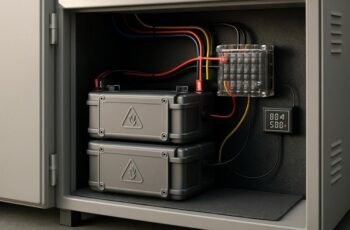
We understand portable lithium battery packs are a common air travel concern, and we’ll break down how these rules apply to what you carry, where you place them, and how to stay within watt-hour limits. We’ll cover how to calculate watts, what counts as a spare versus installed cell, and what airline screening and labeling require. If you want practical tips that help you move through security smoothly, there’s a detail that could change your approach entirely.
Key Takeaways
- Spare lithium batteries must be carried in carry-on baggage with terminals protected; prohibited in checked luggage.
- Carry-on batteries are limited to 100 Wh (waivers possible with airline approval).
- Watt-hours must be calculated as (volts × amp-hours) ÷ 1,000, and labeling must reflect device needs.
- Distinguish installed-in-device batteries from spare batteries; pack spares separately in protective cases.
- Pack and document batteries per airline guidance to streamline screening and risk-based decisions.
What Counts as a Portable Lithium Battery for Flights?
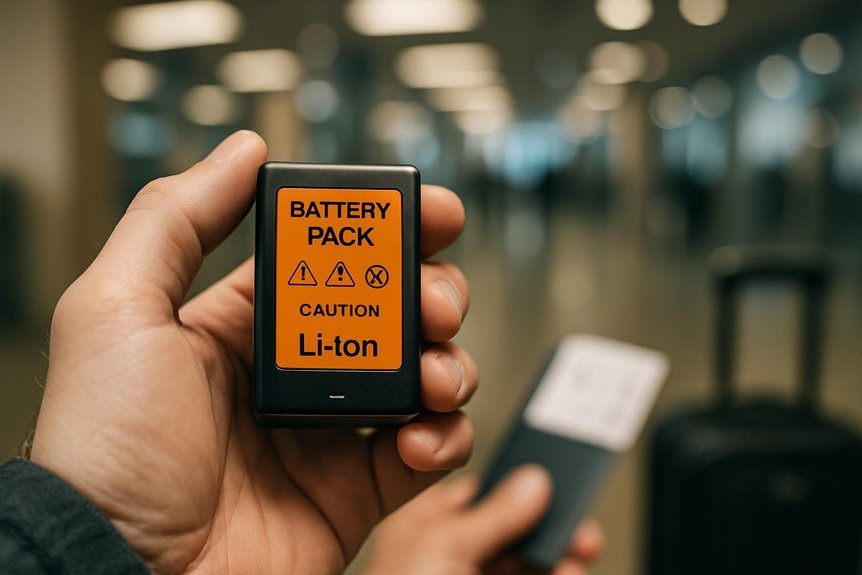
What counts as a portable lithium battery for flights? We evaluate devices that passengers typically carry, including spare cells, power banks, and in-device batteries. Under portable regulations, the battery must be removable and not oversized for cabin use, with the device’s watt-hour rating disclosed. We distinguish between batteries installed in devices and spare batteries, which must be kept in carry-on baggage and protected from shorts. For flights, lithium metal and lithium polymer chemistries are common, but limits apply by capacity and quantity. We rely on battery terminology from official guidance to avoid misclassification. If a battery is over 100 Wh but under 160 Wh, it usually requires airline approval, and certain restrictions apply. We emphasize safety, documentation, and compliance for smooth travel.
How to Calculate Watt-Hours and Sizing for Your Battery
To determine watt-hours and size a battery for flight, start with the basics: multiply the volts by the amp-hours, then divide by 1,000 to get watt-hours (Wh). We base sizing on airline limits and device needs, then verify labeling and safety notes. We avoid vague rules and rely on precise math and regulatory context.
- Understand calculation pitfalls that misstate Wh by confusion between Ah and mAh
- Convert total Wh to pack rating that aligns with airline limits
- Check labeling requirements on the battery case and protective casings
- Reassess device use and total energy draw to avoid overestimation
We emphasize concise calculations, evidence-based checks, and clear documentation to prevent missteps during packing and travel.
Carry-On vs. Checked: Lithium Battery Rules You Must Follow
We’ll compare carry-on and checked battery rules to keep you compliant and safe. We’ll cover carry-on limits, what counts as an allowed battery, and how checked baggage is restricted, so you know what to pack and what to leave behind. You’ll see how airline compliance rules shape your choices and what documentation or labeling may be required.
Carry-On Battery Limits
Carry-on battery limits matter because airlines treat lithium-ion packs differently than other electronics. We outline what you should know before you fly, so you stay compliant and safe. Our guidance reflects current policy and practical experience, not guesswork, with emphasis on real-world steps you can take.
- Ensure your devices have removable batteries or are declared if required by the airline.
- Keep batteries at or below 100 watt-hours (Wh); consider waivers for higher capacities only with prior approval.
- Carry spares in your carry-on only, with terminal protections enabled.
- Check your travel insurer and airline waiver options to confirm coverage and exceptions.
Checked Battery Restrictions
Wondering how checked batteries differ from carry-ons in air travel? We’ve learned that most airlines ban or restrict lithium battery packs in checked luggage due to fire risk. In practice, only devices with non-removable batteries are sometimes allowed when packed securely, but spare batteries must travel in carry-on bags. For checked items, limit watt-hours (usually 100 Wh or less) and avoid loose batteries, power banks, or damaged units. We emphasize packing principles that minimize damage: insulate terminals, place each item in a protective, individual pouch, and avoid crushing or puncturing the pack. This approach supports portable charging when you’re on the move, while prioritizing battery safety and compliance with carrier rules. Always verify airline-specific limits before packing.
Airline Compliance Rules
Airline compliance rules distinguish between carry-on and checked bags for lithium batteries, and knowing the difference helps you stay compliant without sacrificing your devices. We’ll cut through the noise by outlining clear requirements that exams show travelers routinely miss, avoiding common compliance misunderstandings. Our guidance focuses on practical actions you can take before you pack.
- Verify battery watt-hour rating and cell counts against carrier limits
- Place spare batteries in carry-on only, with terminals protected
- Pack batteries with devices whenever possible, or follow airline instructions for loose packs
- Declare batteries when prompted and carry documentation if needed
Airline-by-Airline Restrictions and Common Exceptions
Airline-by-airline restrictions vary, but several common threads guide most policies: many carriers permit portable lithium battery packs in carry-on baggage with size limits and require the batteries to be individually protected against short circuits. We, as travelers, look for airline specific rules that reduce risk and confusion. In practice, standards differ by battery watt-hour rating, whether devices are installed or loose, and if spare packs must be accessible. Common exceptions include replacements for medical devices and inverter-powered equipment, often with documentation. Enforcement hinges on battery by country and destination; some regions ban certain cell chemistries or impose stricter cap limits. Always verify current airline-specific guidance before packing, and carry documentation for unusual or high-capacity packs to minimize delays.
Packing Tips: How to Load, Label, and Carry Spare Batteries
We’ve seen how carrier rules vary, but the core safety practice is the same: pack spare lithium battery packs so they can’t short, overheat, or fall out of their protective casing. When loading, keep batteries in their original packaging or use a protective case, with terminals covered. Carry only what you need, and avoid loose packs that can shift. Clearly label each item with a packing label and weight, so screeners quickly verify compliance. Communicate spare batteries’ status to the crew, and separate them from electronics that could drain or heat.
- Use protective cases and terminal covers
- Label each pack with packing label and quantity
- Keep spares in carry-on, not checked bags
- Protect against shorting, overheating, and damage
What to Do If You’re Unsure or Security Questions Arise
We may encounter questions from security staff about our lithium battery packs, and we’ll stay calm and cooperative. If we’re unsure, we’ll refer to official airline and TSA guidance and ask for written clarification or a supervisor when needed. We’ll document the guidance we receive and adjust our packing and disclosures accordingly to avoid delays.
What To Expect If Unsure
If you’re unsure about whether your portable lithium battery pack meets airline rules, don’t guess—ask the screening staff for guidance. We’ll outline what to expect so you can respond quickly and correctly in unsure scenarios, minimizing delays and confusion. When doubts arise, expect clear prompts about capacity, quantity, and safety features. Staff may request documentation or test results, or suggest on-site checks. We’ll stay calm, provide requested details, and follow instructions precisely. Our aim is to verify compliance before you proceed, reducing risk for everyone. If needed, we’ll re-pack or remove items with care and courtesy.
- Confirm battery type, watt-hours, and model
- Present any required documentation or labeling
- Follow staff directions for charging or stowage
- Seek immediate clarification when instructions aren’t clear
Security Question Handling Steps
When security questions arise, stay calm and respond clearly to the officer’s prompts. We’ll keep answers brief, factual, and focused on the issue at hand, avoiding unrelated topic tangents. If a question feels unclear, ask for confirmation and repeat back what you understand. Provide any required documents or specifics about the battery pack, such as watt-hours, quantity, and packaging type, exactly as requested. Don’t volunteer unrelated topics or extraneous details; stick to security-relevant information. If you’re unsure, acknowledge it and request guidance rather than guessing. Remember, security officers assess risk based on precise information. We’ll cooperate with empathy and composure, maintaining steady communication, and escalating to a supervisor only when necessary. This disciplined approach minimizes delays and keeps the process efficient.
Frequently Asked Questions
Can I Fly With Damaged or Swollen Lithium Batteries?
We cannot fly with damaged batteries or swollen batteries. We strongly advise against transporting them; instead, follow airline/you’re local regulations for proper disposal and replacement, and contact the airline for safe handling options before your trip.
Are Power Banks Considered Portable Lithium Batteries for Flights?
Power banks are considered portable lithium batteries for flights. We advise following airline safety rules, using them with care and keeping within limits. We’ll cite manufacturer guidelines and aviation rules to ensure safe, compliant travel for everyone.
How Many Spare Batteries Can I Carry in Carry-On?
We can carry up to two spare batteries in our carry-on, within carry-on limits. How many spare batteries you bring depends on watt-hour rating, but typically 100Wh–160Wh requires airline approval. Always check your airline’s specific rules before flying.
Do Airline Loyalty Programs Affect Lithium Battery Allowances?
We’ll be honest: airline loyalty programs don’t change lithium battery allowances. Our evidence shows rules are fixed by safety standards, not status; still, we’ll guide you clearly on limits and how to document them for smooth boarding.
Can I Ship Lithium Batteries Separately to My Destination?
We can’t ship lithium batteries separately to most destinations; shipping regulations restrict this, especially for international transport. Always check carrier rules and destination approvals, and consider alternatives like powering devices locally or using compliant, air-approved shipments.
Conclusion
We’ve covered the essentials: portable lithium battery packs must be removable, within watt-hour limits, and carried in the cabin with terminals protected. Calculate watt-hours as volts × amp-hours ÷ 1000, and verify airline-specific rules, as approvals may apply. Keep spares in carry-on with proper protection and clear labeling; declare batteries when asked. If you’re unsure, ask gate staff or security to prevent delays. Ready to pack confidently, or have a last-minute question for us?