We’d best acknowledge the risks we’re managing, not exaggerating them, as we discuss lithium battery safety. We approach charging, storage, and usage with precise steps that must be followed to prevent thermal events. We’ll cover how to inspect gear, select certified chargers, and keep packs cool and ventilated away from clutter. If any warning signs appear or a device is damaged, we pause and reassess before continuing, because the right precautions keep everyone safer—and more options open for what comes next.
Key Takeaways
- Use certified chargers and avoid rapid charging; monitor temperatures during charging and storage.
- Store in cool, ventilated environments away from flammable clutter and direct sun.
- Inspect devices for damage before use; unplug when full and avoid charging on heat-prone surfaces.
- Recognize warning signs like rapid swelling, unusual warmth, odor, leakage, or discoloration; isolate and power down if needed.
- Treat batteries as safety assets during travel; use proper containment, label units, and follow regulations.
Foundations of Lithium Battery Safety
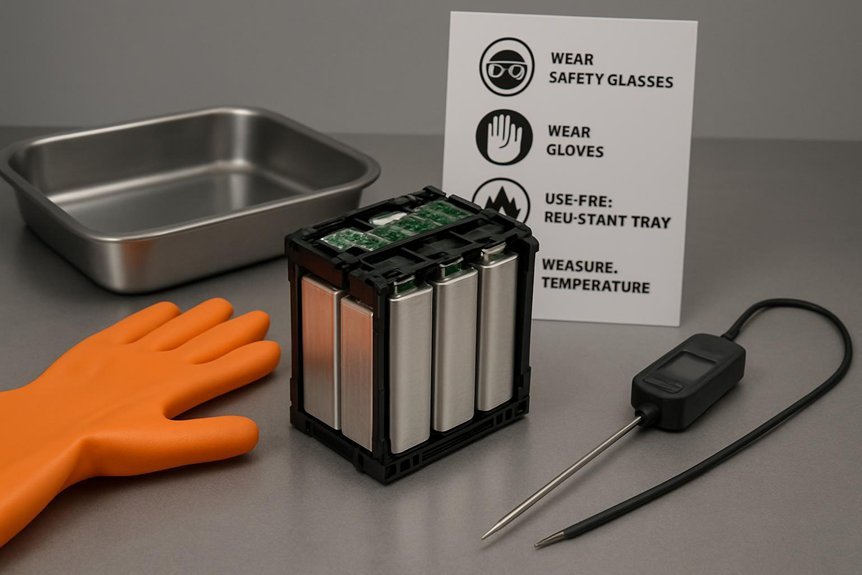
Foundations of Lithium Battery Safety start with a clear grasp of how lithium batteries operate and the hazards they present. We explain the core chemistry, failure modes, and how energy density drives risk. We, as readers, learn to identify critical boundaries: thermal thresholds that govern safe operation, charging myths that invite unsafe currents, and storage myths that neglect ambient conditions. Our approach is practical and precise: monitor temperatures, avoid rapid charging, and use purpose-built hardware. We emphasize systematic checks, protective circuitry, and consistent maintenance. By grounding decisions in data rather than conjecture, we reduce the chance of thermal runaway and structural compromise. Stay disciplined: verify specifications, follow manufacturer guidance, and question unsafe practices rooted in safety myths.
Safe Charging and Storage Practices
How can we safely charge and store lithium batteries to prevent hazards in real use? We approach charging safety, follow storage guidelines, and respect disposal needs with disciplined care. We monitor voltages, avoid overcharge, and use certified chargers. We keep environments cool, ventilated, and free from flammable clutter to support heat management. For storage, we maintain targets per manufacturer guidance, insulate from temperature extremes, and separate damaged units for professional handling. We never mix old and new cells, and we document cycles and conditions. If a fault appears, power down and isolate. When disposal is required, follow local regulations and avoid improper dumping. Our table below summarizes key steps at a glance.
| Action | Principle |
|---|---|
| Charge safety | Certified chargers |
| Storage guidelines | Ideal conditions |
| Battery disposal | Regulatory compliance |
Daily Habits That Prevent Wear and Thermal Events
We can keep wear and thermal risk low by weaving safe habits into daily use. We approach each interaction with deliberate routines: inspect devices for damage before use, avoid charging on heat- or moisture-prone surfaces, and unplug once full to reduce stress. Keep a stable environment, away from direct sun or enclosed spaces that trap heat, especially with wearable devices that ride close to skin. When traveling, plan around reduced charging options and consider airline rules for spare batteries to minimize travel risks. Use official chargers and avoid third-party cables that may misreport current. Maintain firmware updates, store devices in breathable cases, and prevent overuse in extreme temperatures. By forming consistent habits, we limit wear, degradation, and thermal events.
Warning Signs, Diagnostics, and Replacement Timing
What warning signs should we watch for, and how do we diagnose and time replacements? We begin with observable indicators: rapid swelling, unusual warmth, or a hissing or crackling sound. Any persistent odor, leakage, or surface discoloration demands immediate attention. We assess safety by isolating the device, powering down when feasible, and avoiding puncture or crush risks. Diagnostics rely on noninvasive checks first: voltage irregularities, inconsistent charging behavior, and temperature rise under light load. If anomalies persist, more formal diagnostics, including professional cell impedance tests or factory diagnostics, confirm faulted cells. Replacement timing hinges on reproducible symptoms, degraded capacity, or abnormal impedance trends. Do not delay when diagnostics indicate fault; timely replacement minimizes risk and preserves overall system safety.
Travel and Use-Case Safety for Lithium Batteries
When we’re on the move, we must treat lithium batteries as critical safety assets: assess environment, prepare for transport, and follow strict handling protocols to prevent damage or fire risk. In practice, travel safety hinges on choosing appropriate containers, keeping batteries within recommended temperature ranges, and avoiding physical shocks. We assess use cases to identify exposure to high heat, pressure, or conductive surfaces, and we limit charging to approved packs and sources. Inspect for damage before packing, label all units, and carry fire containment methods suitable for lithium fires. During use, minimize extension of charge cycles, store spares separately, and follow airline or vehicle regulations. By evaluating travel safety and use case risks, we reduce incidents and maintain safer journeys for everyone.
Frequently Asked Questions
Can Lithium Batteries Be Recycled at Home or Need a Facility?
We can’t recycle lithium batteries at home; they must go to a proper facility with safety requirements. We’ll follow strict safety facility requirements, use approved collection, and avoid DIY handling, ensuring safe disposal and environmental protection for everyone.
Do All Chargers Hurt Battery Life or Just Poor-Quality Ones?
Do all chargers hurt battery life or just poor-quality ones? Not all, but bad chargers increase wear and risk. We insist on safety testing and use of certified, quality chargers to protect longevity and performance. We’re careful, readers like you deserve it.
How Do Different Climates Affect Battery Safety Performance?
Climate effects can alter safety performance; we, as a safety-forward team, examine how temperature and humidity shift battery behavior, and we document thresholds, mitigating risks with careful charging and storage. We guide you toward safer, climate-aware usage.
What Are Legal Limits for Transporting Lithium Batteries?
We answer: legal limits for transporting lithium batteries are dictated by shipping regulations; follow packaging, labeling, and classification rules to guarantee battery safety legality and shipping compliance, avoiding hazards with precise, methodical steps.
Can I Safely Use Damaged-Looking Batteries After Minor Swelling?
We can’t safely use damaged-looking batteries after minor swelling; please stop using them and handle with care. Damaged looking batteries pose safety concerns. For disposal considerations, follow local guidelines and contact a hazardous waste facility if needed.
Conclusion
We stay vigilant by integrating these safety principles into every use. Our approach is precise: respect design limits, use certified chargers, and store away from heat and flammable clutter. One striking stat: cells fail only when ignored—thousands of incidents center on improper charging or damaged packs, not new technology. By inspecting before use, avoiding mixing old with new, and traveling with labeled, undamaged batteries, we reduce risk and extend lifespan. Safety habits keep everyone protected and devices reliable.