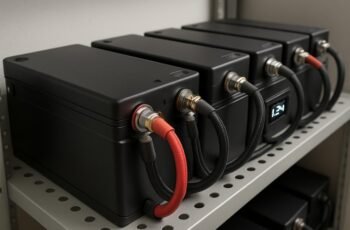
We’ll walk you through solar lithium battery storage with careful, practical steps we trust for safety and reliability. We’ll cover what makes a storage system work, early wear signs, and how temperature, ventilation, and monitoring keep risks down. We’ll outline monthly checks, smart charging habits, and when to call a pro. If we notice rapid changes or unusual odors, we pause and reassess together—and that moment is exactly why we’ll keep you oriented and prepared.
Key Takeaways
- Regularly monitor voltage, temperature, and connections to detect early signs of wear or safety risks.
- Maintain proper ventilation, cabinet spacing, and active cooling to prevent heat buildup.
- Follow a seasonal maintenance cadence: monthly checks and seasonal inspections of charging parameters.
- Practice gentle charging: use smart scheduling, avoid deep discharges, and minimize high current surges.
- When in doubt, pause operation and consult a qualified technician for diagnostic testing and maintenance recommendations.
What’s in a Lithium Battery Storage System and Why It Matters
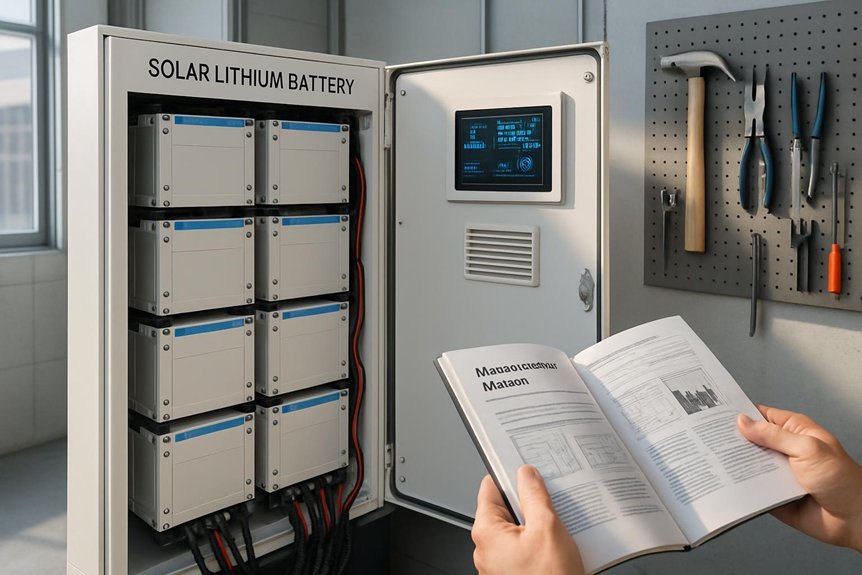
A lithium battery storage system is a carefully integrated package designed to store and deliver solar power safely and efficiently. We’ll walk you through its key components, so you know what matters most. At the core, lithium chemistry governs energy density, pace, and lifespan; it drives performance and safety choices. Cells, modules, and packs are engineered with thermal management, protective controls, and monitoring circuits to keep operations stable. Inverters, transformers, and switchgear convert and route power for home use and grid interactions, while battery management systems continually balance charge, temperature, and state of health. Enclosures and venting, fire suppression, and proper clearance zones reduce risk. Understanding these elements helps prevent thermal runaway and supports reliable, long-term resilience.
Early Signs of Wear and Safety Risks to Watch for
Are early warning signs hiding in plain sight, just waiting to be noticed before a minor issue becomes a major risk? We’re here to help you spot them, calmly and clearly. Early signs of wear can show up as subtle performance dips, unusual smells, or warm spots near battery modules. Recognize safety risks early, and you reduce the chance of costly failures or dangerous conditions.
1) Observe for unusual heat, swelling, or scents
2) Monitor performance drops and leakage indicators
3) Inspect connectors and enclosure for corrosion or damage
We approach each cue with a methodical mindset, documenting findings and prioritizing safety. If any early signs persist, discontinue use and consult a professional. Staying vigilant keeps your system reliable and your space safe from safety risks.
Best Practices for Maintaining Safe Temperatures in Your Storage System
Maintaining safe temperatures in your storage system starts with applying the warning-signs we’ve already identified and turning them into proactive controls. We assess ambient conditions, ventilation adequacy, and cabinet spacing to prevent heat buildup. Regular temperature monitoring guides our actions, helping us spot drift before it becomes risky. We implement clear setpoints and automatic alerts, ensuring alarms trigger at safe thresholds and bypasses aren’t left open. Our approach emphasizes redundancy: dual sensors, backups for power, and documented response procedures. Safety drills train everyone to react promptly, minimize exposure, and shift loads as needed. We also schedule routine airflow checks, filter maintenance, and seal inspections to sustain uniform temps. By staying disciplined and precise, we reduce hot spots and extend system reliability.
Monthly and Seasonal Maintenance Tasks to Perform
Each month, we run through quick battery checks to monitor voltage, temperature, and connections, ensuring anything out of spec is addressed before it becomes a problem. Each season, we perform a broader system inspection, verify charging parameters, and confirm safety devices are functioning properly. We also follow safe cleaning practices to remove dust and ensure terminals stay corrosion-free, keeping the system reliable and safe.
Monthly Battery Checks
Monthly checks keep your solar lithium battery system reliable and safe by catching small issues before they become costly problems. We approach this with calm, systematic steps to protect solar safety and ensure warranty coverage remains intact.
1) Inspect terminals and housing for corrosion, cracks, or moisture, and wipe connections to maintain solid contact.
2) Check voltage, states, and SOC indicators, noting discrepancies and logging readings for trend analysis.
3) Test safety devices, including fuses and venting pathways, and verify that alarms or indicators alert promptly.
We perform these checks after a full system cool-down and before peak demand periods. If anything seems off, we pause operation, isolate the pack if needed, and consult the manual or a qualified technician to preserve safety and warranty coverage.
Seasonal System Inspection
Seasonal system inspections build on our monthly checks by adding longer-horizon checks that align with changing outdoor conditions and system wear. We begin by reviewing performer schedules, mounting hardware, and enclosure integrity to catch corrosion or loosening before it causes failure. Next, we examine venting, cables, and terminations for cracking, discoloration, or warmth, addressing issues promptly for lithium safety. We test charge controllers and inverters under expected seasonal loads, verifying setpoints and alarms align with outdoor temperatures. Battery modules receive a visual scan for swelling, leaks, or debris, followed by electrical insulation checks and insulation resistance tests as appropriate. We document results, adjust maintenance calendars, and prioritize any corrective actions. Throughout, we emphasize seasonal inspection discipline, safe handling, and adherence to manufacturer recommendations.
Safe Cleaning Practices
How can we keep our solar lithium battery storage clean without compromising safety? We approach safe cleaning with care and a clear plan, prioritizing lithium hazards awareness and proper procedures. We’ll keep surfaces dry, use non‑abrasive wipes, and avoid liquids near terminals. Our method is deliberate, documented, and safety‑driven.
- Inspect for corrosion or dust, then wipe with a lint‑free cloth and a mild, non‑conductive cleaner if needed.
- Dry all components completely, and never spray cleaner directly onto the battery pack or vent openings.
- Log results, note any anomalies, and schedule seasonal checks to prevent buildup and address lithium hazards promptly.
Smart Charging Habits to Extend Life and Efficiency
We’ll start by outlining smart charger scheduling to align with our energy use and battery limits, avoiding constant top-offs and peak-rate charging. Next, we’ll define optimal charging windows that minimize stress on cells, preserve capacity, and reduce heat buildup. Finally, we’ll discuss battery health preservation practices—like staying within recommended SOC ranges and monitoring state of health—to maintain long-term efficiency.
Smart Charger Scheduling
Smart charger scheduling is a practical habit we adopt to protect battery health and maximize efficiency. By aligning charging activities with our system’s needs, we reduce heat buildup and curb unnecessary cycles. Through deliberate planning, we practice smart charging and scheduling optimization that minimizes wear and preserves capacity over time.
1) Set flexible thresholds: prioritize low-heat windows and avoid charging at peak temps to maintain stable cell chemistry.
2) Use automated schedules: let the charger respond to weather, usage patterns, and available solar generation for consistent performance.
3) Monitor health indicators: track voltage, current, and temperature to catch anomalies early and adjust routines accordingly.
Together, these steps foster safer operation, prolong life, and improve overall energy reliability.
Optimal Charging Windows
Finding the right electrical cadence matters because charging during ideal windows protects cell chemistry and boosts system reliability. We start by identifying daily cycles when solar input and grid support align, creating a stable charging environment. Our approach is to set clear window timing for each unit, avoiding peak demand zones and rapid top-offs that stress cells. We implement gradual charging ramps and monitor voltage and current thresholds, pausing if parameters drift. We prefer moderate charging currents that maintain a safe temperature range, recalibrating as weather or usage changes. We document each window, adjust schedules after long storage periods, and synchronize with backup devices to prevent simultaneous high draws. By prioritizing optimal charging practices, we extend efficiency while reducing wear and tear.
Battery Health Preservation
We keep a steady, safety-minded approach when preserving battery health, building on optimized charging windows by prioritizing gentle, gradual inputs that minimize stress on cells. Our smart charging habits protect performance by avoiding abrupt high currents and by respecting recommended SOC ranges. This supports reduced battery degradation and steadier energy delivery, while careful electrolyte management helps maintain ionic balance and temperature stability.
- Adhere to manufacturer charge windows and avoid deep discharges.
- Use staged charging: slow first stage, then moderate top-up, monitoring for heat.
- Schedule maintenance checks to confirm electrolyte levels, cell temperatures, and circuit integrity.
When to Call a Pro and What They’Ll Check During a Visit
When should you call a pro for solar lithium battery storage, and what will they check during a visit? We’ll respond promptly if you notice swelling, unusual heat, or a burning smell, plus any rapid voltage drops or error codes on the system monitor. If you’re unsure about wiring integrity or if the balance of plant components shows signs of wear, it’s time to contact a professional. What they’ll check during a visit includes a safety assessment, insulation continuity, and proper component torque. They’ll test the battery module temperatures, monitor cell voltages, and verify the cooling system operates correctly. Expect a diagnostic report with recommended actions, testing logs, and any required maintenance steps. We prioritize safety, documentation, and prevention to keep storage reliable and compliant.
Frequently Asked Questions
How Long Do Lithium Battery Storage Systems Typically Last?
We typically see lithium battery storage systems lasting 5 to 15 years, depending on usage and care. We assess lithium battery lifespan and system longevity factors, applying safety-conscious maintenance, proper temperatures, and balanced charging to maximize performance and reliability.
Can Solar Storage Be Recycled at Home or Need Disposal?
Yes, you can’t recycle lithium batteries at home; you must follow disposal requirements. We’ll separate, store safely, and contact a certified recycler, handling hazardous components responsibly and ensuring proper recycling at home isn’t attempted.
Do Temperature Changes Affect Lithium Iron Phosphate Vs NMC Chemistries Differently?
We can say temperature changes affect LFP and NMC differently, with LFP generally showing greater temperature stability and slower aging indicators, while NMC is more sensitive; we monitor temperature, observe aging indicators, and adjust usage to maintain safety.
What Are Common Signs of Degraded Performance Beyond Safety Alerts?
We can spot degradation indicators like capacity loss, rising internal resistance, and faster voltage sag, and we’ll note efficiency drift as cells age. We investigate methodically, explaining why these signs appear, staying safety-conscious and reader-focused throughout.
Is Regular System Firmware Updating Essential for Storage Efficiency?
Yes, regular system updates are essential for storage efficiency. We practice firmware maintenance proactively, monitor performance, and apply firmware updates promptly, because each update can improve efficiency impact, boost reliability, and safeguard safety while refining overall system operation.
Conclusion
We’ve covered what keeps a lithium battery storage system safe, steady, and efficient. By tracking temps, voltages, and connections, we guard against swelling, heat, and odors, and we act before problems escalate. We’ll stay methodical—ventilate properly, space components, use dual sensors, and follow monthly checks plus seasonal parameter reviews. When issues pop up, we pause, consult a pro, and log every detail. Think of a vintage lighthouse beacon guiding us—constant, calm, and reliably bright through every season.