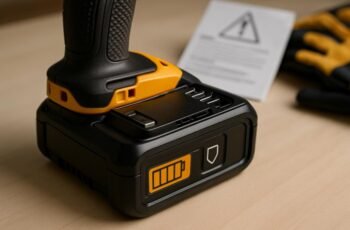
Like a cautious navigator plotting a course, we approach marine lithium battery safety with careful certainty. We’ll outline install planning, labeling, and documentation, plus strict charging protocols and vented, dedicated spaces. We’ll cover storage, winterizing, fire prevention, and emergency response, all while debunking myths that lead to risk. If we align on checks, controls, and maintenance, we can minimize sulfation and thermal events—and there’s more to it, and it’s worth staying with us to ensure safe, reliable power at sea.
Key Takeaways
- Establish a comprehensive plan covering installation, wiring, labeling, and documentation to ensure safe integration of marine lithium batteries.
- Design charging protocols with monitored currents, temperature thresholds, and automatic cutoffs to prevent thermal and voltage issues.
- Store and winterize batteries in dry, insulated spaces with moderate state of charge and regular inspections to minimize corrosion.
- Implement fire prevention and emergency procedures, including proper venting, isolation steps, training, and coordinated firefighting actions.
- Conduct regular diagnostics and preventive maintenance, verifying SOC, aging, and thermal management to debunk myths and avoid guesswork.
Install Your Marine Lithium Battery System: Step-by-Step
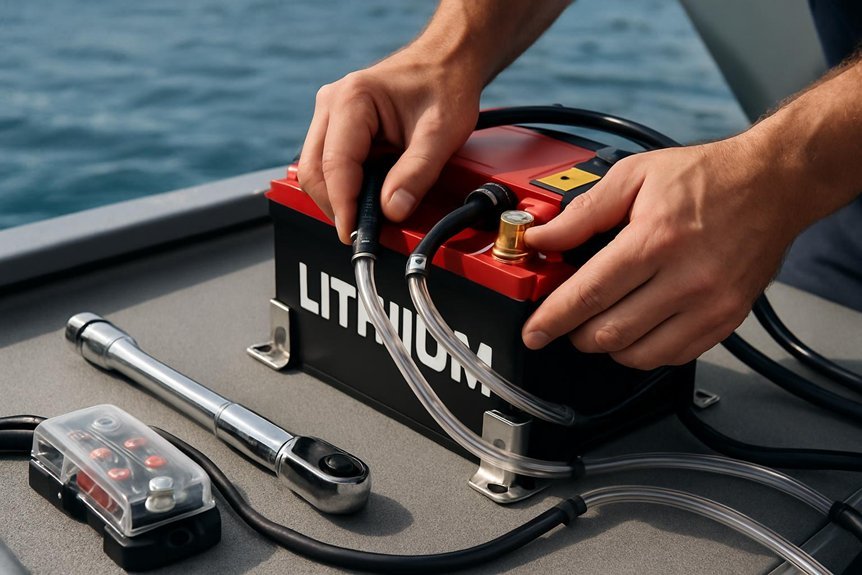
Installing a marine lithium battery system confidently starts with a clear plan and proper preparation. We begin by outlining the install setup sequence, mapping component locations, and listing required tools. Next, we verify compatibility between cells, battery management system, and the vessel’s electrical architecture, ensuring proper ratings and fuse sizing. We anchor the system in a dry, accessible space, secure mounting hardware, and route cables with clear labeling. Then we connect the BMS, battery modules, and DC bus, performing a pre-test of insulation and continuity. We document serial numbers and wiring diagrams for future service. Only after confirming stable nominal voltage and correct polarity do we proceed to final system integration checks, load testing, and documentation, maintaining strict adherence to safety norms and manufacturer guidance.
Charge Safely on Board: Protocols and Limits
When charging on board, we follow strict protocols and limits to prevent overheating, gas buildup, and electrical faults. We establish monitored charging currents, temperature thresholds, and proper isolation during starts and stops. Use purpose‑built chargers, calibrated to your battery chemistry, with automatic cutoffs for high or low temps and voltage drift. Always connect in a well‑ventilated area and never seal compartments during charge. Inspect cables and fuses for wear, and maintain a dedicated charging circuit with surge protection. Document charge profiles and respect manufacturer guidance on maximum current, duration, and rest periods. Avoid dangerous shortcuts or improvisation, and beware improper venting, which creates risks beyond the battery itself. Adhere to crew duties, log events, and promptly address alarms or abnormal readings. Safety depends on disciplined, predictable routines.
Store and Winterize: Marine Battery Care at Sea
Store and winterize correctly, and your marine batteries will endure the off-season with minimal risk. We’ll outline practical steps to store and winterize at sea, minimizing exposure to moisture and temperature swings that accelerate battery corrosion. First, disconnect loads and isolate the pack, then top off with a compatible electrolyte-free option if applicable, and store in a dry, insulated space. Maintain a moderate state of charge to reduce sulfation and corrosion risk, and check for signs of damage before reinstalling. Regular, brief mid-season inspections help catch issues early. Table below summarizes key actions and outcomes.
| Action | Rationale | Expected Result |
|---|---|---|
| Disconnect and isolate | Prevent parasitic drain | Reduced discharge risk |
| Dry, insulated storage | Limit moisture/condensation | Minimized battery corrosion |
| Moderate SOC | Slows degradation | Longer life |
| Inspect for damage | Catch problems early | Safer restart |
| Schedule reminders | Maintain routine | Reliable performance |
Fire Prevention, Detection, and Emergency Response at Sea
As we finish winterizing and securing batteries, fire safety at sea becomes a priority for every crew. We implement layered prevention: rigorous charging practices, proper venting, and clear separation from fuels. Our protocols emphasize fire safety awareness, immediate isolation of any thermal event, and swift notification to the bridge. We train on recognizing signs of battery fires and using appropriate extinguishing agents, prioritizing non-conductive, class C or lithium-ion specific options where available. We monitor for thermal runaway, overheating, and damaged cells, and we enforce fuel compatibility to minimize risk around fuel systems. Emergency response is rehearsed, with defined roles, rapid isolation, and integrated firefighting coordination. Clear reporting, post-incident review, and improved safeguards ensure ongoing maritime safety.
Troubleshooting, Maintenance, and Debunking Myths
Troubleshooting lithium battery systems at sea demands a disciplined, methodical approach: identify symptoms quickly, verify with reliable tests, and apply fixes that don’t compromise safety. We approach every issue with a calm, data-driven mindset, separating myths from proven controls. Below, we address troubleshooting myths and maintenance myths while staying concise and practical.
- Verify pack integrity with voltage, current, and temperature logs before any disassembly.
- Confirm SOC/aging assumptions via manufacturer diagnostics; don’t rely on guesswork.
- Prioritize thermal management; ignore cooling myths that promise miracles.
- Schedule regular preventive maintenance with documented checks and timely component replacements.
Frequently Asked Questions
How Do We Handle Battery Disposal and Recycling While Offshore?
We handle offshore disposal by coordinating certified marine recycling partners, using approved containers, and tracking manifests; we refrain from improper dumping and schedule routine offshore transfers. We ensure compliance with offshore disposal regulations and marine recycling guidelines.
What Are Non-Marine-Grade Chargers Safe for These Packs?
We’re not taking chances; we’ll cut to the chase: non marine chargers are not safe for these packs. We insist on safety only, verifying compatibility and certifications before use, to protect crew, vessel, and cargo.
Can Lithium Batteries Be Used With Solar and Wind Together Onboard?
Yes, we can use lithium batteries with both solar integration and wind coupling onboard. We verify specs, balance inputs, and manage charging profiles, ensuring safe, coordinated operation and redundancy for reliable power delivery anytime we’re cruising offshore.
Are There Compatibility Issues With Different Manufacturers’ BMS Units?
We should acknowledge compatibility issues: BMS interoperability varies by manufacturer, and mixing brands can cause safety and performance gaps. We’ll check specs, insist on standard communication protocols, and avoid off topic for other H2s listed above.
What Are Warning Signs of Subtle Cell Imbalance at Sea?
Yes, subtle cell imbalance shows as creeping capacitance and unbalanced cells; at sea, monitor voltage drift, increased internal resistance, unexpected calendar-like swings, and reduced capacity. We’ll act promptly to isolate causes and rebalance safely.
Conclusion
We’ve seen how a well-planned marine lithium battery setup keeps your voyage safe and reliable. We investigated the theory that “spare, high-capacity packs tempt bold shortcuts” and found truth in preparation: proper install, continuous monitoring, and strict charging limits deter failures. By inspecting components, labeling, and pre/post tests, we stay ahead of sulfation, overheating, and fires. Let’s commit to meticulous maintenance, clear documentation, and proactive emergency drills—for calmer seas and confident hands at the helm.