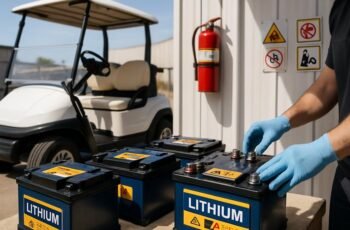
We cannot afford a single bolt of chaos when we travel with lithium power. We’ll walk you through proven chemistries, solid BMS protection, and strict installation practices that minimize fire risk and venting concerns. We’ll cover secure mounting, proper wiring, and safe charging so you’re not guessing in an emergency. There’s more to this than gadgets—let us outline a clear plan you can follow, day after day, mile after mile.
Key Takeaways
- Choose safe RV lithium chemistry with strong BMS, cell balancing, overcurrent protection, SOC monitoring, and third-party testing for reliable performance.
- Plan wiring with gauge-matched conductors, secure clamps, strain relief, and vibration-resistant BMS installation to prevent thermal or electrical faults.
- Prioritize venting and ventilation compliance; inspect outlets, fittings, and airflow to avoid fumes and fire hazards.
- Use certified connectors, verify shore power ratings, proper cable gauges, and monitor load balancing to prevent heat rise during charging.
- Create a personalized safety plan with drills, assign responsibilities, and routinely inspect connections, temperatures, and safety devices.
Choosing a Safe RV Lithium Chemistry: Key Safety Criteria
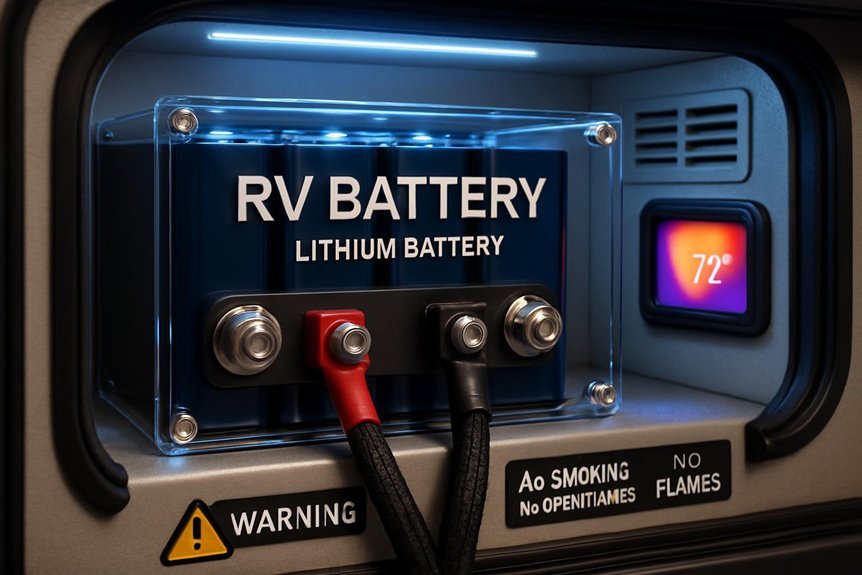
When selecting an RV lithium pack, we prioritize chemistry that minimizes thermal runaway risk, has proven long-term stability, and includes robust protection features. Our focus is on safe chemistry and a battery chemistry that demonstrates consistent performance under varying conditions. We evaluate vendor data, cycle life, and thermal management, since heat is a primary safety concern. We favor chemistries with integrated BMS safeguards, cell balance, overcurrent protection, and accurate state-of-charge monitoring. We avoid options with unclear data or weak short-circuit protection. We require certifications and third-party testing to back performance claims. Our goal is predictable, steady operation, not flashy specs. By narrowing choices to proven formulations, we better safeguard occupants and equipment while maintaining reliability on the road.
Is Your RV Battery Venting Up to Code? How to Check
Is your RV battery venting up to code, or are you risking fumes and fire? We treat venting seriously, and we want you to verify promptly. Misconceptions about venting myths can mask real hazards, so we outline concrete checks and reference venting codes to keep everyone safe.
1) Inspect location: ensure the vent outlet is unobstructed and directed away from living areas and intake vents.
2) Check seals: confirm termination fittings are intact, and that hoses or ducts aren’t cracked or loose.
3) Test airflow: observe steady exhaust flow when the system operates, not a stagnant plume.
4) Review manuals: compare installed hardware to the manufacturer’s venting codes and local regulations for exact specs.
Wiring, BMS, and Installation Basics for Safety
We need to address wiring precautions and proper BMS installation basics to ensure safety. We’ll guide you on cleanly routing cables, secure terminations, and selecting the right BMS for RV use. Let’s start with exact, cautious steps to prevent faults and fire hazards.
Wiring Precautions
How can you keep lithium battery wiring safe on the road? We’re guiding you to tighten routes, connections, and protective measures so hazards stay out of sight. Precise installation minimizes risk of shock, fire, and voltage drop, while clear labeling avoids safety misalignment. Focus on routing away from heat sources, securing cables, and using appropriate gauges. Avoid irrelevant discussion that distracts from real dangers, and verify that every splice is crimped and insulated.
- Plan routes with dedicated, shielded channels and avoid pinch points.
- Use correct gauge wire, proper terminals, and moisture-resistant connections.
- Insulate and seal terminations; test continuity without live power.
- Double-check labels, fuses, and bonding to prevent miswiring.
BMS Installation Basics
BMS installation basics bring the wiring stage into focus: a well-planned setup protects you from overcurrent, improper cell balancing, and voltage spikes. We approach this with precision, outlining clear steps and cautions that keep travel safety in mind. Properly sized cables, correct fuse placement, and consistent bus bars minimize risk, while properly applied shunts monitor current accurately. Always verify that battery management software reflects real‑world readings and aligns with your inverter. We also consider safe battery disposal if replacement becomes necessary, ensuring compliance and responsibility.
| Step | Key Action | Safety Note |
|---|---|---|
| 1 | Plan wiring route | Avoid moisture, heat, and loose connections |
| 2 | Install BMS modules | Secure mounting; protect against vibration |
| 3 | Configure thresholds | Set conservative limits; test cycles |
| 4 | Verify integration | Cross-check with charger/monitoring data |
Travel safety and battery disposal are essential considerations.
Safe Charging for RV Trips: Connectors, Shore Power, and Amps
Are you sure your RV charging setup is ready for safe trips? We’ll cover connectors, shore power, and amps with precise caution. Our aim is safe charging, avoiding overloads and heat rise, while using proper equipment and practices.
1) Use only certified connectors and adapters, matching voltage and amperage to your system.
2) Verify shore power ratings, breakers, and cable gauge before plugging in.
3) Inspect cords for wear, corrosion, and secure connections at both ends.
4) Monitor load balance, avoid simultaneous high-draw appliances, and respect the coach battery’s limits.
Monitor and Maintain Your System to Prevent Fires
We must stay vigilant: we monitor and maintain the system to prevent fires by regularly inspecting connections, monitoring temperatures, and testing safety devices. We keep a tight routine for our lithium battery install, documenting any irregular readings and correcting faults before they escalate. Check terminals for tightness and corrosion, verify isolation switches, and ensure fuses remain intact. Temperature sensors should stay within the manufacturer’s safe range, with alarms clearly audible. Testing safety devices—blow-out indicators, cutoff relays, and emergency shutoffs—becomes a non-negotiable habit. Practice safe disposal for any damaged components and review cabinet ventilation to prevent heat buildup. When a battery casing shows deformation or leakage, replace it promptly and dispose of the unit per local regulations. Vigilance today prevents fires tomorrow.
Heat, Swelling, and Warning Signs to Watch on the Road
Heat and swelling on the road are warning signs you can’t ignore. We keep a close eye on our battery system, noting heat swelling and other warning signs as soon as they appear. Ignoring these cues risks mounting damage, fires, or failure at critical moments. Stay alert, move to a safe location, and assess before proceeding. If we detect any strong odor, abnormal warmth, or rapid venting, we pause and recheck connections, cooling paths, and enclosure integrity.
- Monitor temperature spikes and swelling closely during use
- Note any unusual odors or venting from the pack
- Inspect connections, fuses, and cabling for damage
- Seek professional evaluation if warning signs persist
How to Respond Quickly If a Battery Issue Arises While Traveling
When a battery issue appears while traveling, act quickly and calmly to reduce risk. We stay focused, assess the situation, and alert everyone aboard. If you notice heat, swelling, or smoke, pull over safely, power down the system, and avoid opening hot battery compartments. Use protective gloves and eye protection if you must inspect, but do not handle damaged cells. Disconnect the battery if you’re trained and it’s safe to do so, and ventilate the area. Document the issue for support, then contact roadside assistance or the manufacturer. Prioritize personal safety and traveling emergencies by moving away from flammable materials and keeping a safe distance. Follow the recommended quick response steps, and refrain from improvising repairs. Stay cautious, prepared, and clearheaded.
Safe Charging Gear and Installation Accessories for RVs
What gear actually keeps RV charging safe, and which installation accessories minimize risk? We’re careful about every connection and circuit, because safe charging relies on robust gear and proper setup. Our approach centers on quality components, correct sizing, and secure mounting. We’ll use tested controllers and fuses, plus vibration-resistant wiring, to support safe charging and prevent faults. Installation accessories matter as much as the hardware itself, reducing heat buildup and arc risks. We stay vigilant about labeling, conduit protection, and strain relief to preserve system integrity.
- High-quality charge controllers with proper amperage rating
- Appropriately rated fuses and circuit breakers
- Vibration-resistant, gauge-matched wiring
- Conduit, clamps, and strain-relief that secure all connections
Create a Personalized RV Lithium Safety Plan Now
We’re starting with a personalized RV lithium safety plan that fits your setup and usage. We’ll outline clear, practical steps you can take now to tailor safety rationale to your habits and a concrete action list to follow. Let’s discuss how to translate your realities into precise precautions and achievable tasks.
Personalize Safety Rationale
How can we tailor safety to your RV life? We approach personalized safety by framing a clear risk assessment and then aligning actions to your specifics. We speak to you, not at you, so you understand why each measure matters and how it fits your routine. Our goal is precise, cautious planning that minimizes surprises and maximizes reliability.
- Identify likely hazards in your travel patterns, storage, and charging behavior.
- Distill risks into actionable steps, focusing on containment, monitoring, and maintenance.
- Assign responsibilities for each family member, with check-ins and updates.
- Reassess regularly as routes, loads, and gear change, ensuring ongoing validity of your plan.
Practical Action Steps
Practical action steps start with a clear, personalized plan that translates our safety rationale into daily routines. We’ll map responsibilities, checks, and responses into a compact, repeatable habit. First, identify battery hazards in your chassis, connections, and vented spaces, then seal draft paths and organize tools to minimize risk. Next, implement safety guidelines for charging, discharging, storage, and travel, including temperature limits and clear isolation procedures if anomalies appear. We arm you with a simple triage protocol: recognize warning signs, verify with a quick test, and isolate if needed. Train everyone aboard on shutoff locations and emergency steps, rehearse drills, and document learnings. This approachable plan reduces confusion, reinforces discipline, and keeps safety front of mind for every trip.
Frequently Asked Questions
How Often Should I Replace a Lithium Battery in an RV?
We replace when capacity drops noticeably, typically every 5–10 years with proper care; monitor aging indicators and performance. We discuss two word discussion ideas: battery aging. We caution that usage, depth of discharge, and temperature affect longevity.
Can I Mix Different Lithium Chemistries in One System?
Mixing different lithium chemistries isn’t advised; incompatible chemistries can cause safety issues. We strongly caution that mixed chemistry risks are real, and we recommend keeping a uniform system to prevent imbalance, thermal runaway, or premature failure.
What Is the Safest Storage Temperature for RV Batteries?
The safest storage temperature for RV batteries is around room temperature, roughly 20–25°C, avoiding extreme heat or cold. We stress fire safety, monitor for heat buildup, and store in a well-ventilated, fire-rated enclosure when possible.
Do I Need a Dedicated Extinguisher for Lithium Fires?
We do, yes, you do need a dedicated extinguisher for lithium fires, and we’re precise: lithium fires aren’t compatible with regular extinguishers; use a lithium-specific device, check extinguisher compatibility, and keep it accessible in every RV area.
How Do I Spot Hidden Defects Before Trips?
We spot hidden defects through thorough preflight checks, inspecting wiring, terminals, and connectors for wear or corrosion, and testing seals and ventilation. We stay cautious: address any anomaly promptly, document findings, and defer trips until everything checks clean.
Conclusion
We understand you want reliability without fuss, so we choose safe chemistry, solid BMS, and clear ventilation. Some may worry this is overkill, but the extra vigilance prevents costly failures on the road. By installing rugged wiring, certified gear, and a personalized safety plan, you’ll sleep easier and stay on course. With proactive monitoring and drills, you’ll spot trouble early and act calmly, keeping your RV adventures safe and uninterrupted.