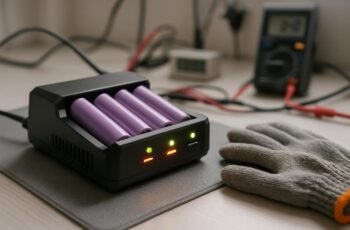
We’re focused on lithium battery safety because these cells power our devices and vehicles, yet missteps can spark thermal runaway, swelling, gas release, or electrolyte breakdown. We’ll insist on certified chargers, proper chemistry matches, and solid connections, while checking for damage and avoiding extreme charging temps or aggressive fast-charging. We’ll monitor for heat and swelling, store and transport correctly, and prepare an incident plan with clear steps and containment. Let’s explore what to do next.
Key Takeaways
- Understand lithium battery basics: anode, cathode, electrolyte, and separator, plus how charging/discharging moves ions between electrodes.
- Use certified chargers matched to your battery chemistry and state of charge; avoid fast-charging beyond manufacturer limits.
- Regularly inspect for swelling, leakage, heat, corrosion, or loose connections; halt use if anomalies appear.
- Store, transport, and charge in well-ventilated areas away from flammables; have proper PPE and fire containment ready.
- Document charging parameters, replacements, and incident details to support safety and traceability.
What Are Lithium Batteries? The Safety Facts Beginners Should Know
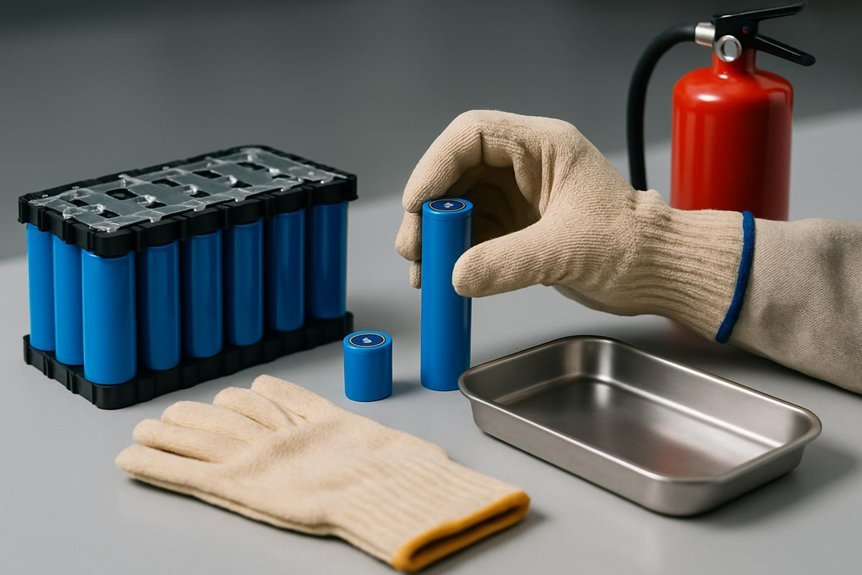
Lithium batteries are compact energy storage devices that power countless devices, from smartphones to electric vehicles, and they operate through lithium ions moving between electrodes during charging and discharging. We’ll frame what these cells are, how they function, and why safety matters. At core, lithium chemistry enables high energy density and rapid cycling, but this also introduces specific battery hazards that demand respect and proper handling. Chemistry choices—lithium cobalt oxide, nickel manganese cobalt, lithium iron phosphate—dictate voltage, capacity, thermal behavior, and failure modes. We assess components: anode, cathode, separator, electrolyte, and current collectors. Misuse can trigger thermal runaway, swelling, gas release, or electrolyte decomposition. Understanding these fundamentals helps us prevent incidents, ensure correct storage, and implement appropriate protection measures in any application.
Lithium Battery Care 101: The Essentials You Must Do
We keep our lithium batteries safe by following two core practices: use proper charging procedures and routinely inspect and replace batteries showing wear or damage. Proper charging means using the correct charger, matching voltage and current specs, and avoiding extreme temperatures during charging. Regular inspections identify swelling, corrosion, or loose connections so we can replace components before failures occur.
Use Proper Charging
Do you know the key to safe lithium charging is using the right equipment and procedures every time? We do, and we insist on strict controls. We follow established charging protocols that match each battery chemistry we handle, never improvising. Use a certified charger with overcurrent, temperature, and short-circuit safeguards, and verify compatibility with the pack’s chemistry and state of charge. Avoid fast-charging beyond manufacturer limits; monitor cell temperature and voltage during balance charging to prevent stacking or thermal runaway risk. Inspect connections for corrosion or looseness before every session, and keep charging areas well-ventilated and away from flammable materials. Document charging parameters for traceability, train operators on safe shutdown, and replace any damaged leads or packs promptly to maintain overall system integrity.
Inspect and Replace Battery
Regular checks and timely replacements prevent small issues from becoming big failures. We inspect batteries systematically, prioritizing signs of swelling, leakage, or heat. When anomalies appear, we halt use, isolate the pack, and initiate replacement protocols with documented steps to ensure traceability and safety. We assess cell balance, connector integrity, and enclosure condition, noting deviations against baseline measurements. Our approach emphasizes conceptual safeguards—clear criteria for replacement thresholds, compatibility checks, and proper handling to prevent secondary damage. During replacement, we follow sequence: power down, disconnect, vent precautions if needed, and transfer to a certified pack or module. We verify insulation, label the new unit, and recheck interlocks. Post-replacement, we monitor for abnormal temperature or voltage drift, maintaining rigorous, routine documentation.
Spotting Damage Early: Warning Signs Nobody Should Ignore
We’ll start with early crack indicators like fine surface fractures and hairline separations that can precede bigger failures. Swelling signals require immediate action, as a growing bulge indicates gas buildup and internal damage. Recognize these warning signs promptly so we can isolate the cell, prevent thermal runaway, and minimize safety risks.
Early Crack Indicators
Are you spotting tiny cracks early enough to prevent a catastrophe? We must act with precision, scan for early crack signs, and log every anomaly. Early crack indicators provide rapid feedback on structural stress, guiding safe handling and isolation if needed. We watch for hairline fractures along seams, edge flaking, and sudden micro-delaminations, all of which can escalate under load or temperature shifts. Battery indicators like voltage drift, irregular charging behavior, and unexpected temperature rise amplify concern when paired with visible cracking. Documented patterns help us decide containment steps and disposal if integrity is compromised. Stay proactive, cross-check with thermal data, and never ignore suspicious fracture development. Early crack awareness protects users, equipment, and surrounding environments.
| Column A | Column B |
|---|---|
| Hairline fractures | Temperature rise |
| Edge flaking | Voltage drift |
| Micro-delaminations | Irregular charging |
| Structural stress | Safe-handling decision |
Swelling Warning Signals
Swelling signals demand immediate attention: the unmistakable expansion of a cell or pack indicates internal gas buildup or pressure from thermal runaway risk. We recognize swelling as a physical warning distinct from simple deformation, often reversible only with controlled cooling, while deformation may reflect mechanical stress or external impact. In our inspection routines, we quantify bulge size, note changes over time, and compare to manufacturer specifications. We also track venting indicators, such as hissing sounds, warm to the touch surfaces, or visible vent activity during charging or puncture tests. If swelling or venting indicators appear, we isolate the pack, discontinue use, and initiate containment and professional evaluation. Early intervention minimizes cell-to-cell propagation and safety risks for users and equipment alike.
Safe Charging in Daily Life: Do’s, Don’ts, and Quick Rules
To charge lithium batteries safely in daily life, we should follow clear rules: use the charger that came with the device or a certified replacement, avoid third-party adapters with unknown specs, and never mix cells or charge in extreme conditions. We commit to safe charging by supervising connections, using proper venting, and unplugging after full charge when feasible. Daily routines should include inspecting cords for wear, avoiding extension cords, and charging away from heat sources. We avoid multitasking during charging and never leave devices unattended for long periods. Table below presents quick references:
| Rule 1 | Rule 2 | Rule 3 |
|---|---|---|
| Use certified charger | No unknown specs adapters | Don’t charge in heat |
| Rule 4 | Rule 5 | |
| Regular inspections | Unplug when full |
How to Store Lithium Batteries to Maximize Life and Safety
How should we store lithium batteries to maximize life and safety, without compromising performance? We store them at a controlled store temperature, typically around 0–25°C, avoiding extreme heat or cold that accelerates degradation. We prevent voltage stress by storing at partial state of charge when long idle periods are expected, following manufacturer guidance. We separate cells and packs to prevent short circuits, and use nonconductive, fire-resistant containers with proper venting behavior awareness. Our Battery safety mindset keeps terminals covered, moisture controlled, and enclosures ventilated to manage any incidental gas release. We implement standardized Storage practices: label dates, rotate stock, inspect for swelling, corrosion, or leaks, and replace aged packs promptly. Adherence minimizesCapacity loss, mitigates risk, and preserves performance across usage cycles.
What to Do If a Battery Smells, Smokes, or Catches Fire
When a battery smells, smokes, or catches fire, act quickly and methodically to minimize danger and injury. We assess the situation, isolate the device from others, and call for emergency help if needed. If safe to do so, evacuate nearby people and move to fresh air. Use a Class ABC extinguisher or water on small lithium fires only after removing sources of oxygen and disabling charging equipment; do not shake or puncture the cell. Maintain distance, avoid inhalation, and monitor temperatures with standard PPE. Perform smell diagnostics by identifying odor signatures without touching hot surfaces. Burn prevention relies on early containment, controlled cooling, and securing the device until it cools fully. Document incident details for post-incident review.
Routine Safety Checks: Weekly and Monthly Habits That Matter
Routine safety checks keep lithium battery use predictable and safer by establishing a regular cadence for inspection, testing, and documentation. We, as readers and practitioners, implement routine checks to prevent degradation, leaks, and thermal events. Weekly habits focus on visual integrity, terminal cleanliness, and connector security, plus verifying venting indicators and protection circuitry status. We record voltage readings, impedance, and any deviation from baseline to detect drift early. Monthly habits emphasize capacity retention, insulation integrity, and thermal runaway safeguards, including insulation resistance and pack balance checks. We document every finding, action, and replacement item, maintaining a traceable history for audits and incident analysis. By adhering to routine checks, we sustain performance, extend life, and support safe operation in all applications.
Your Quick-Start Lithium Battery Safety Checklist
We’ve established routine checks that create a dependable safety backbone; now we’ll translate that discipline into a practical, quick-start safety checklist you can use immediately. We present a concise, action-oriented guide focused on safety fundamentals and proper battery handling. Inspect for physical Damage: cracks, bulges, leaks, or swelling; do not use compromised packs. Verify voltage and temperature prior to any handling; suspend use if exceeding recommended ranges. Use correct PPE, non-conductive tools, and fire containment measures; never short terminals. Store and transport upright in approved containers, away from heat sources. Practice thermal management: monitor ambient temps, avoid charging unattended, and disconnect after charging completes. Document serials, dates, and anomalies. Train every user, enforce a buddy system for high-risk tasks, and review after incidents.
Frequently Asked Questions
Can Lithium Batteries Be Safely Recycled at Home?
We can’t safely recycle lithium batteries at home; they require licensed facilities. We debunk recycling myths, insisting on safe disposal via accredited programs. We’ll guide you to local drop-offs and professional recycling centers for proper handling and contamination prevention.
How Long Can I Safely Store a Charged Battery?
We should store a charged battery for a limited period, typically 3–4 weeks, following charge level guidelines. Storage duration hinges on keeping at about 40–60% charge and in a cool, dry, well-ventilated, non-flammable enclosure.
Do All Chargers Work for Every Lithium Battery?
We’ll tell you flatly: not all chargers work for every lithium battery. Charge compatibility varies; know the chemistry and capacity. Charger limitations exist, so verify specs, use device-recommended adaptors, and avoid improvised, mismatched charging. Remember: safety first.
What Safety Gear Is Essential During Handling?
We use safety gloves, protective goggles, insulated sleeves, and a fire extinguisher as essential gear during handling to prevent shocks, burns, or thermal events, while we ensure proper technique and equipment checks for every battery.
Can a Battery Recover After a Thermal Event Without Replacement?
We can’t rely on recovery after a thermal event; we must replace the battery. We implement essential PPE, handling protocol, non replaceable safety measures, and universal chargers; store it properly, recyclable at home, and monitor storage duration.
Conclusion
We’ve covered the essentials of lithium battery safety, and you’re now equipped to handle energy storage with confidence. By following certified chargers, checking for damage, avoiding extreme temperatures, and monitoring for swelling or heat, you’ll dramatically reduce risk. Remember, misuse can escalate quickly—think of safety as non-negotiable, not optional. Keep a clear incident plan, store properly, and perform routine checks. Stay precise, stay vigilant, and treat every battery as potentially hazardous, because safety truly matters more than anything.