We must approach home lithium storage with careful containment, strict separation, and proactive monitoring. We’ll assess space, label batches, and document charge states, then design vented, noncombustible enclosures away from heat sources. We’ll install proper venting and cooling, enforce electrical safety, and maintain regular maintenance with clear metrics and rapid anomaly response. When a thermal event occurs, we’ll isolate power and follow trained suppression steps, then conduct a thorough post-incident review. There’s a critical gap we’ll need to address next.
Key Takeaways
- Use non-combustible, ventilated enclosures away from heat sources; maintain separation to minimize impact and thermal escalation.
- Implement area zoning, clear access, and documentation with heat sources, vents, outlets, and combustibles clearly mapped.
- Ensure proper electrical safety with surge protection, disconnects, labeling, and unobstructed venting for cooling.
- Establish a defined maintenance cadence with baseline metrics (voltages, temperatures, impedance) and prompt anomaly response.
- In a thermal event, isolate power safely, use appropriate fire suppression, document the incident, and conduct a post-incident review.
Key Safety Factors for Home Lithium Storage
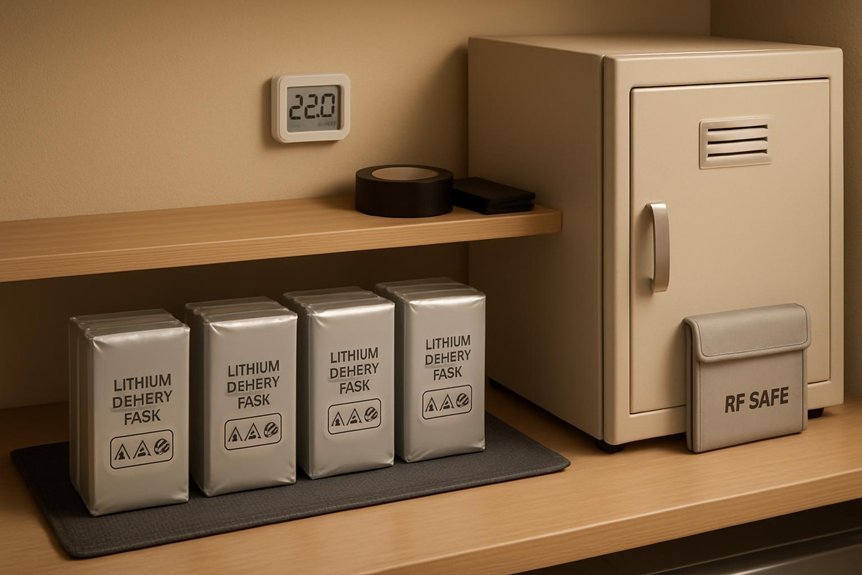
What are the core safety factors we must respect when storing lithium batteries at home? We approach storage with a disciplined, methodical mindset, prioritizing containment, separation, and monitoring. We keep packs in non-combustible, ventilated enclosures away from heat sources and flammable materials, minimizing impact and thermal escalation. Regular inspections look for swelling, corrosion, and damaged wiring, and we retire compromised units immediately. Consistent handling practices prevent mechanical damage during transport and placement, reducing puncture risk. Clear safety labeling guides responders and occupants, outlining proper storage conditions and emergency steps. We recognize that battery chemistry dictates performance limits and hazards, so storage conditions align with manufacturer specifications. We maintain documentation of batch numbers, charge state, and expiry windows, ensuring traceability and timely replacement. Continuous risk assessment informs adjustments to layout, ventilation, and access controls.
Assessing Your Storage Space for Fire Risk: A Step-by-Step Guide
We’ll start by mapping the area, listing every heat source, vent, outlet, and combustible item, then assess fire risk step by step.
We approach storage zoning with a methodical checklist: separate high-risk lithium battery zones from general storage, ensure clear access, and minimize clutter. Enclosure materials must be noncombustible or fire-resistant, with seals that deter sparks. Follow fire codes for clearance, venting, and electrical connections. Install smoke detection in each zone and verify alarms link to a central panel. Contain batteries in approved enclosures, away from flammable liquids. Regularly inspect for damage, corrosion, or swelling, and document findings. Practical risk metrics guide decisions on placement, insulation, and ventilation. This process reduces risk while meeting safety standards and protecting your home.
| Area | Risk Marker | Action |
|---|---|---|
| Zone A | High | Apply noncombustible enclosure |
| Zone B | Medium | Maintain clear access |
| Zone C | Low | Routine checks |
| Zone D | Very High | Reassign or upgrade |
| Zone E | Moderate | Install smoke detection |
Installation, Venting, and Cooling: Practical Tips for Homes
To ensure safe home use, we start with disciplined installation, proper venting, and effective cooling to prevent heat buildup and minimize fire risk. Our approach emphasizes installation considerations that place batteries away from heat sources, in accessible, well-ventilated spaces, and anchored to withstand shocks. We verify enclosure integrity, surge protection, and correct orientation to support thermal handling. Venting requirements are addressed by designing for unobstructed airflow, using approved vent channels, and avoiding sealed or confined areas that trap fumes. We install dedicated circuits, proper disconnects, and clear labeling to support quick isolation if needed. For cooling, we deploy passive and active strategies, monitor ambient temperatures, and ensure unobstructed clearances around units. These steps reduce thermal runaway potential and improve response readiness.
Regular Maintenance and Monitoring for Lithium Storage Safety
Regular maintenance and ongoing monitoring are the steady backbone of safe lithium storage, keeping the systems we install from drifting toward unsafe conditions. We approach upkeep with discipline: a defined maintenance cadence, documented actions, and timely component checks. Our aim is early detection of drift in performance, temperature, and charging behavior. We establish baseline monitoring metrics—cell voltages, pack temperatures, string impedance, and state-of-charge consistency—and compare them at regular intervals. Any deviation prompts immediate verification, prioritizing safety and reliability over convenience. We replace aging components before failure, recalibrate sensors, and verify venting and enclosure integrity. This disciplined routine reduces risk, extending system life while preserving safety margins for occupants and property. Two two word discussion ideas: anomaly review, trend forecasting.
Handling a Thermal Event: Emergency Steps and Follow-Up Actions
In a thermal event, the top priority is rapid, controlled action to protect people and property. We respond with clear roles, swift containment, and accurate communication to minimize harm. First, alert others, evacuate if needed, and summon emergency response if the situation escalates. If safe, disconnect power sources and move flammable materials away from the heat source. Do not spray water on an active lithium battery fire unless you’re trained and equipped; use a Class D extinguisher or contribute to cooling with water sparingly from a distance. Once the scene is safe, document the sequence, preserve evidence, and coordinate with responders. Conduct a post incident review to identify improvements and update emergency response plans accordingly.
Frequently Asked Questions
How Long Do Battery Packs Typically Last in Home Storage?
We typically see battery packs lasting 5–10 years in home storage, depending on use and cycles. We prioritize life cycle data and rigorous safety testing, and we monitor degradation patterns to address risks proactively and maintain overall safety.
Can Lithium Batteries Be Recycled at Home Installations?
We can’t recycle lithium batteries at home installations; we’re careful, like engineers inspecting a stove. Recycling safety is paramount, and we avoid home.installation hazards by directing proper disposal to certified facilities rather than DIY methods.
What Insurance Implications Exist for Home Storage Systems?
We need to discuss insurance implications for home storage systems, focusing on liability coverage. We assess risk, ensure clear policy terms, disclose design and maintenance practices, and align with local codes to secure comprehensive liability coverage for homeowners and installers.
Are There Age Limitations for Lithium Storage Equipment?
Yes—there aren’t universal age limits, but equipment age can affect warranties and safety, so we monitor age restrictions and warranty implications carefully. We’ll review specs with you, explaining risks, maintenance, and compliant usage—no shortcuts, ever.
Do Residential Setups Require a Permit or Local Approvals?
We require permit requirements and local approvals for most residential setups, along with zoning approvals. We’ll verify permit requirements upfront, assess risks, and coordinate with authorities to ensure compliant, safe installation and ongoing local approvals.
Conclusion
We prioritize safety above all, and we act with discipline and vigilance. By hard zoning, noncombustible enclosures, and proactive monitoring, we reduce risk and enable rapid response. In a real-world scenario, a home storage system with proper venting and fault detection detected a temp rise early, triggering isolation and cooling before escalation. Such diligence reinforces a culture of prevention: inspect regularly, document charge states, and train for swift, coordinated action if anomalies appear.