We all know the road to safety begins with clear rules, much like a steady compass guiding through a storm. We must classify lithium batteries for transport, assess risks, and ensure packaging, labeling, and documentation meet exacting standards. Our aim is rigorous containment, venting, and puncture resistance, backed by standardized testing and traceability. Compliance hinges on precise training, incident response, and continuous audits. If we align our routes and procedures now, we’ll reduce exposure and keep operations compliant—and the path forward demands our fullest attention.
Key Takeaways
- Classify batteries correctly as primary lithium metal or secondary lithium-ion to determine applicable transport rules and labeling needs.
- Ensure complete labeling, documentation, and traceability for every shipment, with cross-checks against destination, hazard class, and packaging group.
- Pack and seal to prevent leaks, short circuits, and venting, validating containment, material compatibility, and venting performance.
- Conduct verifiable safety testing and maintain auditable records for chemistry, packaging integrity, and thermal performance during transport.
- Establish incident response, training, and containment procedures, including notification protocols and corrective actions to ensure ongoing compliance.
Classify Lithium Batteries for Transport
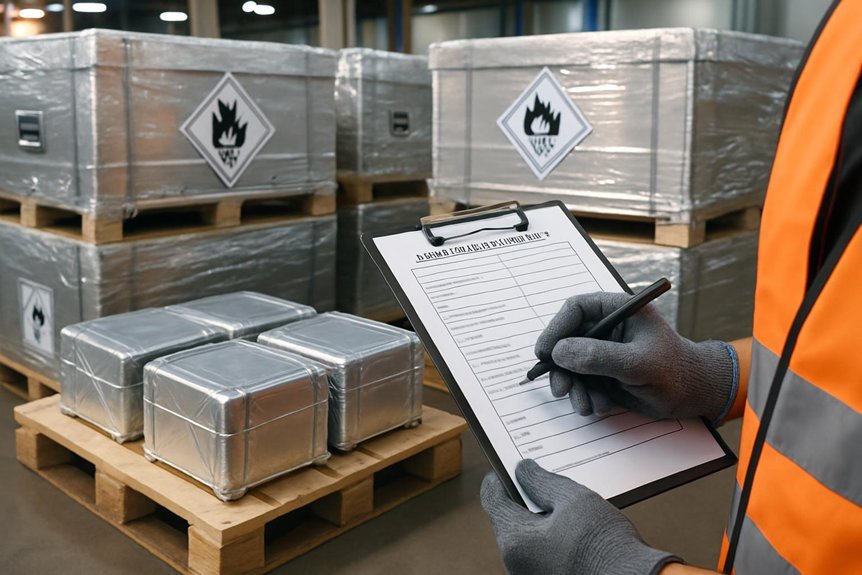
Classifying lithium batteries for transport involves distinguishing them by chemistry, construction, and intended use to determine applicable regulatory requirements. We, as practitioners, present a concise framework to readers, clarifying how classifications guide compliance, packaging, and handling. We describe primary categories—primary (non-rechargeable) lithium metal and secondary (rechargeable) lithium-ion—alongside distinctions in form factors, packaging conventions, and voltage limits. The framework emphasizes consistent documentation, marked labeling, and appropriate testing standards, ensuring that decisions align with governing authorities. We acknowledge that an unrelated topic may surface in broader discussions, yet it bears no bearing on core classification criteria. Our focus remains precise: identify chemistry, construct, and purpose, then map to applicable rules. This targeted approach minimizes irrelevant focus and supports clear regulatory alignment.
Assess Transit Risks and Exposure Scenarios
We assess transit risk factors, map exposure scenarios, and align incident response planning with regulatory requirements. We guide readers through systematic evaluation of potential conditions, exposures, and consequences along transport routes. Our approach ensures clear, concise links between risk factors, scenario development, and prepared responses.
Transit Risk Factors
Transit risk factors require a systematic assessment of exposure scenarios that lithium battery shipments may encounter during movement. We, as stewards of safety, identify conditions that influence incident likelihood and consequence severity. Our focus is on regulatory thresholds, containment integrity, and procedural controls that mitigate exposure. We evaluate transport modes, handling events, and environmental stressors to determine risk sequences without speculating beyond established guidelines. Emphasis rests on maintaining packaging integrity, prompt isolation of compromised units, and timely notification procedures. We document observable indicators such as frayed packaging and signs of thermal or mechanical stress, ensuring corrective actions align with prescribed limits. We also address battery disposal pathways for end-of-life material in compliance with applicable disposal standards, avoiding improper diversion or uncontrolled release.
Exposure Scenario Mapping
Exposure Scenario Mapping requires mapping how transit conditions, handling events, and environmental stressors combine to create specific exposure pathways for lithium battery shipments. We assess materials, packaging, and transport modes to identify sequence-driven risk profiles. Our approach highlights credible exposure routes, including potential leakage, permeation, and aerosol formation under defined conditions. We examine battery health indicators, thermal stability, and cell failure modes to determine when safeguards suffice or when escalation is warranted. Regulatory thresholds guide threshold-based decision points, ensuring consistent evaluation across routes and carriers. We document scenario boundaries, timeframes, and containment assumptions to support risk comparison, controls, and monitoring plans. This mapping informs design, inspection, and maintenance requirements, emphasizing proactive prevention of incidents and preservation of safe transit performance.
Incident Response Planning
When incidents occur, we promptly identify and assess transit risks and exposure scenarios to enable rapid, informed response. Our incident response planning establishes clear roles, notification timelines, and authority lines, ensuring coordinated action across carriers, shippers, and emergency responders. We define exposure pathways, including thermal events, mechanical damage, and environmental releases, and prioritize risk-based actions for containment, evacuation, and remediation. We incorporate temperaments considerations to guide decision-making under pressure, balancing safety with operational continuity. We maintain accessible incident protocols, checklists, and drill schedules to verify preparedness and regulatory compliance. We also evaluate marketing implications, ensuring transparent communication with customers and stakeholders without compromising safety priorities. Continual refinement follows after-action reviews, metric tracking, and regulatory updates, reinforcing a proactive, disciplined safety culture.
Pack to Prevent Leaks and Short Circuits
We will emphasize pack integrity by ensuring containers seal effectively to prevent leaks and maintain overall containment. We will address preventing contact between cells and conductive parts to avoid short circuits, while implementing proper venting steps as needed. Our guidance covers maintaining seal integrity, preventing unintended contact, and following venting procedures to safeguard transport safety.
Seal Container Integrity
Seal containers must be designed and tested to prevent leaks and short circuits under normal and abnormal conditions. We assert that container integrity reflects overall system safety, and we communicate how to achieve it. Our guidance focuses on selecting materials with appropriate chemical compatibility, verifying seam closures, and validating sealing methods through standardized tests. We require containment to resist puncture, flexing, and environmental stressors while maintaining tightness during handling and transport. Documentation should detail test protocols, acceptance criteria, and corrective actions for identified deficiencies. We emphasize traceability, periodic requalification, and integration with packing procedures to prevent leaks. In this section, we avoid extraneous discussion—unrelated topic, off topic—yet we maintain rigorous, regulatory clarity for consistent implementation.
Prevent Contact Short
Preventing contact short requires proactive packing practices that isolate cells and blocks paths for unwanted electrical discharge. We implement separation strategies that maintain physical distance between cells, packs, and conductive materials, reducing the risk of neighbor-to-neighbor transfer. Our packing approach uses approved containment, robust cushioning, and secure enclosures designed to resist abrasion and puncture. We require compatibility of packing materials with lithium battery chemistries and strict adherence to labeling and documentation standards. We monitor for unlabeled hazards and visibly inspect packaging for integrity, ensuring that any compromise is flagged before transit. We address potential battery odors through defined handling procedures that prevent leakage exposure and maintain environmental controls. By enforcing these controls, we minimize short-circuit scenarios and preserve transport safety.
Proper Venting Steps
What steps ensure proper venting when packing lithium batteries to prevent leaks and short circuits, and how do we implement them? We implement controlled venting by verifying a reliable venting mechanism in each cell assembly and packaging, ensuring only intact, approved units are used. We align packing configurations to limit pressure buildup within the pack, employing ventilated enclosures and compliant cushioning that directs displaced gases away from terminals. We document venting performance specifications, conduct pre-shipment checks, and apply manufacturer guidelines for sealing, insulation, and thermal management. We avoid overpacking, and we schedule transport modes that accommodate rise in temperature without compromising integrity. If a venting event is anticipated, we implement immediate isolation, follow regulatory reporting requirements, and replace components to restore safe, compliant transport.
Label, Document, and Comply With Regulations
Do we guarantee every shipment carries the proper markings, documentation, and regulatory clearances before departure? We insist on meticulous adherence to labeling processes and complete regulatory documentation. Our approach integrates clear labeling, traceable paperwork, and verified certifications to ensure compliant transport. Staff verify destination, hazard class, and packaging group, then cross-check against applicable regulations. Any discrepancy prompts immediate corrective action, with records updated for audit readiness. The following table delineates roles, documents, and checkpoints to uphold consistency across shipments.
| Role | Required Document | Compliance Check |
|---|---|---|
| Carrier | Shipping Paperwork | Review prior to pickup |
| Shipper | Safety Data Sheet | Confirm accuracy |
| Regulator Liaison | Certification | Validate current status |
| QA Auditor | Audit Trail | Verify completeness |
| Receiver | Delivery Receipt | Confirm intact condition |
Meet Safety Testing and Performance Standards
We now apply the rigor of labeling, documentation, and regulatory clearance to meet safety testing and performance standards for lithium battery transport. Our approach centers on verifiable test protocols, objective criteria, and traceable outcomes that support consistent compliance across carriers. We assess battery chemistry, packaging integrity, and thermal performance under representative transport conditions, ensuring that each unit withstands anticipated handling. We align with recognized test regimes, documenting results in clear, auditable records that support safety cases and regulatory submissions. Charging standards are evaluated for compatibility with standard recharge cycles, shipment modes, and state-of-charge limits, with explicit thresholds established. We communicate findings promptly to stakeholders, maintaining transparency while enforcing corrective actions where deviations appear. This disciplined framework minimizes risk and reinforces confidence in safe, compliant transport operations.
Handle and Load Correctly for Carriers and Shippers
How can carriers and shippers guarantee safe handling and loading of lithium batteries during every phase of transport? We implement standardized procedures that ensure proper packing, securing, and load distribution. We require carriers to verify packaging integrity, confirm correct orientation, and apply appropriate handling tags and contextual labeling. Shippers must provide complete documentation, including battery type, quantity, and state of charge, aligned with regulatory thresholds. Training emphasizes hazard recognition, emergency response, and segregation from incompatible goods. We enforce continuous chain-of-custody checks, visual inspections, and tamper-evident seals at loading and unloading points. Contextual labeling alerts handlers to risks, while handling tags communicate necessary actions for each shipment segment. Our approach minimizes movement-induced damage, ensures regulatory compliance, and supports traceable, safe transport across all modes.
Plan Routes and Consider Environmental Factors
Routes and environmental considerations shape every phase of lithium battery transport. We outline route selection to minimize risk exposure, ensure regulatory compliance, and support timely delivery. Our planning integrates restricted zones, permissible roads, and approved hazmat corridors, with documentation aligned to governing standards. We evaluate terrain, infrastructure, and access to emergency services to reduce delay potential and safeguard cargo integrity. Weather considerations drive contingency sizing, hourly schedules, and driver fatigue management; we adjust routes to avoid extreme heat, freezing conditions, or flood-prone paths when practicable. We verify border and intermodal transfer points for compatibility with equipment and surveillance requirements. Communication with shippers, carriers, and authorities follows defined escalation protocols, ensuring traceability and accountability. Through deliberate route selection, we reinforce safety, efficiency, and regulatory adherence.
Respond to Compromised Batteries: Incident Protocol
When a battery is compromised, immediate, structured action is essential to limit risk and preserve safety. We respond with a defined incident protocol that prioritizes containment, communication, and compliance. First, alert supervisory and relevant authorities, then isolate the affected area and prohibit unauthorized access. Assess the situation using objective criteria, documenting capacity, temperature, and visual indicators. Initiate incident escalation per regulatory timelines, designate a lead responder, and implement protective measures for personnel and surrounding materials. Maintain a transparent chain of custody for the battery and any debris. After stabilization, pursue compassionate recovery for involved personnel, and arrange appropriate battery disposal through approved channels. Review the incident for lessons learned, update procedures, and reinforce training to prevent recurrence.
Train for Safety and Competency Across Teams
We must discuss Cross-Functional Safety Training, Competency Verification Methods, and On-Board Incident Drills as core elements of our safety program. We will outline how these components integrate to guarantee consistent competencies across teams and clear accountability. We invite feedback on current practices and opportunities to standardize training, verification, and drills nationwide.
Cross-Functional Safety Training
Cross-functional safety training guarantees that all teams—engineering, logistics, safety, and operations—understand the lithium battery transport safety framework and their roles within it. We design cross-functional sessions to align responsibilities, ensure regulatory compliance, and fast-track incident reporting. Through practical exercises, we emphasize battery chemistry considerations and the labeling hierarchy, so teams apply correct handling and documentation at every step. Training materials map to applicable standards, and sessions conclude with clear performance criteria and documentation trails.
| Topic | Objective |
|---|---|
| Roles & Responsibilities | Define accountabilities across functions |
| Compliance & Documentation | Verify recordkeeping and reporting steps |
| Risk Mitigation | Practice escalation and corrective actions |
This approach maintains consistency, reduces gaps, and supports auditable safety outcomes.
Competency Verification Methods
Competency verification methods are essential to ensure all teams consistently demonstrate the requisite knowledge and skills for safe lithium battery transport. We implement structured assessments that align with regulatory expectations and role-specific duties, ensuring objective measurement of capability. Our approach integrates knowledge checks, practical demonstrations, and documented performance records, with explicit criteria for passing thresholds. We evaluate durability metrics to confirm resilience of handling procedures under typical and adverse conditions, validating that personnel apply approved containment, labeling, and documentation practices. We assess battery chemistry understanding to ensure accurate risk identification, segregation, and response actions. Feedback loops accompany verifications, enabling timely remediation and re-certification when gaps arise. This standardized framework supports continuous competency across teams while maintaining a clear audit trail.
On-Board Incident Drills
On-Board Incident Drills are conducted to validate immediate, coordinated responses to lithium battery transport incidents and to reinforce role-specific competencies across crews. We design these drills to replicate realistic scenarios, ensuring that all responders execute predefined procedures reliably under pressure. Our aim is to confirm clear communication, standardized handoffs, and adherence to safety protocols across teams. During drills, we assess the application of battery chemistry knowledge to identify fault signatures and select appropriate mitigation actions, including containment and notification steps. We emphasize compliance with charging limits to prevent thermal runaway, overcharge, and external hazards. Findings are documented, corrective actions assigned, and training updates implemented to close gaps. Regular, monitored repetition maintains preparedness, aligns with regulatory requirements, and sustains a high level of operational proficiency in transport safety.
Audit Shipments and Pursue Continuous Improvement
Are shipments consistently meeting regulatory requirements and company standards, or do gaps in documentation and handling persist? We audit every batch to verify compliance, transparency, and traceability. Our approach combines rigorous checklists, verifications, and root-cause analysis, ensuring issues are identified at the source rather than after the fact. We monitor fragile handling and thermal monitoring practices during loading, transit, and unloading, documenting deviations and corrective actions with timestamped records. Continuous improvement emerges from trend analysis, internal audits, and supplier performance reviews, enabling targeted training and process refinement. We require prompt corrective actions and verification of effectiveness before resuming normal shipments. By closing gaps, we enhance safety, reliability, and regulatory alignment, reinforcing stakeholder confidence and minimizing operational risk across the lithium battery transport system.
Frequently Asked Questions
How Do New Lithium Battery Chemistries Affect Transport Classifications?
New chemistries can shift transport classifications as performance and hazard profiles evolve; we must assess energy density, flame propagation, and cell chemistry for accurate regulatory categorization, ensuring consistent labeling, packaging, and training to meet applicable transport safety requirements.
What Are Atypical Transit Risk Scenarios Not Covered by Standard Routes?
We identify atypical transit risk scenarios not covered by standard routes as unrelated risk arising from unconventional shipments, requiring generic handling protocols, enhanced documentation, and regulatory consultation to ensure compliance, safety, and timely risk mitigation during transport.
How Can Packaging Decisions Influence Battery Thermal Runaway Prevention?
We can reduce runaway risk by prioritizing packaging design that enhances heat dissipation; studies show proper thermal buffering lowers incident severity. We apply hazard categorization and optimized packaging to improve thermal buffering and heat dissipation.
What Post-Incident Data Should Be Recorded for Regulatory Audits?
We record incident data comprehensively, including root cause, timeline, actions taken, and outcomes, and we preserve audit records with tamper-evident integrity for regulatory reviews. We ensure accessibility, traceability, and completeness for all audits.
How Often Should Training Programs Be Refreshed to Address Emerging Hazards?
We should refresh training annually to address emerging hazards, and more frequently when new regulations or incidents dictate. We, as guardians of safety, will implement a continuous training refresh to ensure ongoing compliance and preparedness for evolving risks.
Conclusion
We must adhere to rigorous transport safety practices to protect people and property. By classifying batteries, assessing risks, packing properly, labeling and documenting, meeting performance standards, planning routes, and training staff, we ensure compliance and safety. Consider a hypothetical case: a mispackaged cell caused a short circuit on a regional delivery—corrective actions, root-cause analysis, and reinforced labeling prevented recurrence. Let’s commit to continual audits and improvements, strengthening traceability and response readiness across every shipment.