Did you know lithium golf cart batteries typically outlast lead-acid by 2–3 times with proper care? We approach maintenance with precise charging routines, temperature control, and proactive inspections to optimize cycles and SOC calibration. We’ll share practical steps that keep terminals clean, connections solid, and the BMS performing as designed, but the biggest gains come from consistent habits and timely checks—details that could shift your daily reliability and long-term costs. Let’s start with what to monitor first.
Key Takeaways
- Use a temperature-aware charger and store lithium packs at 40–60% SOC in cool, dry environments to maximize cycle life.
- Avoid deep discharges; charge to 85–90% for daily use and top to 100% only for long downtimes.
- Conduct regular visual inspections of terminals, wiring, and fuses; log observations and maintain clean, secure connections.
- Monitor voltage, current, and temperature during charging; ensure BMS communications and balance functions operate correctly.
- Charge in a well-ventilated area with manufacturer-approved chargers and document every cycle for performance tracking.
Why Lithium Golf Cart Batteries Are Ideal for Your Cart
Lithium golf cart batteries are ideal for our carts because they deliver higher energy density, longer life, and faster, more efficient charging than traditional lead-acid packs. We prioritize performance consistency, thermal stability, and predictable discharge curves to minimize surprises during operation. Our assessment highlights lithium advantages such as scalable capacity, reduced parasitic losses, and simplified battery management. Weight savings translate to improved acceleration, handling, and overall efficiency, which we quantify through cycle-life data and real-world usage tests. We also note lower maintenance demands, fewer electrolyte risks, and modular architectures that simplify upgrades. By adopting lithium, we align with engineering targets for reliability and uptime. In summary, their advanced chemistry directly supports higher usable capacity, tighter voltage control, and prudent lifecycle economics.
Daily Charging Habits to Maximize Life
As we move from evaluating lithium golf cart batteries’ performance to practical daily use, we focus on charging habits that preserve capacity and extend life. Our daily charging habits center on consistent voltage and current ranges, avoiding deep discharges and extreme high states of charge. We recommend charging to 85–90% for routine use, reserving full 100% top-ups for long downtime. Use a charger compatible with the battery chemistry, and monitor for temperature spikes during charging, which signal inefficiency or imbalance risk. Minimize interruptions mid-charge, and let the pack settle after charging before use. Maintain a clean, secure connection and verify that all venting or thermal paths remain unobstructed. These practices support maximizing life, reducing cycle fatigue, and sustaining peak performance.
Storage Tips to Protect Lithium Battery Health Through the Seasons
We’ll outline how seasonal charge levels, temperature effects, and long-term storage practices interconnect to protect lithium battery health. By adjusting charge targets for summer and winter, monitoring ambient temperatures, and following proper off-season storage steps, we keep cells balanced and minimize degradation. This discussion sets the framework for practical, actionable tips that you can apply year-round.
Seasonal Charge Levels
Seasonal charge levels are critical for protecting lithium battery health across the year, so we start with practical targets for each season. We communicate clear benchmarks to minimize degradation while maximizing cycle life. In spring, aim for a mid-range seasonal charge that avoids full discharges, with storage timing aligned to first use after winter layups. Summer requires keeping the pack near 70–80% when idle, preventing overheat risk during high ambient temps. Autumn calls for a gradual top-off before extended storage, ensuring a stable state of charge without stressing cells. Winter storage should occur around 40–60% and in a cool, dry environment to reduce self-discharge. We monitor voltage drift, adjust seasonal charge intervals, and document deviations for proactive maintenance. This disciplined approach preserves capacity and readiness.
Temperature Impact Tips
Do temperature swings quietly erode lithium cells, so we must tailor storage to keep cells within safe operating windows year-round. We focus on minimizing temperature fluctuations and implementing solid thermal management practices to preserve capacity and cycle life.
1) Keep batteries in a climate-controlled environment, avoiding garages or sheds that swing with the day.
2) Use a charger with temperature compensation, so charge rates match ambient conditions rather than push heat.
3) Monitor storage temps regularly and adjust insulation or active cooling/heating as seasons shift.
4) Schedule seasonal top-offs at moderate temperatures to prevent deep discharge and stress.
Long-Term Storage Practices
Long-term storage demands a disciplined routine that builds on the temperature-aware practices we outlined earlier. We approach storage seasonally, prioritizing a stable state of charge and consistent environmental conditions to preserve battery health. For lithium packs, avoid full discharges and extreme temperatures; keep cells near mid-charge unless a storage guide specifies otherwise. Regularly inspect terminals for corrosion, and disconnect to minimize parasitic draw when the cart sits idle. Use a smart charger with a maintenance or float mode to prevent overcharge. In prolonged gaps, store the battery in a cool, dry place, away from metal objects and moisture. Document voltage, date, and any maintenance actions to track long term storage efficacy and safeguard battery health over time.
Regular Inspections and Fault Checks You Can Perform
We routinely start with visual inspections and cleaning to spot corrosion, loose connections, or grime that could mask underlying issues. We then perform basic electrical checks—terminals, fuses, and charging indicators—verifying proper continuity and safety interlocks. We’ll keep these checks systematic and documented so any fault is caught early and addressed with precision.
Visual Inspections and Cleaning
Visual inspections and routine cleaning are the first line of defense for detecting early faults. We approach this with a methodical eye, documenting observations and maintaining a disciplined cleaning routine that protects connections and housings. By staying proactive, we minimize corrosion risks and catch loose components before symptoms escalate.
1) Conduct a visual inspection of terminals, wiring, and enclosure seals for signs of wear or moisture intrusion.
2) Check for loose fasteners, damaged insulation, and corrosion near contact points; reseat or replace as needed.
3) Clean surfaces with approved non-abrasive cleaners, ensuring no residue remains that could affect sensors.
4) Inspect venting paths and cooling surfaces, confirming unobstructed airflow and intact cooling fins.
Basic Electrical Checks
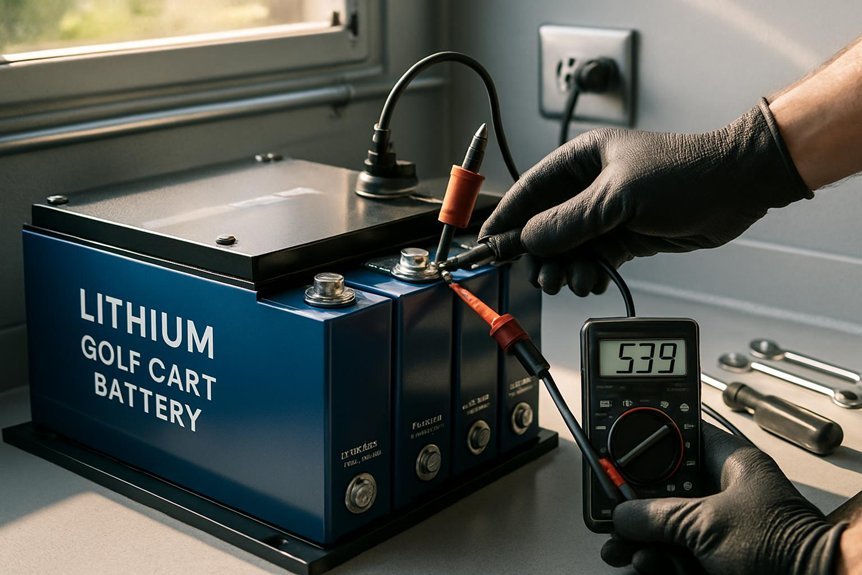
Having completed our visual checks, we now perform Basic Electrical Checks to confirm system integrity and identify faults before they manifest as failures. We approach this with a systematic, proactive mindset. First, we verify basic wiring connections at terminals, ensuring tightness and absence of corrosion or moisture ingress. Next, we perform voltage checks across critical points: pack terminals, balance leads, and the main disconnect. Compare readings to manufacturer specs and note any deviations or irregular fluctuations. Look for abnormal resistance with an insulation tester to detect degraded cables or insulation breaches. Document all findings, then recheck after any service actions. Finally, confirm protection devices function correctly and recording equipment captures trends. Regular, concise records help pinpoint emerging issues and support timely maintenance decisions.
Troubleshooting Common Lithium Battery Issues
When diagnosing common lithium battery issues in golf carts, we start by confirming symptoms, then verify that the pack, connections, and BMS are functioning within spec. We approach failures methodically, documenting readings, and ruling out root causes before replacing components. Our goal is to disable troubleshooting myths and identify true faults, avoiding guesswork or overreaction to transient signals.
- Check voltage, current, and temperature against spec sheets, noting any excursions.
- Inspect wiring, connectors, and fuses for corrosion, looseness, or damage that could cause common misfires.
- Validate BMS communication and balance activities; ensure proper SOC estimation.
- Reproduce the symptom under load to differentiate sensor errors from pack issues.
If anomalies persist, escalate with precise data logs and plan corrective actions promptly.
Safety Practices for Charging and Handling Lithium Batteries
How can we guarantee safe charging and handling of lithium batteries in golf carts without compromising performance? We approach this with strict safety protocols and disciplined procedures. First, always charge in a well-ventilated area, away from heat sources, and use manufacturer-approved chargers with proper amperage, voltage, and temperature monitoring. Inspect connections for corrosion or looseness before charging, and never charge damaged packs. During handling, wear cut-resistant gloves and eye protection, and transport cells in dedicated containers to prevent short circuits. Monitor for abnormal temperature rises, unusual smells, or swelling, and isolate any suspect pack immediately. Document every charging cycle, including times, voltages, and ambient conditions. By adhering to these guidelines, we reduce handling hazards while preserving battery performance and longevity.
Budget-Friendly Ways to Extend Battery Life Without Overspending
Are we maximizing efficiency without breaking the bank? We approach budget-friendly longevity with precise, practical steps that address short term compatibility and cost effective upgrades. We aim for measurable gains without overhauls, focusing on proven, scalable actions.
1) Optimize charge routines. Schedule balanced charging to minimize parasitic losses and maximize cycle stability.
2) Calibrate state-of-charge limits. Keep the pack within manufacturer-specified SOC windows to extend usable life.
3) Implement thermal-aware operation. Maintain cool, stable temperatures to reduce degradation rates.
4) Prioritize efficient components. Choose cost effective upgrades that align with existing hardware for easy integration and predictable performance.
Frequently Asked Questions
How Often Should I Replace a Lithium Golf Cart Battery Pack?
We should replace a lithium golf cart battery pack when its capacity falls below 70–80% of original, affecting performance; monitor battery lifespan via cycles, and follow charging best practices to extend life before replacement.
Can Lithium Batteries Be Recycled After Long-Term Use?
We can recycle lithium batteries after long-term use, with a thorough recycling overview and clear assessment of environmental impact. We’ll emphasize proper handling, documented processes, and proactive compliance to minimize risk and maximize material recovery for a sustainable future.
Do Lithium Cells Require Discharging Before Charging?
Do lithium cells require discharging before charging? We say yes, typically you should discharging before charging to balance cycles, preserve capacity, and avoid voltage stress. We’ll monitor state-of-charge and ensure proper charging before use. Readers, stay proactive.
What Charger Specifications Are Essential for Lithium Golf Carts?
We recommend a charger with proper voltage, current, and connector specs for lithium golf carts, ensuring charger compatibility and peak current handling. We prioritize balanced termination, temperature protection, and warranty considerations to safeguard performance and coverage.
How Does Climate Affect Lithium Battery Performance Long-Term?
We’ve found climate impact lowers long term performance by accelerating capacity fade and increasing internal resistance; we proactively mitigate risk with proper thermal management, storage under recommended temperatures, and periodic conditioning to preserve cycle life and reliability.
Conclusion
We’ve seen how careful charging schedules and proactive care mirror the subtle coincidences of a well-tuned system: a seasoned battery performs precisely when it’s expected, and a small habit today avoids big downtime tomorrow. When you routinely keep temps controlled, terminals clean, and SOC calibrated, you’re aligning physics with practice. So, as our routines converge with the battery’s needs, you’ll notice smoother runs, longer life, and fewer unexpected outages—basically, a quietly reliable cart that’s ready when you are.